
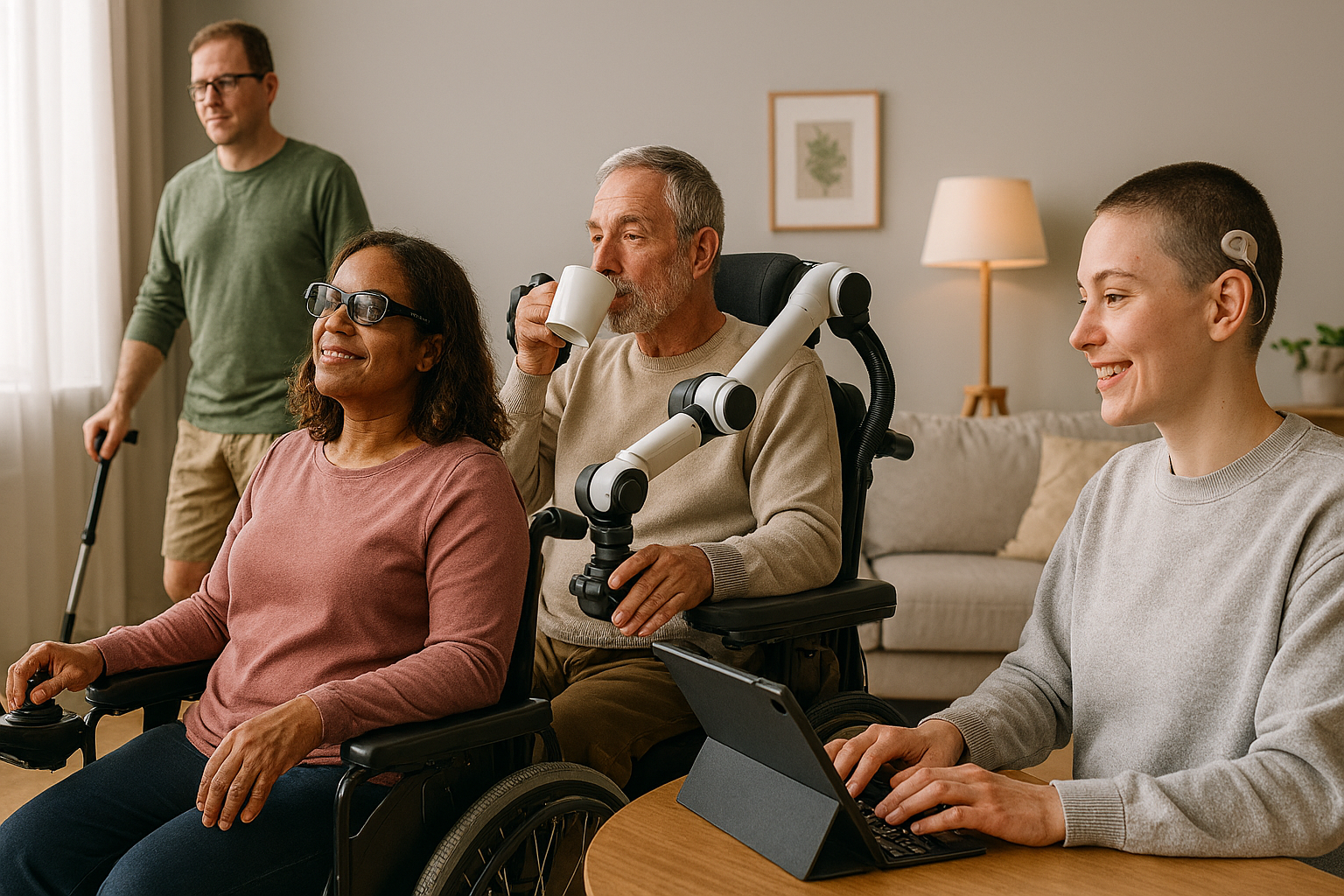
Life-Changing Devices for Independence 🦽✨
The world is experiencing a revolution that’s transforming lives for over 1 billion people worldwide who live with disabilities. Disability-assistive tech gadgets are no longer just simple tools – they’re sophisticated, AI-powered devices that are breaking down barriers and creating unprecedented independence for users! 💪
From smart glasses that describe the world around you to robotic prosthetics that move with your thoughts, disability-assistive tech gadgets are changing everything. Whether you’re managing a disability yourself, caring for a loved one, or working in healthcare, understanding these breakthrough technologies is absolutely essential in 2025.
Why Disability-Assistive Tech Gadgets Are More Important Than Ever 🌟
The statistics are staggering – and hopeful! The global assistive technology market has skyrocketed from $24.4 billion in 2025 and is projected to reach an astounding $45.88 billion by 2029. That’s a compound annual growth rate of 7.7%! But these aren’t just numbers – they represent millions of people gaining independence, confidence, and quality of life.
The aging population is driving unprecedented demand for disability-assistive tech gadgets. By 2034, Americans aged 65+ will outnumber children under 18 for the first time in history. This demographic shift, combined with rising chronic disease rates and improved disability awareness, is creating a perfect storm of innovation and opportunity.
What’s truly exciting is how artificial intelligence and machine learning are revolutionizing traditional assistive devices. Modern disability-assistive tech gadgets don’t just help – they learn, adapt, and anticipate user needs in ways we could never imagine just a few years ago.
Revolutionary Smart Glasses: Seeing the Impossible 👓
Envision Glasses: AI-Powered Vision for the Blind
Envision Glasses represent the cutting edge of visual assistance technology. These aren’t just smart glasses – they’re AI-powered companions that transform the visual world into rich, detailed audio descriptions. Built on Google Glass Enterprise Edition 2, these disability-assistive tech gadgets can:
Read any text instantly – from restaurant menus to medication labels Describe scenes in real-time – helping users understand their surroundings Recognize faces and objects – maintaining social connections and navigation Make hands-free video calls – connecting users with family and assistance when needed
Users report life-changing experiences. One person shared: “Tonight I ordered Chinese for dinner. I was able to use my Envision Glasses to identify what the sauce packets were, which ones were soy sauce and which ones were duck sauce. Thanks Envision!”
The pricing ranges from $3,030 for the Read Edition to $4,030 for the Professional Edition, making these powerful disability-assistive tech gadgets accessible to various budgets and needs.
eSight: Electronic Vision Enhancement
eSight takes a different approach to visual assistance by enhancing remaining vision rather than replacing it entirely. These electronic eyewear devices work by:
- Capturing live video through high-definition cameras
- Processing images in real-time to enhance contrast and brightness
- Displaying magnified, high-resolution imagery directly to the user’s eyes
- Allowing users with visual acuity from 20/60 to 20/1400 to achieve enhanced vision
The technology stimulates synaptic activity from remaining photoreceptor function, naturally completing the vision process in the brain. Users report being able to see their grandchildren’s faces, read independently, and engage in activities they thought were lost forever.
The Future: EchoVision and Beyond
New innovations like EchoVision are pushing boundaries even further. Designed with the blind, for the blind, these next-generation disability-assistive tech gadgets offer:
- Live, detailed environmental descriptions
- Hands-free remote assistance integration
- Reading capabilities for printed and handwritten text
- Open platform architecture supporting multiple applications
Mobility Revolution: Smart Wheelchairs and Advanced Prosthetics 🚀
AI-Powered Smart Wheelchairs
The wheelchair industry is experiencing a technological renaissance. Modern smart wheelchairs aren’t just mobility devices – they’re intelligent companions that anticipate user needs and adapt to environments.
Key features of 2025 smart wheelchairs include:
- Predictive navigation using AI algorithms that learn user patterns
- Voice control integration with Amazon Alexa, Google Assistant, and Apple Siri
- Automatic obstacle detection and collision avoidance systems
- Health monitoring sensors tracking posture, activity levels, and vital signs
- Emergency response systems that can automatically call for help
These advanced disability-assistive tech gadgets are transforming independence. Users can navigate complex environments, control smart home devices, and maintain active lifestyles with unprecedented freedom.
Breakthrough Prosthetic Technology
The prosthetics revolution is equally impressive. Take the Bio Leg, a CES 2025 Innovation Award winner that’s redefining what artificial limbs can do:
- Electric motor with multiple sensors providing powered support
- Natural movement replication matching human knee function
- Calf muscle contour design for lifelike appearance
- Sleek carbon fiber construction turning prosthetics into fashion statements
Advanced prosthetics now respond to neural signals, allowing users to control artificial limbs through thought alone. These disability-assistive tech gadgets are so sophisticated that users report feeling sensation and natural movement – something unimaginable just decades ago.
Mobility Aid Trends for 2025
The latest mobility aids incorporate several breakthrough technologies:
AI-Powered Gait Analysis: Devices like smart walkers and canes now include adaptive gait analysis, automatically adjusting support based on user movement patterns.
Extended Battery Life: New battery technologies provide all-day power for electric wheelchairs and mobility scooters, with some models offering 15+ hour operation.
Lightweight Materials: Advanced carbon fiber and titanium alloys are making devices lighter without sacrificing strength or durability.
Communication Breakthroughs: Giving Voice to Everyone 🗣️
Communication disability-assistive tech gadgets are experiencing revolutionary advances, particularly for people with speech disabilities and hearing impairments.
AI-Powered Speech Generation
Modern Augmentative and Alternative Communication (AAC) devices are becoming incredibly sophisticated:
Bling: A wearable solution enabling people with speech disabilities to communicate in their own voices Voice to Braille: Instantly converts spoken words into Braille text using advanced AI algorithms
XanderGlasses Connect: Translates speech into real-time text captions with AI enhancement features
These devices use machine learning to understand context, predict commonly used phrases, and adapt to individual communication patterns. Users can maintain natural conversation flow while expressing complex thoughts and emotions.
Hearing Enhancement Technology
The Multi-Mic+ represents next-generation hearing assistance. Unlike traditional remote microphones restricted to specific hearing aid brands, this device can transmit audio to multiple users simultaneously, supporting:
- Hearing aids and cochlear implants
- Standard earbuds and headphones
- Any Auracast-enabled device
- Group conversations in noisy environments
This universal compatibility makes these disability-assistive tech gadgets incredibly versatile for various hearing needs and social situations.
Neural Interface Innovation
Naqi Neural Earbuds push the boundaries of what’s possible. These revolutionary disability-assistive tech gadgets enable users to:
- Control computers, devices, and IoT systems without voice, touch, or screens
- Operate wheelchairs and assistive technologies through neural signals
- Access an “invisible user interface” for connected device control
- Maintain independence for quadriplegics, disabled veterans, and amputees
This technology creates safe, non-invasive alternatives to brain implants while providing unprecedented control over digital environments.
Smart Home Integration: The Connected Independence Revolution 🏠
Just like cloud computing is transforming business infrastructure, smart home technology is revolutionizing disability assistance. Modern disability-assistive tech gadgets integrate seamlessly with home automation systems to create truly accessible living environments.
AI-Powered Home Assistants
Voice assistants like Amazon Alexa, Google Assistant, and Apple Siri have become essential disability-assistive tech gadgets for many users. These systems provide:
Medication reminders ensuring proper dosing schedules Emergency assistance through voice-activated emergency calls Smart home control managing lights, temperature, and security systems Entertainment access providing music, audiobooks, and video content Social connection facilitating video calls and communication
The key advantage is hands-free operation, making these technologies accessible to users with various mobility limitations.
Environmental Control Systems
Advanced environmental control systems represent some of the most practical disability-assistive tech gadgets available:
- Automated lighting responding to movement patterns and preferences
- Temperature control maintaining optimal comfort automatically
- Security monitoring with intelligent intrusion and fall detection
- Appliance integration controlling kitchen devices, entertainment systems, and more
These systems learn user preferences over time, creating personalized environments that adapt to daily routines and changing needs.
Emergency Response Integration
Modern smart homes equipped with disability-assistive tech gadgets provide comprehensive safety monitoring:
Fall detection systems using AI to differentiate between normal movement and emergencies Behavior pattern analysis identifying deviations that might indicate health issues Automatic emergency notification contacting family members or emergency services Medical alert integration connecting with monitoring services and healthcare providers
This technology is particularly valuable for elderly users and those with cognitive impairments who want to maintain independence while ensuring safety.
Breakthrough Medical Monitoring Devices 🏥
The healthcare revolution includes remarkable disability-assistive tech gadgets that provide continuous health monitoring and medical support.
Wearable Health Technology
Advanced wearables go far beyond simple fitness tracking:
AngelSense Watch: Provides GPS tracking, two-way communication, and emergency SOS functions specifically designed for individuals with autism, dementia, or cognitive disabilities.
Smart medication dispensers like Hero and MedMinder automatically dispense pre-sorted medications at scheduled times, with smart alerts for caregivers if doses are missed.
Continuous health monitoring devices track vital signs, sleep patterns, and activity levels, providing data that helps healthcare providers make better treatment decisions.
AI-Driven Health Analysis
Modern disability-assistive tech gadgets use artificial intelligence to provide sophisticated health insights:
- Predictive health alerts identifying potential issues before they become serious
- Personalized treatment recommendations based on individual health patterns
- Integration with telemedicine platforms enabling remote consultations
- Automated health reporting keeping healthcare providers informed of patient status
These systems are particularly valuable for managing chronic conditions and preventing emergency situations.
Rehabilitation Technology
Cutting-edge rehabilitation disability-assistive tech gadgets are accelerating recovery and improving outcomes:
Robotic exoskeletons helping paralyzed individuals walk again VR therapy systems providing immersive rehabilitation experiences
Biofeedback devices helping users relearn motor functions AI-powered physical therapy providing personalized exercise programs
Daily Living: Independence in Every Task 🌈
The most impactful disability-assistive tech gadgets often address everyday challenges, making routine tasks manageable and maintaining dignity.
Kitchen and Cooking Assistance
Smart kitchen technologies include:
Voice-controlled appliances that respond to verbal commands Automated cooking systems with built-in safety features Smart containers that identify contents and expiration dates Adaptive utensils designed for various grip and dexterity limitations
These disability-assistive tech gadgets enable users to maintain independence in meal preparation, which is crucial for both physical health and psychological well-being.
Personal Care Innovation
Bathroom and personal care disability-assistive tech gadgets include:
- Automated bath lifts providing safe bathing access
- Smart toilets with built-in assistance features
- Voice-activated grooming tools for hands-free operation
- Adaptive clothing with magnetic closures and easy-access designs
The My Aura beauty device exemplifies innovation in this space – it’s a first-of-its-kind assistive beauty device that dispenses perfume without requiring button presses, making personal care more accessible for users with mobility limitations.
Transportation and Mobility Support
Getting around independently requires various disability-assistive tech gadgets:
Smart mobility scooters with GPS navigation and obstacle detection Adaptive vehicle controls enabling driving with various disabilities
Public transit apps designed specifically for accessibility needs Ride-sharing integrations with disability accommodation features
Cognitive Support: Technology for Brain Health 🧠
Cognitive disabilities present unique challenges that modern disability-assistive tech gadgets are addressing with remarkable innovation.
Memory Assistance Technology
MIT’s MemPal represents breakthrough innovation in cognitive support. This wearable voice-based memory assistant helps older adults and those with memory issues by:
- Answering location questions like “Where are my keys?”
- Providing activity reminders about daily tasks and appointments
- Offering reassurance about completed activities like locking doors
- Maintaining privacy while providing essential memory support
User feedback has been overwhelmingly positive, with one 78-year-old tester stating: “Memory is of utmost importance and I want to keep my memory for as long as I can.”
Learning and Cognitive Enhancement
Educational disability-assistive tech gadgets support various learning needs:
Text-to-speech systems for dyslexia and reading disabilities Visual scheduling apps helping with executive function challenges
Memory training games designed to strengthen cognitive abilities Attention focusing tools for ADHD and concentration difficulties
These technologies adapt to individual learning styles and provide personalized support for cognitive development and maintenance.
Dementia and Alzheimer’s Support
Specialized disability-assistive tech gadgets for dementia care include:
- Companion robots providing emotional support and engagement
- Wandering prevention systems using GPS tracking and geofencing
- Familiar voice interfaces that remain recognizable throughout disease progression
- Simple communication devices adapting to changing cognitive abilities
Market Trends and Future Innovations 📈
The disability-assistive tech gadgets market is experiencing unprecedented growth driven by several key factors:
Market Drivers
Aging population worldwide creating increased demand for assistive technologies Rising chronic disease rates necessitating long-term support solutions Improved disability awareness leading to better accommodation and inclusion Technological advancement making sophisticated solutions more affordable Government initiatives supporting assistive technology development and access
Much like how AI is revolutionizing various industries, artificial intelligence is transforming assistive technology with unprecedented capabilities.
Investment and Innovation
Major technology companies are increasing investment in disability-assistive tech gadgets:
Apple continues developing accessibility features across all devices Google integrates AI assistance into various assistive applications
Microsoft creates inclusive design principles for all products Amazon expands Alexa capabilities for disability support
This corporate commitment ensures continued innovation and broader accessibility.
Emerging Technologies
Breakthrough technologies coming to disability-assistive tech gadgets include:
- Brain-computer interfaces enabling direct neural device control
- Advanced materials creating lighter, stronger, more comfortable devices
- Quantum sensors providing unprecedented precision in health monitoring
- Holographic displays creating new visual interface possibilities
Choosing the Right Assistive Technology 🎯
Selecting appropriate disability-assistive tech gadgets requires careful consideration of individual needs, capabilities, and goals.
Assessment Considerations
Functional needs evaluation: What specific tasks need assistance? Technology comfort level: How comfortable is the user with digital interfaces?
Physical capabilities: What interaction methods work best for the individual? Environmental factors: Where will the device be used most frequently? Support system: What training and ongoing support are available?
Similar to how professionals need to understand different cloud computing options, choosing assistive technology requires understanding various options and their capabilities.
Working with Professionals
Assistive technology teams typically include:
- Occupational therapists specializing in daily living skills
- Speech-language pathologists for communication needs
- Physical therapists addressing mobility requirements
- Assistive technology specialists understanding device options
- Healthcare providers managing overall care coordination
These professionals help ensure that selected disability-assistive tech gadgets truly meet individual needs and integrate well with existing care plans.
Trial and Adaptation Periods
Most quality disability-assistive tech gadgets offer trial periods allowing users to:
Test functionality in real-world environments
Assess comfort during extended use Evaluate integration with existing devices and routines Determine learning curve and training requirements Confirm value and benefit before making significant investments
Funding and Access: Making Technology Affordable 💰
Cost shouldn’t be a barrier to accessing life-changing disability-assistive tech gadgets. Multiple funding sources and programs help make these technologies accessible.
Insurance Coverage
Many disability-assistive tech gadgets qualify for insurance coverage:
Medicare Part B covers medically necessary devices when prescribed by doctors Private health insurance often covers prescribed assistive technologies Medicaid programs provide coverage based on state-specific guidelines
Veterans Affairs offers comprehensive assistive technology support for veterans
The key is working with healthcare providers to document medical necessity and navigate the approval process effectively.
Grant and Foundation Support
Numerous organizations provide funding for disability-assistive tech gadgets:
The Wheelchair Foundation provides free wheelchairs globally Friends of Disabled Adults and Children (FODAC) offers refurbished equipment Lions Club International chapters often fund assistive technology needs Local community foundations frequently support disability-related requests
Employment Accommodations
Employers may be required to provide disability-assistive tech gadgets as reasonable accommodations under:
- Americans with Disabilities Act (ADA) requirements
- State disability accommodation laws
- Company diversity and inclusion policies
- Vocational rehabilitation programs
These accommodations help ensure equal employment opportunities and workplace productivity.
The Economics of Independence 💼
Disability-assistive tech gadgets represent more than personal convenience – they’re investments in independence that provide substantial economic benefits.
Individual Economic Impact
Personal financial benefits include:
Reduced caregiving costs through increased independence
Maintained employment capabilities with appropriate accommodations Avoided institutional care costs by supporting independent living Improved health outcomes reducing medical expenses Enhanced quality of life providing immeasurable personal value
Societal Economic Benefits
Broader economic impacts include:
- Reduced healthcare system burden through preventive and supportive technologies
- Increased labor force participation among people with disabilities
- Innovation spillover effects benefiting the general population
- Economic growth in the assistive technology sector
- Social inclusion creating more diverse and dynamic communities
The assistive technology sector provides high-paying jobs and drives innovation that benefits everyone, much like how technological advancement creates employment opportunities across industries.
Safety and Privacy Considerations 🔒
As disability-assistive tech gadgets become more connected and intelligent, safety and privacy become increasingly important considerations.
Data Security
Modern assistive technologies collect sensitive personal information:
Health data requiring HIPAA-compliant handling Location information needing secure transmission and storage Communication records demanding privacy protection
Behavioral patterns requiring ethical use policies
Users should understand what data devices collect, how it’s used, and who has access to personal information.
Device Security
Connected disability-assistive tech gadgets need robust security measures:
- Regular software updates addressing security vulnerabilities
- Strong authentication protecting device access
- Encrypted communication securing data transmission
- Network security protecting home and institutional networks
Emergency Safeguards
Safety features in disability-assistive tech gadgets include:
Automatic emergency notifications when devices detect problems Backup communication methods ensuring help remains accessible Device failure alerts notifying users and caregivers of malfunctions Manual override options maintaining user control in emergencies
Success Stories: Real Lives Transformed ⭐
The true impact of disability-assistive tech gadgets becomes clear through individual success stories.
Vision Restoration
Sarah, a 45-year-old professional who lost vision due to diabetic retinopathy, regained independence using Envision Glasses. “I can read my own mail again, identify products while shopping, and recognize faces of colleagues. These glasses gave me back my professional confidence and personal independence.”
Mobility Freedom
Marcus, a veteran who uses a smart wheelchair, shares: “The AI navigation helps me get around crowded areas I used to avoid. The voice control integration means I can manage my smart home, order groceries, and stay connected with family without assistance. This technology restored my sense of autonomy.”
Communication Breakthrough
Lisa’s daughter Emma uses an AAC device for autism-related communication challenges. “Watching Emma express her thoughts and feelings through her device has been incredible. She’s developing friendships, excelling in school, and showing us her brilliant mind. This technology unlocked her potential.”
Cognitive Support Success
Robert, dealing with early-stage dementia, uses multiple disability-assistive tech gadgets: “The medication reminders, GPS tracking, and memory assistance help me maintain independence while giving my family peace of mind. I’m staying in my own home longer because of this technology.”
Global Perspectives: Assistive Technology Worldwide 🌍
Disability-assistive tech gadgets development and adoption vary significantly across different countries and regions.
Leading Innovation Countries
United States: Strong research funding and large market driving innovation Japan: Advanced robotics and aging population creating demand Germany: Engineering excellence and social support systems
South Korea: Technology integration and universal design principles United Kingdom: Accessibility legislation and inclusive design focus
Developing World Challenges
Access to disability-assistive tech gadgets in developing countries faces unique challenges:
- Cost barriers limiting access to advanced technologies
- Infrastructure limitations affecting device connectivity and support
- Training needs requiring local expertise development
- Cultural factors influencing acceptance and adoption
Organizations like the World Health Organization are working to address these disparities through global assistive technology initiatives.
International Cooperation
Global collaboration in disability-assistive tech gadgets includes:
Technology transfer programs sharing innovations across borders International standards development ensuring compatibility and safety Research partnerships pooling resources for breakthrough developments Humanitarian initiatives providing assistive technology in crisis situations
The Future of Disability-Assistive Tech Gadgets 🚀
Looking ahead, disability-assistive tech gadgets will become even more sophisticated, accessible, and integrated into daily life.
Artificial Intelligence Evolution
AI advancements will create disability-assistive tech gadgets that:
Predict user needs before they’re expressed Adapt automatically to changing abilities and preferences Integrate seamlessly across all devices and environments
Provide personalized support based on individual patterns
Just as AI is transforming cloud computing, artificial intelligence will revolutionize assistive technology capabilities.
Miniaturization and Integration
Future disability-assistive tech gadgets will be:
- Nearly invisible integrated into clothing, jewelry, and everyday objects
- Always available with extended battery life and wireless charging
- Universally compatible working across all platforms and ecosystems
- Intuitively operated requiring minimal learning or training
Biological Integration
Breakthrough developments in disability-assistive tech gadgets include:
Neural implants enabling direct brain-device communication Regenerative technologies restoring biological functions
Genetic therapies addressing disabilities at the cellular level Bioprinting creating replacement organs and tissues
Societal Integration
The ultimate goal is creating a world where disability-assistive tech gadgets enable full participation in all aspects of society:
Universal design principles making all environments accessible by default Inclusive technology development considering disability needs from the beginning Policy advancement ensuring equal access and opportunity
Cultural change embracing diversity and inclusion as societal strengths
Getting Started: Your Journey to Independence 🌟
If you’re considering disability-assistive tech gadgets for yourself or a loved one, here’s how to begin:
Initial Steps
- Assess needs honestly and comprehensively
- Research options thoroughly, including latest innovations
- Consult professionals for expert guidance and support
- Explore funding sources and insurance coverage options
- Plan for training and ongoing support requirements
Building Your Support Network
Connect with:
- Disability advocacy organizations for resources and community
- Online forums where users share experiences and advice
- Local support groups providing peer connections and encouragement
- Technology vendors offering training and customer support
- Healthcare providers coordinating overall care and assistance
Staying Informed
Keep up with disability-assistive tech gadgets developments through:
Industry publications covering the latest innovations Conference attendance networking with developers and users Online resources providing reviews and comparisons Social media groups sharing real-world experiences
Research studies understanding effectiveness and outcomes
Much like staying current with technology trends in other industries, keeping informed about assistive technology developments ensures access to the most beneficial innovations.
Conclusion: Technology as the Great Equalizer ✨
Disability-assistive tech gadgets represent one of the most hopeful and transformative aspects of modern technology. These innovations aren’t just changing individual lives – they’re reshaping our understanding of human potential and societal inclusion.
From AI-powered smart glasses that restore vision to neural interfaces that enable thought-controlled devices, from advanced prosthetics that feel and move naturally to smart home systems that anticipate user needs, these technologies are breaking down barriers that have existed for centuries.
The statistics tell a compelling story: with over 1 billion people worldwide living with disabilities and the global assistive technology market growing at 7.7% annually, we’re witnessing the emergence of a new era of independence and possibility.
But beyond the numbers and technical specifications, disability-assistive tech gadgets are about human dignity, independence, and the fundamental right to participate fully in society. They’re about children with autism finding their voice, veterans with mobility challenges regaining their independence, older adults with dementia maintaining their autonomy, and individuals with various disabilities achieving their dreams.
The future looks incredibly bright. As artificial intelligence, robotics, and biotechnology continue advancing, disability-assistive tech gadgets will become even more powerful, affordable, and accessible. We’re moving toward a world where disability becomes simply another form of human diversity, supported by technology that adapts to individual needs rather than forcing adaptation to technological limitations.
Whether you’re personally navigating disability challenges, supporting a loved one, working in healthcare, or simply interested in how technology can improve human lives, understanding disability-assistive tech gadgets is essential. These innovations represent the best of human creativity and compassion, using technology to build a more inclusive and accessible world for everyone.
The revolution is already here – and it’s just the beginning! 🎉
Looking for more insights on how technology is transforming our world? Check out our comprehensive guides on artificial intelligence innovations, smart home technology, and the future of remote work. Technology has the power to improve every aspect of human life – and assistive technology is leading the way!