The Science-Backed Method 🎯
Last Updated: July 31, 2025 | Reading Time: 12 minutes
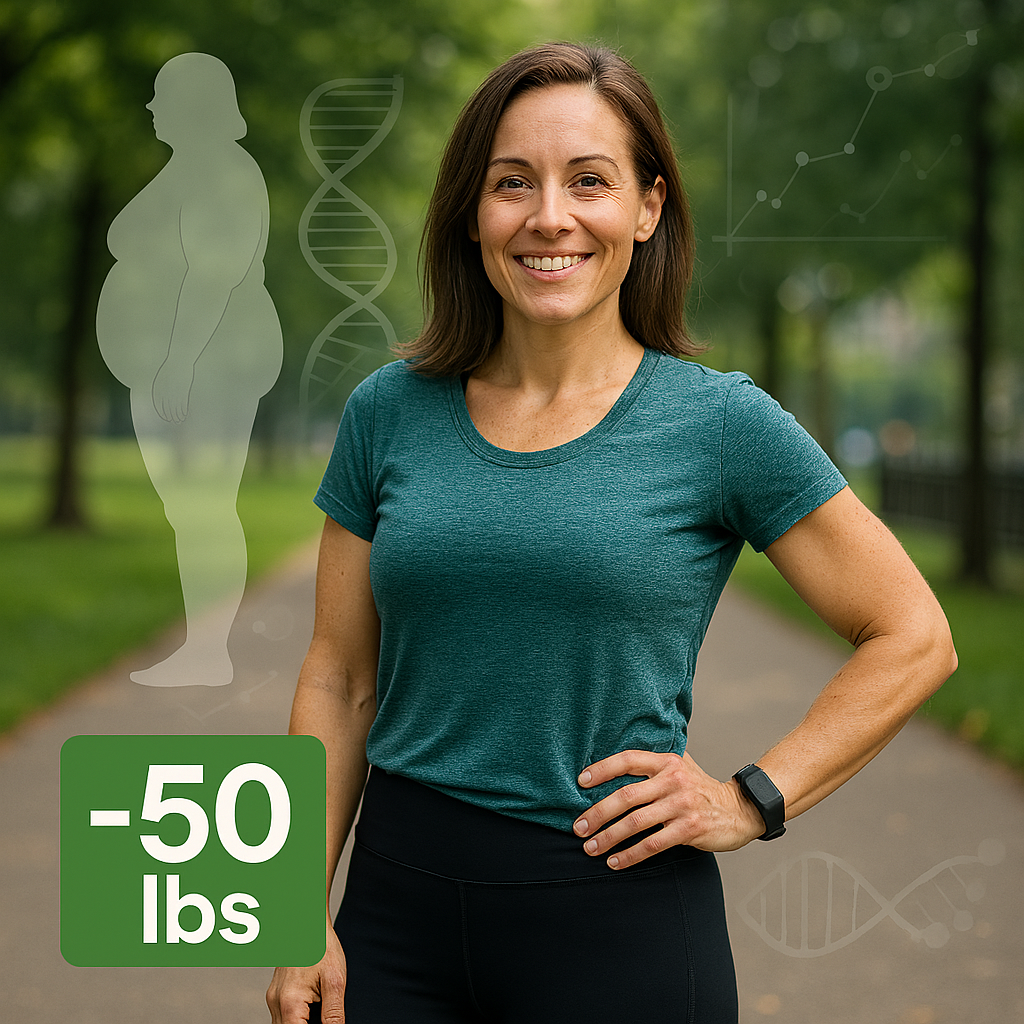
TL;DR: I discovered a game-changing approach that helped me lose 50 pounds without obsessing over every calorie. Using science-backed strategies like intermittent fasting, protein optimization, mindful eating, and visual portion control, I transformed my relationship with food while achieving sustainable weight loss. Here’s exactly how I did it! 💪
The Breaking Point That Changed Everything 😤
Three years ago, I was standing in my bathroom at 6 AM, staring at the scale showing 195 pounds – the heaviest I’d ever been. I was exhausted from years of calorie counting apps, measuring every morsel, and the constant mental math that made eating feel like torture rather than nourishment.
Sound familiar? You’re probably here because you’re tired of:
- Tracking every single bite in MyFitnessPal 📱
- Feeling guilty when you can’t find the exact calories for homemade meals
- The overwhelming anxiety around social eating events
- The yo-yo cycle of restriction followed by inevitable “failure”
That morning, I made a decision that would change my life forever. I was done with calorie counting. But I wasn’t done with losing weight.
Why Calorie Counting Actually Backfires 🚫
Before diving into what worked, let me explain why traditional calorie counting often fails. Harvard Medical School research reveals that the “calories in, calories out” model is actually antiquated and wrong!
Here’s what science tells us:
Your Body Isn’t a Calculator 🧮 The same 100 calories from processed cookies versus 100 calories from almonds affect your body completely differently. Your metabolism, gut bacteria, and hormonal responses all play crucial roles that calorie counting completely ignores.
The Metabolic Adaptation Problem ⚡ When you severely restrict calories, your body fights back. Studies on contestants from “The Biggest Loser” show that their metabolic rates plummeted after dramatic weight loss, making it nearly impossible to maintain their results.
Decision Fatigue Is Real 🧠 Making conscious decisions about food 6+ times per day leads to mental exhaustion. Eventually, you’ll make poorer choices based on old habits you were trying to change.
That’s why I needed a completely different approach – one that worked WITH my body’s natural systems, not against them.
The Game-Changing Discovery: Science-Backed Weight Loss Without Counting 🔬
My transformation began when I discovered research from the University of Illinois showing that intermittent fasting was as effective as calorie counting for weight loss. But the participants in the fasting group weren’t told to count calories – they naturally reduced their intake by 400+ calories per day!
This was my “aha moment.” Instead of fighting my body’s natural hunger and satiety signals, I needed to optimize them.
Strategy #1: The 16:8 Intermittent Fasting Method ⏰
What I Did:
- Ate all my meals between 12 PM and 8 PM
- Fasted for 16 hours daily (including sleep time)
- Drank water, black coffee, and herbal tea during fasting hours
The Science Behind It: Research published in the Annals of Internal Medicine found that people following time-restricted eating lost an average of 7.6% of their body weight compared to 5% in traditional calorie-restriction groups. The beauty? No calorie counting required!
My Real Experience: The first week was tough – I won’t lie. But by week 2, something magical happened. I stopped thinking about food constantly. My energy stabilized, and I naturally started eating less because I simply wasn’t as hungry.
Pro Tips That Made All the Difference:
- Start with a 12-hour eating window and gradually narrow it
- Break your fast with protein to stabilize blood sugar
- Stay busy during morning hours to avoid thinking about food
- Listen to your body – some days you might need a longer eating window
Want to dive deeper into passive income strategies while you’re on your weight loss journey? Check out our guide on Passive Income Apps That Actually Pay – I used some of these during my transformation!
Strategy #2: The Protein Power Play 💪
The Science: Studies show that protein has the highest “thermic effect” of all macronutrients – meaning your body burns 20-30% of protein calories just digesting it! Compare that to 5-10% for carbs and 0-3% for fats.
What I Actually Did:
- Aimed for 25-30% of my total intake from protein
- Started every meal with a protein source
- Chose whole food proteins over processed options
- Made protein smoothies my go-to snack
My Favorite High-Protein Hacks:
- Greek yogurt with berries for breakfast (25g protein)
- Chicken or fish as the star of lunch and dinner
- Hard-boiled eggs as emergency snacks
- Protein powder in my morning coffee during eating hours
The Results: Within 3 weeks, I noticed I was staying full for 4-5 hours between meals instead of feeling hungry every 2 hours. The protein was literally changing my hunger hormones – decreasing ghrelin (hunger hormone) while increasing GLP-1, peptide YY, and cholecystokinin (satiety hormones).
Real Talk: Getting enough protein felt challenging at first, but once I made it a priority, everything else fell into place. My cravings for processed snacks virtually disappeared!
Strategy #3: Mindful Eating Revolution 🧘♀️
This might sound “woo-woo,” but hear me out. Research from Harvard’s Nutrition Source shows that mindful eating can lead to the same weight loss results as traditional diet programs – without the restriction!
My Mindful Eating Protocol:
- Put away all distractions during meals (no phone, TV, or computer)
- Chewed each bite 20+ times
- Paused halfway through meals to assess hunger levels
- Ate slowly enough that my brain could register fullness signals
The 20-Minute Rule: Your brain needs about 20 minutes to receive satiety signals from your stomach. By eating slowly and mindfully, I naturally started eating less because I could actually FEEL when I was satisfied.
Practical Mindful Eating Tips:
- Use smaller utensils to naturally slow down eating
- Set a timer for 20 minutes per meal
- Practice the “hunger scale” – rate your hunger from 1-10 before eating
- Stop eating at a 7/10 fullness level
The Unexpected Benefit: Not only did I lose weight, but I started actually ENJOYING food again. Every meal became a mindful experience rather than mindless consumption.
Struggling with digital distractions during meals? Our 30-Day Digital Detox Challenge helped me reduce screen time by 70% and become more present during eating.
Strategy #4: Visual Portion Control (No Measuring Required!) 👀
The Plate Method Revolution: Instead of measuring portions, I used my hand and a standard 9-inch plate as portion guides. Research shows this method can be just as effective as precise calorie counting for weight loss!
My Simple Plate Formula:
- 1/2 plate: Non-starchy vegetables (broccoli, spinach, peppers, etc.)
- 1/4 plate: Lean protein (palm-sized portion)
- 1/4 plate: Complex carbohydrates (cupped hand portion)
- Thumb-sized: Healthy fats (nuts, avocado, olive oil)
The Hand Method:
- Protein: Palm of your hand (thickness and size)
- Vegetables: Unlimited (seriously, go crazy!)
- Carbohydrates: Cupped hand portion
- Fats: Thumb-sized portion
Visual Tricks That Actually Work: Studies show that eating from smaller plates can reduce calorie intake by 100-200 calories per meal without feeling deprived. I switched from 12-inch dinner plates to 9-inch plates and barely noticed the difference!
Strategy #5: The Liquid Calorie Elimination 🥤
This was probably the easiest change with the biggest impact. I completely eliminated liquid calories:
What Had to Go:
- Soda and sweetened beverages
- Fancy coffee drinks with syrups and whipped cream
- Fruit juices (yes, even “healthy” ones)
- Alcohol (at least initially)
What I Drank Instead:
- Water with lemon or cucumber
- Black coffee or coffee with unsweetened almond milk
- Herbal teas
- Sparkling water with a splash of real fruit juice
The Impact: I was probably consuming 400-600 calories daily just from beverages. Eliminating these alone created a significant calorie deficit without any hunger or deprivation!
Strategy #6: The 80/20 Approach to Food Quality 🥗
Instead of labeling foods as “good” or “bad,” I followed the 80/20 rule:
80% Whole Foods:
- Vegetables and fruits
- Lean proteins (chicken, fish, eggs, legumes)
- Whole grains (quinoa, brown rice, oats)
- Healthy fats (avocados, nuts, olive oil)
20% Whatever I Wanted:
- Pizza night with friends
- Birthday cake at celebrations
- The occasional ice cream treat
Why This Works: Perfectionism kills progress. By allowing flexibility 20% of the time, I never felt deprived or like I was “cheating.” This made the approach sustainable long-term.
Need tech solutions to support your lifestyle changes? Check out our comparison of Tesla Autopilot vs Mercedes EQS – I found the right tech tools essential for staying consistent with my health goals!
The Weekly Progress System (Beyond the Scale) 📊
I tracked progress without obsessing over daily weight fluctuations:
Weekly Measurements:
- Weight (same day, same time, same conditions)
- Progress photos from front and side
- How clothes fit (this was huge!)
- Energy levels (1-10 scale)
- Sleep quality
- Mood and mental clarity
Monthly Assessments:
- Body measurements (waist, hips, arms)
- Fitness improvements (strength, endurance)
- Overall relationship with food
The Game-Changer: Some weeks the scale didn’t move, but my clothes fit better. Other weeks, I felt stronger and more energetic despite maintaining weight. This comprehensive tracking showed me that health is so much more than a number!
My Typical Day: What 50-Pound Weight Loss Looks Like 📅
6:00 AM: Wake up, drink 16 oz water with lemon 7:00 AM: Black coffee while getting ready for work 8:00-11:30 AM: Fasting period – focus on work, drink herbal tea 12:00 PM: Break fast with Greek yogurt parfait (protein + berries) 3:00 PM: Handful of almonds if hungry 6:00 PM: Dinner – salmon, roasted vegetables, quinoa (following plate method) 7:30 PM: Herbal tea and done eating for the day 8:00 PM onwards: Fasting begins again
Weekend Flexibility: I adjusted my eating window for social events and family meals. The key was consistency most of the time, not perfection all the time.
The Unexpected Mental Health Benefits 🧠
Losing weight without calorie counting didn’t just transform my body – it transformed my relationship with food:
Freedom from Food Obsession: No more calculating calories at restaurants or avoiding social events because I couldn’t track the food accurately.
Reduced Anxiety: The constant mental math of calorie counting was exhausting. Removing that burden improved my overall mental health significantly.
Better Sleep: Intermittent fasting and stable blood sugar levels led to deeper, more restorative sleep.
Increased Confidence: As the weight came off naturally, I felt more confident in my ability to maintain healthy habits long-term.
Common Challenges and How I Overcame Them 💪
Challenge 1: Social Pressure “Why aren’t you eating breakfast with us?”
Solution: I educated close friends and family about my approach and suggested social activities beyond food-focused gatherings.
Challenge 2: Initial Hunger The first two weeks of intermittent fasting were tough.
Solution: I stayed busy during fasting hours and reminded myself that hunger comes in waves – it always passed.
Challenge 3: Weekend Temptations Weekends were full of social eating opportunities.
Solution: I planned ahead and allowed flexibility in my eating window while maintaining the overall structure.
Challenge 4: Plateau Periods Weight loss stalled around month 4.
Solution: I focused on non-scale victories and trusted the process. The plateau broke after 3 weeks.
Speaking of overcoming challenges, check out our guide on Best Free AI Tools for Everyday Users – I used several AI apps to help track my habits and stay motivated!
The Science Behind Why This Works 🔬
Hormonal Optimization: This approach optimized key hormones:
- Insulin: Intermittent fasting improved insulin sensitivity
- Ghrelin: High protein intake reduced hunger hormone levels
- Leptin: Better sleep and stress management improved satiety signaling
- Cortisol: Mindful eating reduced stress-related cortisol spikes
Metabolic Advantages: Unlike severe calorie restriction, this approach:
- Preserved metabolic rate
- Maintained muscle mass through adequate protein
- Improved fat burning through fasting periods
- Enhanced metabolic flexibility
Psychological Benefits:
- Reduced decision fatigue around food choices
- Eliminated the restriction-binge cycle
- Improved body awareness and hunger cues
- Built sustainable, long-term habits
Month-by-Month Breakdown: My 50-Pound Journey 📈
Month 1: Lost 8 pounds
- Mostly water weight from reducing processed foods
- Adjusted to intermittent fasting schedule
- Started incorporating more protein
Month 2: Lost 6 pounds (14 total)
- Fat loss became more apparent
- Energy levels stabilized
- Clothes started fitting better
Month 3: Lost 5 pounds (19 total)
- Added mindful eating practices
- Strength training 3x per week
- Sleep quality improved dramatically
Month 4: Lost 3 pounds (22 total)
- First plateau period
- Focused on non-scale victories
- Refined portion control techniques
Month 5: Lost 7 pounds (29 total)
- Plateau broke naturally
- Incorporated more variety in eating window
- Started getting compliments from friends
Month 6: Lost 5 pounds (34 total)
- Consistency became effortless
- Social eating no longer stressful
- Felt like a completely different person
Months 7-10: Lost 16 pounds (50 total)
- Slow, steady progress
- Focus on maintenance strategies
- Built habits that felt natural
Foods That Became My Best Friends 🥘
High-Protein Champions:
- Greek yogurt (25g protein per cup)
- Chicken breast, salmon, and lean beef
- Eggs (nature’s perfect protein package)
- Lentils and chickpeas for plant-based options
Fiber-Rich Satiety Boosters:
- Broccoli, Brussels sprouts, and cauliflower
- Berries (antioxidants + fiber + low sugar)
- Apples with skin (pectin for fullness)
- Chia seeds and flaxseeds
Healthy Fats for Satisfaction:
- Avocados (monounsaturated fats)
- Nuts and seeds (portion-controlled)
- Olive oil for cooking
- Fatty fish like salmon and sardines
Complex Carbohydrates:
- Quinoa (complete protein bonus)
- Sweet potatoes (vitamin A powerhouse)
- Steel-cut oats for breakfast
- Brown rice and wild rice
The Foods I Naturally Stopped Craving 🚫
Ultra-Processed Snacks:
- Chips, crackers, and packaged cookies
- Candy and sugary treats
- Fast food and frozen meals
- Sugary cereals and granola bars
The Amazing Part: I didn’t force myself to avoid these foods – I just naturally stopped wanting them as much. When your body gets proper nutrition and you’re not constantly hungry, junk food loses its appeal!
Interested in other lifestyle optimizations? Check out our comparison of iPhone 15 vs iPhone 16 – the right tools and tech can support your health journey!
Maintenance: How I’ve Kept the Weight Off 🎯
18 Months Later: I’ve maintained my 50-pound loss using these principles:
Flexible Consistency: I still follow intermittent fasting 80% of the time, with flexibility for travel, special occasions, and life events.
Intuitive Eating: My hunger and fullness cues are completely recalibrated. I naturally eat appropriate portions without thinking about it.
Regular Movement: I added strength training and walking, but exercise became about feeling strong, not burning calories.
Stress Management: Improved sleep, mindfulness practices, and stress reduction became non-negotiables for maintaining my weight.
The Ripple Effect: How This Changed Everything 🌊
Career Impact: Increased energy and confidence led to better performance at work and ultimately a promotion.
Relationships: I became more present during meals with family and friends, leading to deeper connections.
Overall Health: Better sleep, improved digestion, stable energy, and enhanced mental clarity became the norm.
Financial Benefits: I spent less money on:
- Takeout and restaurant meals
- Processed snacks and drinks
- Clothes (because I maintained a stable size)
- Healthcare costs related to being overweight
Speaking of financial benefits, check out our research on 15 Highest Paying Remote Tech Jobs – better health led to better career opportunities for me!
Your Action Plan: Getting Started Today 🚀
Week 1: Foundation
- Choose your intermittent fasting window (start with 12:12 if needed)
- Eliminate liquid calories
- Add protein to every meal
Week 2: Refinement
- Practice the plate method for portion control
- Begin mindful eating practices
- Reduce processed food intake
Week 3: Integration
- Establish your eating routine
- Focus on whole foods 80% of the time
- Start tracking non-scale victories
Week 4: Optimization
- Fine-tune your eating window
- Address any remaining challenges
- Plan for long-term sustainability
The Truth About Sustainable Weight Loss 💯
After losing and maintaining a 50-pound weight loss without counting a single calorie, here’s what I learned:
It’s Not About Perfection: You don’t need to be perfect. You need to be consistent most of the time and flexible when life happens.
Your Body Is Smarter Than Any App: When you optimize your hormones and listen to your natural hunger cues, your body will guide you to the right amount of food.
Health Is More Than Weight: The improvements in energy, sleep, mood, and overall well-being were worth more than any number on the scale.
Sustainability Beats Speed: Losing weight slowly and building lasting habits is infinitely better than quick fixes that don’t last.
Final Thoughts: Your Journey Starts Now 🌟
If you’re tired of the calorie-counting hamster wheel, I want you to know that there’s another way. The science is clear: you can lose weight effectively without obsessing over every calorie.
The strategies I’ve shared aren’t magic – they’re evidence-based approaches that work WITH your body’s natural systems instead of against them. Will it take some adjustment? Absolutely. Will it be worth it? 100%.
Your relationship with food doesn’t have to be complicated, stressful, or full of guilt. You can lose weight, improve your health, and actually enjoy eating again.
The best time to start was yesterday. The second best time is right now.
Remember: You don’t need another diet. You need a sustainable lifestyle that you can maintain for life. This approach gave me exactly that, and it can do the same for you.
Ready to optimize other areas of your life? Check out our guide on How to Set Up a Home Office – creating the right environment supports all your health and wellness goals!
Want to dive deeper into health and wellness content? Check out these related articles:
- Smart Kitchen Gadgets Transforming Cooking 🍳
- Best Password Managers Tested 🔐
- Why I Switched from iPhone to Google Pixel 📱
Have questions about my weight loss journey? Drop them in the comments below! I read every single one and love helping others achieve their health goals. 💪
Disclaimer: This content is for informational purposes only and shouldn’t replace professional medical advice. Always consult with your healthcare provider before making significant changes to your diet or lifestyle, especially if you have underlying health conditions.