
Ugh, that dreaded “No Internet, Secured” message again! 😩 You’re connected to WiFi, Windows shows you’re secured, but… no internet? Don’t worry – you’re not alone! This frustrating Windows 10/11 error affects millions of users daily, and I’m here to help you fix it once and for all! 🚀
What Does “No Internet, Secured” Actually Mean? 🤔
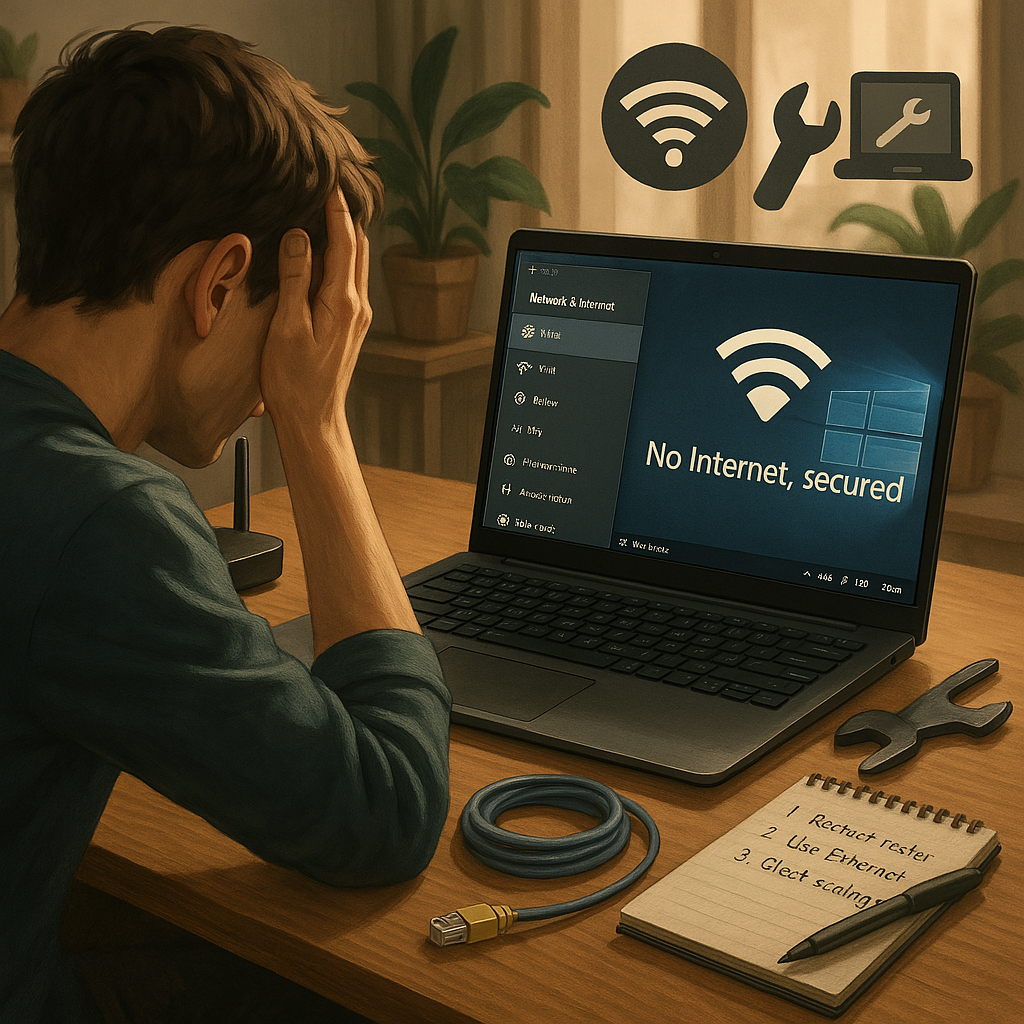
Before diving into solutions, let’s understand what’s happening. When you see “No Internet, Secured,” it means:
- ✅ Your device successfully connected to the WiFi router
- ✅ The connection is encrypted and secure
- ❌ BUT your device can’t reach the internet
Think of it like having a locked mailbox (secured) but the postal service isn’t delivering mail (no internet)! 📬
Quick Fixes That Work 90% of the Time ⚡
1. The Classic Turn It Off and On Again 🔄
Yes, seriously! This simple trick solves most connectivity issues:
Step 1: Right-click the WiFi icon in your system tray Step 2: Click “Open Network & Internet settings” Step 3: Select “Network reset” at the bottom Step 4: Click “Reset now” and restart your computer
💡 Pro tip: Also restart your router by unplugging it for 30 seconds!
2. Run Windows Network Troubleshooter 🛠️
Windows has a built-in doctor for network problems:
Step 1: Right-click the WiFi icon showing “No Internet, Secured” Step 2: Select “Troubleshoot problems” Step 3: Let Windows diagnose and fix issues automatically Step 4: Follow any additional prompts
The troubleshooter often fixes IP configuration issues, DNS problems, and adapter glitches automatically! 🎯
3. Flush DNS and Reset IP Configuration 🌐
Open Command Prompt as Administrator and run these commands one by one:
ipconfig /release
ipconfig /flushdns
ipconfig /renew
netsh int ip reset
netsh winsock reset
After running all commands, restart your computer. This clears out old network data that might be causing conflicts! 🧹
Advanced Solutions for Stubborn Cases 💪
4. Update or Roll Back Network Adapter Drivers 🔄
Outdated or corrupted drivers are often the culprit:
To Update Drivers: Step 1: Press Windows + X and select “Device Manager” Step 2: Expand “Network adapters” Step 3: Right-click your WiFi adapter Step 4: Select “Update driver” Step 5: Choose “Search automatically for drivers”
To Roll Back Drivers (if issues started after an update): Follow steps 1-3 above, then: Step 4: Select “Properties” Step 5: Go to “Driver” tab Step 6: Click “Roll Back Driver” if available
🎈 Fun fact: Driver issues cause about 30% of “No Internet, Secured” errors!
5. Disable IPv6 (Temporary Fix) 🔌
Some ISPs have IPv6 compatibility issues:
Step 1: Open Network Connections (Win + R, type ncpa.cpl) Step 2: Right-click your WiFi connection Step 3: Select “Properties” Step 4: Uncheck “Internet Protocol Version 6 (TCP/IPv6)” Step 5: Click OK and restart
⚠️ Note: This is a temporary workaround. Re-enable IPv6 once your ISP fixes compatibility!
6. Change DNS Servers to Google or Cloudflare 🌍
Your ISP’s DNS might be down:
Step 1: Open Network adapter properties (as above) Step 2: Double-click “Internet Protocol Version 4 (TCP/IPv4)” Step 3: Select “Use the following DNS server addresses” Step 4: Enter:
- Preferred: 8.8.8.8 (Google) or 1.1.1.1 (Cloudflare)
- Alternate: 8.8.4.4 (Google) or 1.0.0.1 (Cloudflare)
These public DNS servers are faster and more reliable than most ISP defaults! 🚀
7. Disable Windows Firewall and Antivirus (Temporarily) 🛡️
Sometimes security software blocks internet access:
For Windows Defender Firewall: Step 1: Search “Windows Defender Firewall” in Start menu Step 2: Click “Turn Windows Defender Firewall on or off” Step 3: Temporarily turn off for both networks Step 4: Test your connection
Remember: Turn it back on after testing! Your security matters! 🔒
8. Reset Network Settings via Settings App 🔧
For Windows 11 users, there’s an easier reset option:
Step 1: Go to Settings > Network & Internet Step 2: Click “Advanced network settings” Step 3: Select “Network reset” Step 4: Click “Reset now”
This removes and reinstalls all network adapters and resets everything to default! 🎉
Router-Side Solutions 📡
9. Check Router Settings and Firmware 🏠
Access your router’s admin panel:
Step 1: Open browser and type 192.168.1.1 or 192.168.0.1 Step 2: Login (check router label for credentials) Step 3: Look for firmware updates Step 4: Check if MAC filtering is blocking your device Step 5: Ensure DHCP is enabled
💡 Tip: Try changing your WiFi channel to avoid interference!
10. Power Cycle Your Entire Network 🔌
The nuclear option that often works:
Step 1: Turn off your computer Step 2: Unplug modem and router Step 3: Wait 2 minutes (yes, really!) Step 4: Plug in modem first, wait for lights Step 5: Plug in router, wait for lights Step 6: Turn on computer and test
This clears all temporary glitches in your network chain! ⚡
Windows 11 Specific Fixes 🪟
11. Disable Modern Standby/Connected Standby 💤
Windows 11’s power features can interfere with WiFi:
Step 1: Open Registry Editor (Win + R, type regedit) Step 2: Navigate to HKEY_LOCAL_MACHINE\SYSTEM\CurrentControlSet\Control\Power Step 3: Create new DWORD: PlatformAoAcOverride Step 4: Set value to 0 Step 5: Restart
⚠️ Warning: Be careful with registry edits! Back up first!
12. Reset Windows 11 Network Stack 🔄
Windows 11 has additional network components:
Open PowerShell as Admin and run:
Get-NetAdapter | Restart-NetAdapter
Clear-DnsClientCache
Register-DnsClient
These PowerShell commands are more thorough than traditional methods! 💪
Preventing Future “No Internet, Secured” Errors 🛡️
Keep Everything Updated 📱
- Enable automatic Windows updates
- Set router to auto-update firmware
- Keep network drivers current
- Update your antivirus regularly
Optimize Your Network Setup 🌟
- Position router centrally, away from interference
- Use 5GHz band when possible
- Limit connected devices if router is older
- Consider mesh network for larger homes
Regular Maintenance Tasks 🧹
- Monthly router restarts
- Quarterly DNS cache flushes
- Check for driver updates
- Clean temporary files
When Nothing Works – Nuclear Options ☢️
13. System Restore to Before the Problem 🕰️
Step 1: Search “Create a restore point” Step 2: Click “System Restore” Step 3: Choose a point before issues started Step 4: Follow the wizard
This rolls back system changes while keeping your files! 📁
14. Network Reset Using Command Line 💻
For the tech-savvy, try this comprehensive reset:
Run as Administrator:
netsh wlan delete profile name=* i=*
netsh int tcp set heuristics disabled
netsh int tcp set global autotuninglevel=disabled
netsh int tcp set global rss=enabled
Then reconnect to your WiFi from scratch! 🔄
15. Check for Windows Corruption 🔍
System file corruption can cause network issues:
Run as Administrator:
sfc /scannow
DISM /Online /Cleanup-Image /RestoreHealth
These commands repair corrupted Windows files! 🛠️
Hardware Considerations 🔧
Check Physical Connections 🔌
- Ensure all cables are firmly connected
- Look for damaged ethernet cables
- Check router LED indicators
- Test with different devices
Router Age and Compatibility 📅
Routers older than 5 years might struggle with modern devices. Consider upgrading if:
- Multiple devices have issues
- Connection drops frequently
- Speed is consistently slow
- Router runs hot
ISP-Related Issues 📞
When to Call Your Internet Service Provider:
- Multiple devices show “No Internet”
- Modem lights indicate no connection
- Issues persist after trying everything
- Neighbors report similar problems
What to tell them: “I’m getting a ‘No Internet, Secured’ error on Windows 10/11. I’ve already tried [list what you’ve done]. Can you check if there’s an outage or issue with my connection?”
The Ultimate Checklist ✅
Before giving up, ensure you’ve tried:
- Restart computer and router
- Run Network Troubleshooter
- Flush DNS and reset IP
- Update network drivers
- Try Google/Cloudflare DNS
- Disable IPv6 temporarily
- Check firewall/antivirus
- Reset network settings
- Power cycle network equipment
- Check router firmware
- Try ethernet connection
- Boot in Safe Mode with Networking
Conclusion: You’ve Got This! 💪
The “No Internet, Secured” error is frustrating, but it’s definitely fixable! Start with the simple solutions – they work most of the time. If those don’t help, work through the advanced fixes systematically.
Remember:
- 🎯 Most issues are software-related and easy to fix
- 🔄 Restarting truly does solve many problems
- 📝 Document what works for future reference
- 🤝 Don’t hesitate to seek help if needed
Did this guide help you? Share it with others facing the same frustrating error! And remember – every tech problem has a solution. Sometimes it just takes a bit of patience and the right guide! 🌟
Stay connected, stay secured, and most importantly – stay online! 🚀💻✨
Last tip: Bookmark this page for future reference. Windows updates sometimes bring back old bugs, and having this guide handy will save you hours of frustration! Happy surfing! 🏄♂️