How Much You Really Need in 2025 💰🛡️
Bottom Line Up Front: The average American needs between $12,000-$30,000 in their emergency fund for 2025, but your exact amount depends on your monthly expenses, job stability, and life situation. Use our guide below to calculate your personalized emergency fund target and start building your financial safety net today!
Why Emergency Funds Are More Critical Than Ever in 2025 🚨
Picture this: It’s 2 AM, your car breaks down on the highway, and the towing company wants $800 upfront. Or worse – you get that dreaded phone call from HR asking you to come in for an “important meeting.” These aren’t hypothetical scenarios anymore – they’re the reality millions of Americans face every single day.
According to Bankrate’s 2025 Emergency Savings Report, only 41% of Americans could afford to cover a $1,000 expense from their savings, and nearly 90% of Americans save regularly but many don’t have adequate emergency funds. That’s not just a statistic – that’s your neighbor, your coworker, maybe even you.
Here’s the thing that keeps financial experts up at night: despite widespread financial awareness, many Americans still lack sufficient emergency funds, with less than 15% incorporating emergency savings into their monthly budget.
But here’s some good news! 💡 Building an emergency fund doesn’t require a finance degree or a six-figure salary. It just requires the right strategy, the right tools, and most importantly – getting started TODAY.
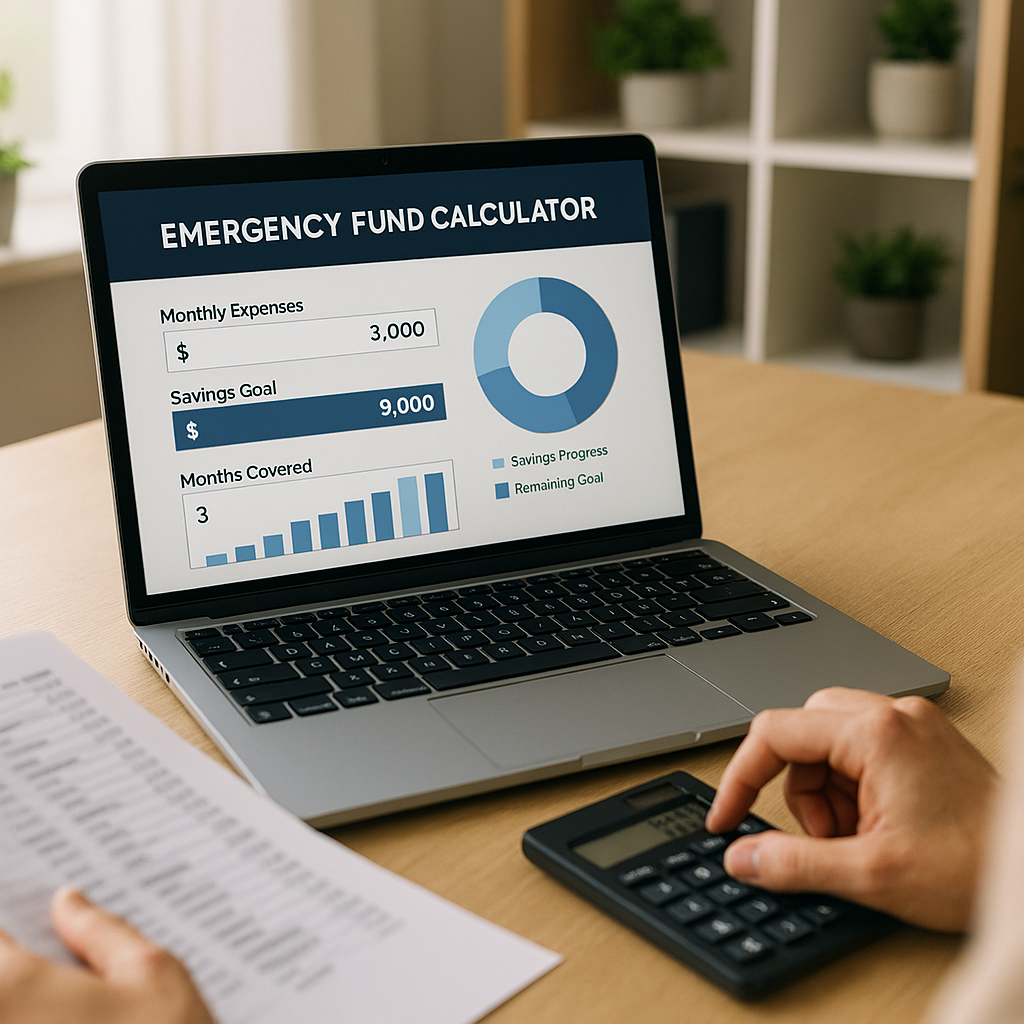
Emergency Fund Calculator: Find Your Magic Number 📊
The Traditional 3-6 Month Rule (And Why It Might Be Wrong for You)
Everyone’s heard the classic advice: save 3-6 months of expenses. But that’s like saying “eat healthy” – it’s technically correct but completely useless without specifics. Financial experts recommend having no less than three months’ worth of basic living expenses set aside in case of an emergency, such as a major medical bill or job loss, but the exact amount depends on how much will help you feel financially secure.
Your Personal Emergency Fund Formula
Here’s how to calculate your REAL emergency fund target:
Step 1: Calculate Your Monthly Essential Expenses
- Housing (rent/mortgage, utilities, insurance) 🏠
- Food and groceries 🛒
- Transportation (car payment, gas, insurance) 🚗
- Healthcare (insurance premiums, medications) 🏥
- Minimum debt payments 💳
- Essential childcare costs 👶
Step 2: Choose Your Multiplier Based on Your Risk Level
Conservative (6-9 months): Choose this if you have:
- Irregular income or freelance work
- High-risk job or volatile industry
- Single income household with dependents
- Chronic health conditions
- Limited family support network
Moderate (4-6 months): Perfect if you have:
- Stable employment with good benefits
- Dual-income household
- Good health insurance coverage
- Some family financial support available
Aggressive (3-4 months): Only if you have:
- Extremely stable job (think government or tenured positions)
- Multiple income streams
- Excellent health and insurance
- Strong family financial safety net
Real-World Emergency Fund Examples 🌟
Let me show you exactly what this looks like for real people:
Sarah, 28, Marketing Manager in Austin, TX:
- Monthly essentials: $3,200
- Job stability: Good (marketing role, stable company)
- Situation: Single, no dependents, good health insurance
- Emergency fund target: $12,800 (4 months)
The Rodriguez Family (2 adults, 2 kids):
- Monthly essentials: $5,800
- Job stability: One stable income, one freelance
- Situation: Homeowners, two young children
- Emergency fund target: $34,800 (6 months)
Mike, 45, Software Developer:
- Monthly essentials: $4,100
- Job stability: High-demand skills, contract work
- Situation: Divorced, child support, diabetes
- Emergency fund target: $36,900 (9 months)
Emergency Fund Scenarios: When Life Happens 🌪️
Scenario 1: The Sudden Job Loss 😰
The Reality: Job loss is one of the most common emergencies, and experts recommend having enough savings to cover living expenses during the average time it takes to find new employment. In 2025, the average job search takes 4-6 months in most industries.
What Your Emergency Fund Covers:
- Mortgage/rent payments
- COBRA health insurance (often $500-800/month)
- Basic utilities and groceries
- Transportation for job interviews
- Professional development or retraining costs
Pro Tip: If you work in tech, consider our guide to the highest paying remote tech jobs to understand market opportunities before you need them.
Scenario 2: Medical Emergency Bills 🏥
The Reality: Even with insurance, medical emergencies can cost thousands. Medical emergencies are among the most common unexpected expenses, with sudden health issues often coming with hefty medical bills that an emergency fund ensures you can access without worrying about payment.
Common Costs:
- Emergency room visits: $1,500-$5,000
- Ambulance rides: $400-$2,000
- Surgery deductibles: $2,000-$8,000
- Lost income during recovery
Scenario 3: Major Home Repairs 🔧
The Reality: Home emergencies like leaking roofs, broken appliances, or plumbing issues can be managed without stress when savings are set aside.
Typical Emergency Repairs:
- HVAC system replacement: $3,000-$8,000
- Roof repairs: $1,500-$7,000
- Plumbing emergencies: $500-$3,000
- Foundation issues: $5,000-$15,000
Scenario 4: Car Breakdown 🚗
The Reality: Transportation emergencies can derail your entire financial plan if you’re not prepared.
Common Car Emergency Costs:
- Engine repairs: $2,000-$5,000
- Transmission replacement: $3,000-$6,000
- Major accident repairs: $5,000-$15,000
- Temporary rental car during repairs
Where to Keep Your Emergency Fund: The 2025 Guide 🏦
High-Yield Savings Accounts: Your Best Friend
The best high-yield savings account rates in 2025 are up to 5.00% APY, with many accounts offering competitive rates between 4.3% and 4.66% APY. That means your emergency fund is actually GROWING while it sits there waiting for you.
Top Features to Look For:
- FDIC insurance (up to $250,000 protection)
- No monthly maintenance fees
- Easy online access and mobile apps
- No minimum balance requirements
- Competitive APY (aim for 4%+ in 2025)
2025’s Best Emergency Fund Account Types:
- High-Yield Online Savings: High-yield savings accounts are ideal for emergency funds because they provide easy access while earning more interest than standard accounts, with funds typically withdrawable at any time.
- Money Market Accounts: Similar to savings but often with debit card access
- Certificate of Deposits (CDs): CDs tend to have higher rates but require locking in money for set periods, making them better for funds that can be put away for the entire term. Only use for a portion of your emergency fund.
Where NOT to Keep Your Emergency Fund ❌
- Checking Account: Too tempting to spend
- Investment Accounts: Too risky for emergency money
- Cryptocurrency: Extremely volatile
- Cash Under Your Mattress: No growth, inflation risk
- 401(k) or Retirement Accounts: Penalties and taxes
Building Your Emergency Fund: The 2025 Automation Strategy 🤖
The “Pay Yourself First” Method
Automatic transfers into savings on a set schedule help you save money before you spend it, with experts recommending setting up recurring transfers from checking to emergency savings accounts.
Here’s the exact setup:
- Open a separate high-yield savings account specifically for emergencies
- Calculate your weekly target: Emergency fund goal ÷ 52 weeks
- Set up automatic transfers for every payday
- Use direct deposit splitting if your employer offers it
The Accelerated Emergency Fund Plan 🚀
You can save $1,000 in just 12 weeks by following a structured weekly savings plan, with small daily changes adding up to $84+ weekly savings without feeling deprived.
Week 1-4: Foundation Building
- Set up accounts and automation
- Find $20-30/week in spending cuts
- Use password management to cancel forgotten subscriptions
Week 5-8: Acceleration Phase
- Add any side hustle income (check our passive income apps guide)
- Save tax refunds and bonuses
- Sell unused items
Week 9-12: Optimization
- Use tools like Rocket Money to cancel unused subscriptions and find additional savings opportunities.
- Negotiate bills and insurance rates
- Consider gig work for extra income
Emergency Fund Building Apps and Tools 📱
Apps like Chime offer automatic savings features with high-yield rates, while Acorns provides round-up investing and emergency fund accounts with competitive APYs.
Top Apps for 2025:
- Chime: 2% APY savings with automatic round-ups
- Acorns: Emergency fund accounts with up to 4.05% APY
- YNAB: Budgeting with emergency fund goal tracking
- Rocket Money: Subscription cancellation and automated savings
Emergency Fund Mistakes That Cost You Money 💸
Mistake #1: Waiting for the “Perfect” Time
The Reality: There’s never a perfect time to start saving, and the best time is always now, even if you can only save $5 today.
The Fix: Start with ANY amount. Even $10/week adds up to $520 annually.
Mistake #2: Mixing Emergency Money with Other Savings
The Problem: When your emergency fund isn’t separate, you’ll spend it on “quasi-emergencies” like vacation deals or holiday gifts.
The Fix: Keep emergency funds in a different account that you don’t use unless absolutely necessary, establishing a separate account that isn’t mixed with routine spending money.
Mistake #3: Not Adjusting for Life Changes
The Problem: Your emergency fund from when you were single won’t cover a family of four.
The Fix: As you go through life, adjust your emergency fund amount – if you have children or buy a home, your monthly expenses increase, so you’ll need to increase your emergency fund.
Mistake #4: Choosing the Wrong Account Type
The Problem: Keeping emergency funds in checking (no growth) or investments (too risky).
The Fix: High-yield savings accounts offer the perfect balance of accessibility and growth.
Emergency Fund FAQ: Your Burning Questions Answered 🔥
Q: Should I pay off debt or build an emergency fund first?
A: Build a small emergency fund ($1,000) first, then focus on high-interest debt, then complete your full emergency fund. Having no emergency fund often leads to more debt when emergencies strike, creating a dangerous cycle.
Q: Can I use credit cards as my emergency fund?
A: Absolutely not! Credit cards should be your absolute last resort, with average interest rates over 20%, turning a $1,000 emergency into much more if you can’t pay it off immediately.
Q: How much should self-employed people save?
A: If you’re self-employed and the breadwinner, it makes sense to set aside at least six to nine months’ worth of expenses due to irregular income patterns.
Q: What if I have really good insurance?
A: Insurance is great, but it doesn’t cover everything. You still need cash for deductibles, copays, and income replacement during recovery periods.
Q: Should I invest my emergency fund?
A: While investing can offer higher returns, the primary goal of an emergency fund is liquidity and stability rather than growth, so it’s advisable to keep funds in safer, more liquid assets.
The Psychology of Emergency Fund Success 🧠
Why Most People Fail (And How to Succeed)
Less than half of Americans met or exceeded their savings goals for 2024, despite many setting ambitious financial resolutions at the beginning of the year. The problem isn’t lack of knowledge – it’s lack of system.
The Winning Formula:
- Automate everything – remove willpower from the equation
- Start ridiculously small – success builds momentum
- Celebrate milestones – reward yourself at $500, $1,000, $2,500
- Track visually – use apps or charts to see progress
- Adjust, don’t abandon – life changes, your plan should too
The Compound Effect of Emergency Funds
Your emergency fund isn’t just about money – it’s about mental freedom. When you know you can handle life’s curveballs, you make better decisions:
- Take calculated career risks
- Negotiate more confidently
- Sleep better at night
- Avoid relationship stress over money
- Make health decisions based on need, not cost
Advanced Emergency Fund Strategies for 2025 🎯
The Laddered Emergency Fund Approach
Consider having one month in a savings account, the next few months in a money market or high-yield savings account, and the last couple months in CDs or mutual funds.
How It Works:
- Tier 1 (1 month expenses): Checking/savings for immediate access
- Tier 2 (2-3 months expenses): High-yield savings
- Tier 3 (3-6 months expenses): Short-term CDs or money market
The Business Owner’s Emergency Fund
If you’re self-employed or run a business, your emergency fund needs are different:
- Personal expenses: 6-9 months (higher than employees)
- Business operating expenses: 3-6 months
- Equipment replacement fund: Based on your critical tools
- Tax obligation fund: 25-30% of quarterly income
Related Reading: Check out our guide to making money with AI if you’re looking to diversify your income streams.
The Digital Nomad Emergency Fund
Remote workers and digital nomads need specialized emergency planning:
- Location-independent funds: Keep in globally accessible accounts
- Currency diversification: Consider keeping some funds in stable foreign currencies
- Travel emergency fund: Separate from general emergency fund
- Equipment replacement: Critical for remote work
Related: Our remote tech jobs guide can help you understand income potential for location-independent work.
Emergency Fund Action Plan: Start TODAY 🚀
Week 1: Foundation
- [ ] Calculate your monthly essential expenses
- [ ] Determine your emergency fund target
- [ ] Open a high-yield savings account
- [ ] Set up automatic transfers
Week 2: Optimization
- [ ] Review and cut unnecessary subscriptions
- [ ] Check our browser privacy guide to avoid online spending temptations
- [ ] Set up emergency fund tracking system
- [ ] Tell someone about your goal for accountability
Week 3: Acceleration
- [ ] Look for additional income sources
- [ ] Sell items you don’t need
- [ ] Review insurance deductibles and adjust if needed
- [ ] Celebrate your first milestone!
Week 4 and Beyond: Consistency
- [ ] Monthly account reviews
- [ ] Adjust savings rate based on income changes
- [ ] Resist temptation to “borrow” from emergency fund
- [ ] Plan for fund replenishment after any emergency use
Technology and Your Emergency Fund 💻
Protect Your Digital Financial Life
Your emergency fund is worthless if hackers drain it. Essential security steps:
- Use strong password management for all financial accounts
- Enable two-factor authentication
- Monitor accounts regularly
- Consider identity theft protection
Smartphone Apps That Actually Help
Beyond the savings apps, consider:
- Budgeting: YNAB, Rocket Money, Mint
- High-yield accounts: Marcus, Ally, Capital One 360
- Cash back: Rakuten, Ibotta (funnel earnings to emergency fund)
- Credit monitoring: Credit Karma, Annual Credit Report
Pro Tip: Check out our secret smartphone features guide to maximize your phone’s money-saving potential.
The Future of Emergency Planning 🔮
2025 Economic Outlook
The U.S. has a 1-in-3 chance of recession in the next year, making emergency funds more critical than ever for financial stability. Key factors affecting your emergency fund strategy:
- Inflation impact: Your fund loses purchasing power over time
- Interest rate environment: High-yield accounts currently beneficial
- Job market volatility: Tech layoffs and AI disruption continue
- Healthcare costs: Rising faster than general inflation
AI and Personal Finance
The intersection of AI and emergency planning is just beginning:
- Predictive budgeting: AI apps that predict your optimal emergency fund size
- Automated optimization: AI managing your emergency fund across different account types
- Risk assessment: AI analyzing your personal risk factors for customized recommendations
Related: Learn more in our comprehensive AI guide about how artificial intelligence is changing personal finance.
Your Emergency Fund Success Story Starts Now 🌟
Look, I get it. Reading about emergency funds isn’t exactly thrilling. You probably have a million other things you’d rather spend money on right now. That new iPhone, a weekend getaway, those shoes you’ve been eyeing.
But here’s what I want you to remember: Your emergency fund isn’t taking money away from your life – it’s protecting the life you’re building.
Every dollar you put aside today is a dollar that will save you stress, sleepless nights, and potentially thousands in high-interest debt tomorrow. It’s the difference between a financial hiccup and a financial disaster.
Your Next Steps:
- Right now: Calculate your emergency fund target using the formulas above
- This week: Open a high-yield savings account
- This month: Set up automatic transfers
- This year: Celebrate reaching your first major milestone
Remember, you don’t need to be perfect. You just need to start.
Despite financial challenges, over 60% of Americans feel confident about achieving their savings targets in 2025. Be part of that optimistic group – but back it up with action.
Related Resources to Boost Your Financial Security:
- Digital Detox Challenge – Reduce spending on apps and subscriptions
- AI Business Building – Create additional income streams
- Smartphone Money Tips – Hidden features that save money
- Password Security – Protect your financial accounts
- Free WiFi Safety – Secure your banking when traveling
Final Word: Your emergency fund isn’t just about the money – it’s about buying yourself options, peace of mind, and the freedom to make decisions based on what’s best for you, not what’s cheapest or easiest. In 2025, that freedom is worth its weight in gold.
Start today. Start small. But start.
Your future self will thank you. 💪✨
Have questions about building your emergency fund? Drop them in the comments below, and let’s build financial security together! 👇