
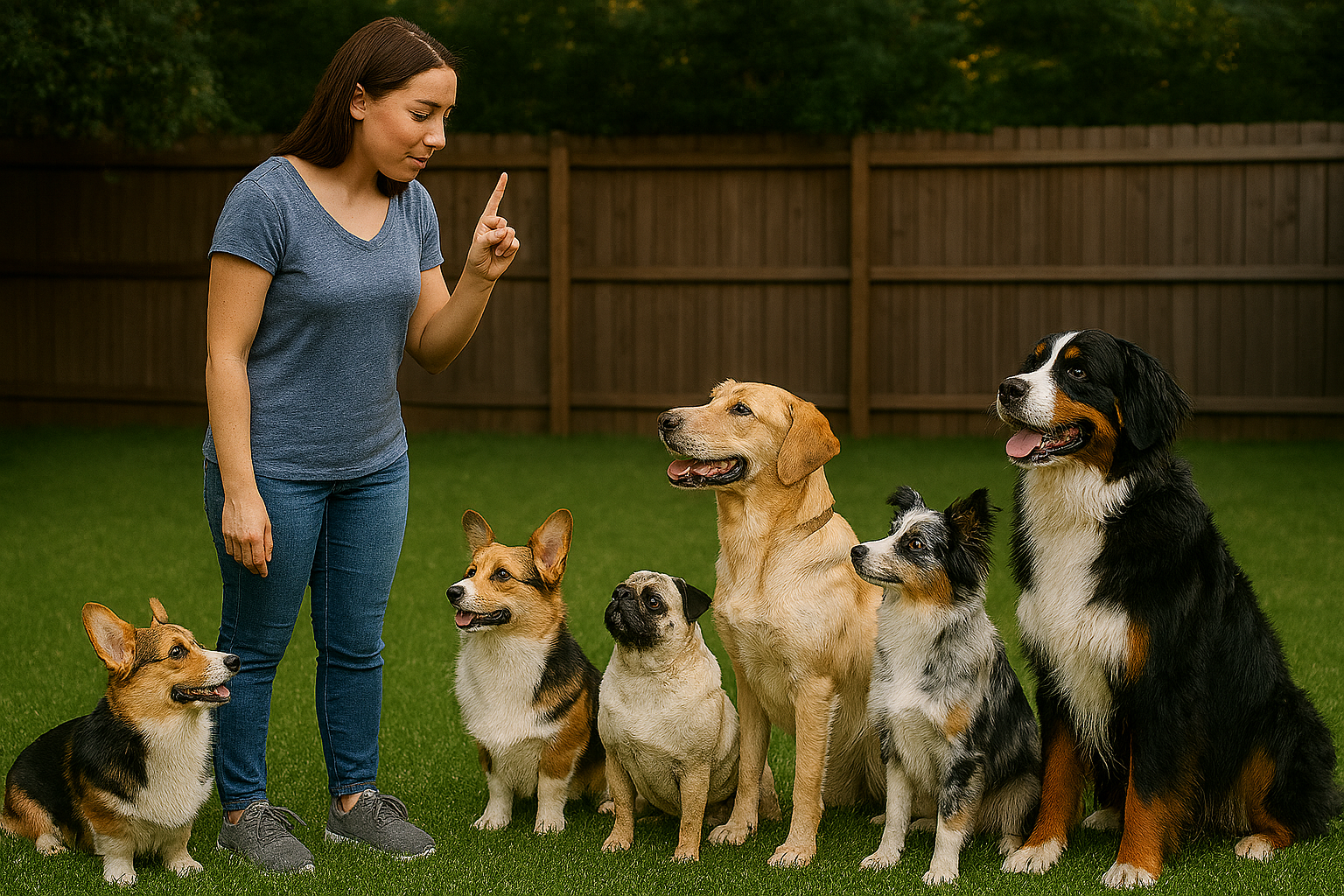
Well-Behaved Dog in 6 Weeks 🐕✨
Master dog training basics with our comprehensive 6-week program. Transform your puppy into a well-behaved companion using proven positive reinforcement techniques, behaviour modification, and progress tracking methods.
Ready to transform your furry friend into the well-behaved companion you’ve always dreamed of? Dog training basics don’t have to be overwhelming or complicated. With the right approach, consistency, and patience, you can achieve remarkable results in just six weeks! 🎯
Whether you’re welcoming a new puppy home or working with an older dog who needs some behavioural adjustments, this comprehensive guide will walk you through everything you need to know about successful dog training. From understanding the science behind positive reinforcement to tracking your progress week by week, we’ve got you covered.
Understanding Your Dog’s Learning Process 🧠
Before diving into specific training techniques, it’s crucial to understand how dogs actually learn. Dogs are incredibly smart creatures who respond best to positive experiences and clear communication. The key lies in understanding that dog training basics are built on the foundation of operant conditioning – a fancy term that simply means dogs repeat behaviours that result in good things happening.
Think of it this way: when your dog sits and gets a treat, they’re more likely to sit again in the future. When they jump up and get ignored, they’re less likely to repeat that behaviour. It’s really that simple!
The most effective training happens during your dog’s prime learning period. For puppies, this golden window is between 8 to 16 weeks old, but don’t worry if your dog is older – dogs can learn at any age with the right approach.
The Power of Positive Reinforcement 🌟
Here’s where the magic happens! Positive reinforcement isn’t just a trendy training buzzword – it’s a scientifically proven method that creates lasting behavioural changes while strengthening your bond with your dog.
What makes positive reinforcement so effective?
• Builds confidence: Dogs trained with rewards are more eager to try new things • Strengthens your relationship: Your dog associates you with good things happening • Creates lasting results: Behaviours learned through positive experiences stick around longer • Reduces stress: No fear or anxiety associated with learning • Makes training fun: Both you and your dog actually enjoy the process!
The beauty of positive reinforcement lies in its simplicity. You can use treats, praise, toys, play time, or even just your attention as rewards. The key is timing – rewards must happen within seconds of the desired behavior for your dog to make the connection.
Your 6-Week Training Timeline 📅
Week 1: Foundation Building
Focus: Basic commands and routine establishment
Start with the essentials! This week is all about creating structure and introducing your dog to the concept of learning. Dog training basics begin with simple commands that set the stage for everything else.
Key Commands to Introduce: • Sit: The gateway command that teaches impulse control • Watch/Look: Helps your dog focus on you • Name recognition: Ensuring your dog responds when called
Daily Schedule:
- Morning: 5-minute training session with breakfast
- Afternoon: Practice commands during playtime
- Evening: Short review session before dinner
Success Tips: Keep training sessions short and sweet – just 5 minutes at a time. Puppies have incredibly short attention spans, so multiple brief sessions work better than one long marathon. End each session on a positive note with something your dog does well!
Week 2: Building Consistency
Focus: Strengthening basic commands and adding duration
Now that your dog understands the basics, it’s time to make these behaviours more reliable. This week focuses on getting consistent responses to your commands in familiar environments.
New Additions: • Stay: Starting with just a few seconds • Down: Teaching relaxation on command • Leave it: The foundation of impulse control
Training Environment: Practice in your living room, backyard, and other familiar spaces. Avoid highly distracting environments until these commands are rock solid at home.
Common Challenges: Don’t get discouraged if your dog seems to “forget” what they learned yesterday. This is completely normal! Dogs need lots of repetition to form lasting habits.
Week 3: Adding Distractions
Focus: Proofing behaviors in more challenging situations
Time to level up! This week introduces mild distractions while practicing your commands. Remember, just because your dog can sit perfectly in the kitchen doesn’t mean they can do it when the doorbell rings.
Distraction Training:
- Practice commands with the TV on
- Try training sessions during family dinner prep
- Work on commands when other people are moving around
- Introduce training during mild outdoor activities
Behaviour Modification Techniques: If your dog struggles with specific behaviours like jumping or pulling, this is the perfect time to address them. Use the “redirect and reward” approach – interrupt unwanted behaviour and immediately ask for something you do want, then reward heavily.
Week 4: Real-World Application
Focus: Taking training outside the home environment
Your dog is ready for the big leagues! This week involves practicing all learned behaviours in new locations with increased distractions.
New Environments to Explore: • Front yard training sessions • Quiet parks or empty parking lots • Pet-friendly stores (if fully vaccinated) • Friends’ homes
Leash Training Integration: If you haven’t started leash training yet, now’s the perfect time. Begin indoors, letting your dog drag a lightweight leash around while supervised. Gradually add gentle guidance and reward for walking nicely beside you.
Socialization Opportunities: Arrange controlled meetings with calm, friendly dogs. Always supervise interactions and reward your dog for polite behaviour around other animals.
Week 5: Advanced Commands and Problem-Solving
Focus: Teaching more complex behaviors and addressing specific issues
With a solid foundation in place, your dog is ready for more challenging commands and addressing any persistent behavioral issues.
Advanced Commands: • Come when called: The ultimate safety command • Heel: Walking politely on leash • Place: Going to a specific spot and staying there • Drop it: Releasing items on command
Problem-Solving Strategies: Every dog has unique challenges. Common issues at this stage include:
- Excessive barking: Teach a “quiet” command using positive interruption
- Jumping on people: Practice greetings with family members
- Pulling on walks: Use the “be a tree” method – stop moving when they pull
- Resource guarding: Work on “wait” and “leave it” commands around food and toys
Week 6: Mastery and Maintenance
Focus: Perfecting learned behaviours and creating long-term success habits
Congratulations! You’ve reached the final week of intensive training. This week focuses on perfecting everything you’ve worked on and establishing routines that will maintain your dog’s good behaviour for life.
Mastery Checkpoints:
- Commands work reliably in various environments
- Your dog responds to verbal cues without needing treats every time
- Behavioural issues show significant improvement
- You both enjoy training sessions
Transition to Maintenance Mode: You don’t need formal training sessions forever, but regular practice keeps skills sharp. Integrate commands into daily life – ask for a sit before meals, practice stays during grooming, use recall during outdoor adventures.
Progress Tracking Made Simple 📊
One of the most motivating aspects of dog training is seeing tangible progress. Here’s how to track your success:
Weekly Assessment Questions:
- How consistently does my dog respond to each command?
- What environments can we successfully train in now?
- Which behaviors have improved most dramatically?
- What challenges still need work?
- How has our relationship changed?
Creating a Training Log: Keep it simple! Note the date, what you worked on, how your dog responded, and any breakthrough moments. Even a basic smartphone note works perfectly.
Celebrating Milestones: Acknowledge every victory, no matter how small. The first time your dog sits without a treat, the first successful recall at the park, the first walk without pulling – these moments deserve celebration! 🎉
Behavior Modification Techniques That Actually Work 🔧
Sometimes basic training isn’t enough to address specific behavioral issues. Here’s where behavior modification comes into play:
Counter-Conditioning: This technique changes your dog’s emotional response to specific triggers. For example, if your dog is anxious about nail trimming, you’d pair the sight of nail clippers with fantastic treats until your dog gets excited rather than worried.
Desensitization: Gradually exposing your dog to triggers at a level that doesn’t cause stress, then slowly increasing intensity. This works brilliantly for noise sensitivity, fear of new people, or anxiety about car rides.
Response Substitution: Teaching your dog what TO do instead of what NOT to do. Rather than just saying “don’t jump,” teach “sit for greetings.” This gives your dog a clear path to success.
Management Strategies: Sometimes the smartest approach is simply preventing problems from occurring while you work on training. Baby gates, leashes indoors, and removing tempting items are all part of smart management.
Common Training Mistakes to Avoid ❌
Even with the best intentions, it’s easy to make mistakes that can slow down progress. Here are the most common pitfalls:
Inconsistent Timing: Rewards must happen within 2-3 seconds of the desired behavior. Late rewards confuse your dog about what they’re being rewarded for.
Mixed Messages: If you allow jumping sometimes but not others, your dog gets confused. Consistency from all family members is crucial.
Training When Frustrated: Dogs pick up on our emotions instantly. If you’re having a bad day, skip the formal training session and just go for a fun walk instead.
Overwhelming Your Dog: Trying to teach too many things at once leads to confusion. Master one command before moving to the next.
Forgetting to Practice: Daily 5-minute sessions work better than weekly hour-long marathons. Consistency beats intensity every time.
The Science Behind Success 🔬
Understanding why positive reinforcement works helps you become a more effective trainer. When your dog performs a behavior and receives a reward, their brain releases dopamine – the same “feel good” chemical that makes humans want to repeat enjoyable experiences.
This neurological response creates strong pathways in your dog’s brain, making desired behaviors more automatic over time. The more often these pathways are activated through positive training experiences, the stronger they become.
Classical Conditioning in Action: Your dog doesn’t just learn specific commands – they learn to associate training time with fun, positive experiences. This is why dogs trained with positive methods are often more eager to learn and try new things.
Creating a Training-Friendly Environment 🏠
Your physical environment plays a huge role in training success. Here’s how to set yourself up for victory:
Essential Equipment: • High-value treats (small, soft, irresistible to your dog) • Proper collar or harness • 6-foot leash for training • Clicker (optional but helpful for precise timing) • Treat pouch or pocket for easy access
Space Considerations: Start training in a quiet, familiar room with minimal distractions. As your dog progresses, gradually add distractions and move to new locations.
Family Involvement: Everyone in the household should use the same commands and reward systems. Consider posting a list of cues where everyone can see them to maintain consistency.
Troubleshooting Common Challenges 🛠️
Every dog is unique, and you might encounter specific challenges along the way. Here are solutions for the most common issues:
“My dog won’t take treats during training”: Your dog might be too excited, stressed, or simply not hungry. Try training right before meal times, use higher-value rewards, or reduce environmental stress.
“Training works at home but nowhere else”: This is completely normal! Dogs don’t automatically generalize behaviors to new environments. Practice each command in multiple locations, starting with less distracting places and gradually increasing difficulty.
“My dog seems to ‘forget’ everything we’ve learned”: Dogs learn through repetition. What feels like forgetting is usually just needing more practice. Go back to basics and rebuild the behavior with lots of rewards.
“Training feels like bribery”: This is a common concern! Remember, you’re not bribing – you’re paying your dog for a job well done. As behaviors become stronger, you’ll naturally reduce treat frequency while maintaining occasional rewards.
Advanced Training Considerations 🎓
Once you’ve mastered the basics, you might want to explore more advanced training options:
Puppy Classes: Even if you’re training at home, puppy classes provide valuable socialization opportunities and professional guidance. Look for trainers who use positive reinforcement methods.
Specialized Training: Depending on your lifestyle, you might explore agility training, therapy dog preparation, or advanced obedience classes. The foundation you’ve built makes all these options possible.
Addressing Serious Issues: Some behavioral problems require professional help. Don’t hesitate to consult a certified dog behaviorist for issues like aggression, severe anxiety, or compulsive behaviors.
Maintaining Long-Term Success 🏆
Training doesn’t end after six weeks – it evolves into a lifestyle. Here’s how to maintain your success:
Regular Practice: Integrate commands into daily routines. Ask for a sit before meals, practice stays during grooming, and use recall during outdoor adventures.
Continued Learning: Dogs are lifelong learners who benefit from mental stimulation. Teach new tricks, rotate toys, and provide puzzle feeders to keep their minds active.
Relationship Building: Training is just one aspect of your relationship with your dog. Regular play, exercise, and quality time together strengthen your bond and make training more effective.
Adapting to Life Changes: As your dog ages or your circumstances change, be prepared to adapt your training approach. Senior dogs might need gentler methods, while life transitions might require refresher courses.
For those looking to enhance their understanding of technology integration in pet care, check out our comprehensive guide on IT consulting services where we explore how modern solutions can streamline various aspects of business and personal management, including pet care tracking systems.
Celebrating Your Success! 🎉
After six weeks of dedicated training, take a moment to appreciate how far you and your dog have come. You’ve not only taught specific commands – you’ve built a communication system based on trust, respect, and positive experiences.
Your well-behaved dog is the result of your consistency, patience, and commitment to positive training methods. The skills you’ve both learned will serve you well for years to come, creating a stronger bond and a more harmonious life together.
Remember, every dog learns at their own pace. Some might master everything in six weeks, while others might need a bit more time. What matters most is the journey you’ve taken together and the positive relationship you’ve built.
The dog training basics you’ve mastered aren’t just about having a well-behaved pet – they’re about creating a partnership built on mutual understanding and respect. Your dog now knows what you expect, you understand how to communicate effectively, and you both have the tools to continue learning and growing together.
Keep practicing, stay patient, and most importantly, enjoy every moment with your amazing, well-trained companion! The foundation you’ve built during these six weeks will continue paying dividends for the rest of your dog’s life. 🐾❤️
Ready to start your training journey? Remember that consistency beats perfection every time. Focus on building positive experiences, celebrate small victories, and trust the process. Your dream of having a well-behaved dog in six weeks is absolutely achievable with dedication and the right approach!