
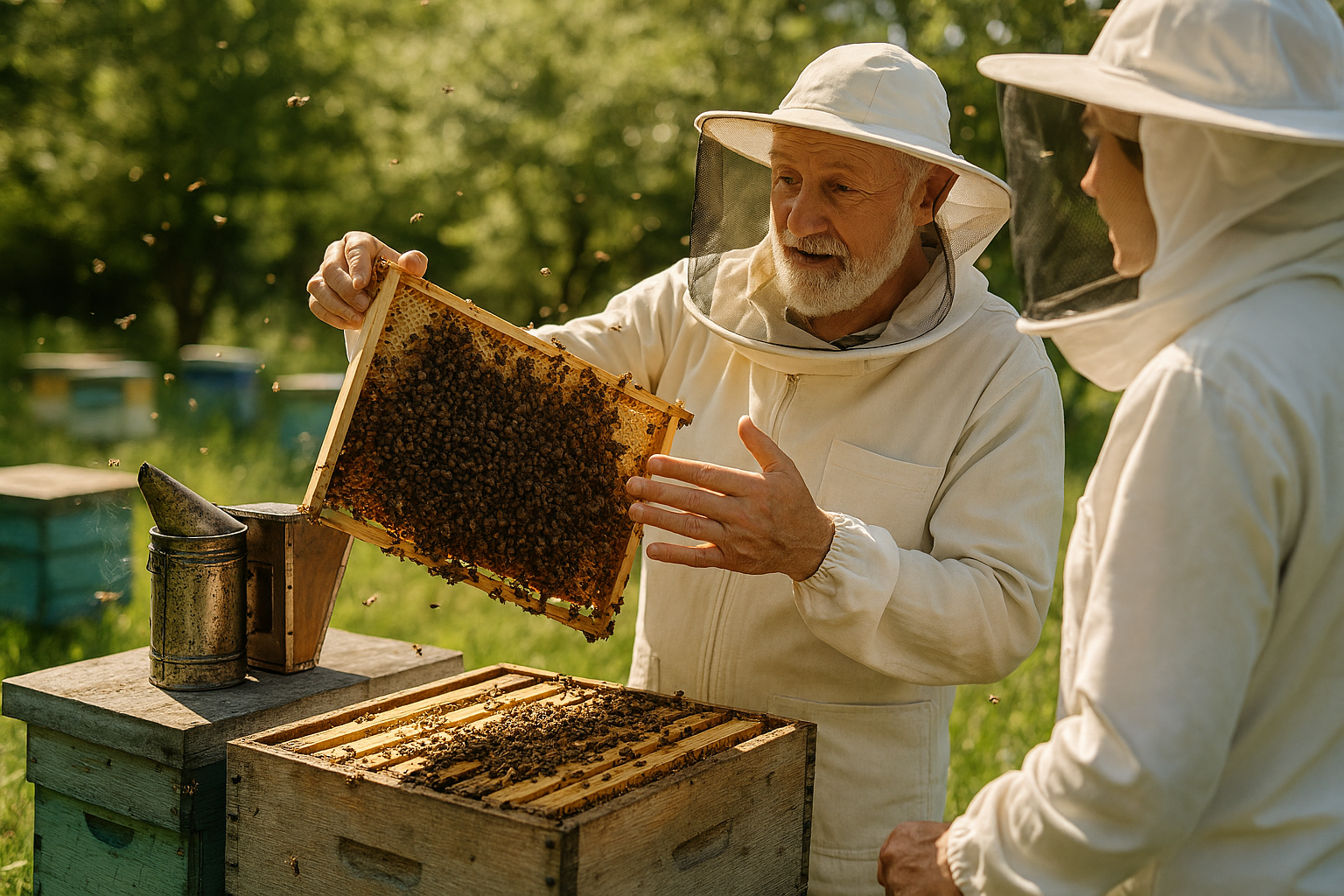
Start Your Honey Business 🍯🐝
Beekeeping for beginners has become one of the most profitable and rewarding ventures you can start in 2025. With honey prices soaring to $10-15 per pound and the global demand for natural, locally-sourced honey reaching unprecedented levels, there’s never been a better time to transform your backyard into a thriving honey business empire.
Did you know that the average beekeeper with just 10 hives can generate $6,000-$15,000 annually? That’s right – beekeeping for beginners isn’t just about producing sweet golden nectar for your family. It’s about creating multiple income streams from honey sales, beeswax products, pollination services, and even bee education programs that can replace your day job income within 2-3 years! 💰
The best part? Unlike most businesses that require massive upfront investments, you can start beekeeping with as little as $400-800 per hive and begin seeing returns within your first year. But here’s what most beginner guides won’t tell you – success in beekeeping isn’t just about keeping bees alive. It’s about understanding the intricate business ecosystem that surrounds these amazing creatures.
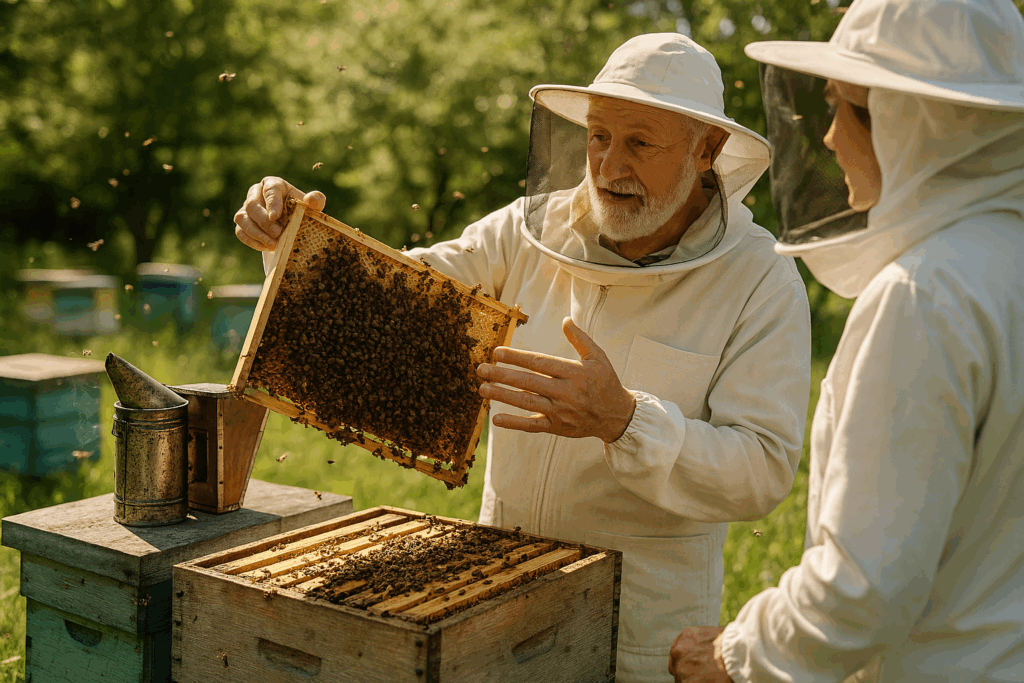
Why Beekeeping is the Ultimate Beginner Business Opportunity 🚀
Recent industry data shows that beekeeping businesses have a 85% survival rate compared to just 45% for traditional startups. Why? Because you’re working with nature’s most efficient workers who literally create profit while you sleep! Here’s what makes beekeeping for beginners such an incredible opportunity:
Market Demand is Exploding:
- Honey consumption has increased 30% in the last 5 years
- Local honey commands premium prices ($12-25/lb vs $3-5/lb for commercial)
- Value-added products like bee pollen sell for $20-35 per pound
- Beeswax candles and cosmetics have profit margins of 200-400%
Low Competition in Local Markets: Most areas have fewer than 3 serious local honey producers, meaning you can quickly establish market dominance with the right approach. Plus, consumers increasingly prefer supporting local beekeepers over large commercial operations.
Multiple Revenue Streams: Unlike single-product businesses, beekeeping offers incredible diversification:
- Raw honey sales: $300-600 per hive annually
- Beeswax products: $200-500 additional income per hive
- Pollination services: $150-300 per hive for 4-6 weeks
- Queen bee breeding: $25-75 per queen (70-80% profit margins)
- Beekeeping education: $150-400 per workshop
- Bee removal services: $200-500 per removal
Understanding Your Tiny Workforce: Honey Bee Biology Made Simple 🧬
Before diving into the business side, successful beekeeping for beginners requires understanding your employees – the honey bees themselves! A typical hive contains 20,000-80,000 bees organized in the most efficient corporate structure nature has ever created.
Meet Your Team:
The Queen Bee 👑 – Your CEO and sole egg-layer
- Lives 2-5 years (compared to workers’ 6-week summer lifespan)
- Lays up to 2,000 eggs daily during peak season
- Produces pheromones that keep the entire colony working together
- Worth $25-75 when replaced (yes, you’ll need to replace her eventually!)
Worker Bees 💪 – Your dedicated female workforce (99% of the hive)
- Start as “house bees” (cleaning, nursing, building)
- Graduate to “field bees” (foraging, guarding)
- Produce all honey, wax, propolis, and royal jelly
- Each worker visits 50-100 flowers per foraging trip
Drone Bees 🤵 – Your seasonal male employees
- Only present spring through early fall
- Sole purpose is mating with queens from other hives
- Don’t sting, forage, or work (sounds nice, right?)
- Get kicked out before winter (harsh but effective cost-cutting!)
The Production Cycle That Prints Money: Understanding the bee lifecycle helps you maximize profits. Queens develop in just 16 days, workers in 21 days, and drones in 24 days. This rapid reproduction means healthy hives can double in size every 6-8 weeks during peak season, dramatically increasing your honey production capacity.
Your Complete Startup Cost Breakdown (Every Penny Accounted For) 💸
One of the biggest advantages of beekeeping for beginners is the relatively low startup costs compared to other agricultural businesses. Here’s exactly what you’ll need to invest:
Essential Equipment (Per Hive):
- Langstroth hive setup: $200-300
- Protective gear (suit, gloves, veil): $75-150
- Hive tool and smoker: $40-60
- Bee package or nucleus colony: $150-250
- Initial supplies (feeder, medications): $50-100
Total per hive: $515-860
Recommended Beginner Setup (2-3 hives): Starting with multiple hives isn’t just recommended – it’s essential for success. Here’s why: if one hive fails (and 30-40% of beginners lose their first hive), you still have backup colonies to learn from and potentially use to strengthen weaker hives.
Two-Hive Startup Budget:
- Equipment for 2 hives: $1,030-1,720
- Additional shared tools: $100-200
- First-year feeding and treatments: $100-150
- Business registration and permits: $50-200
- Total Investment: $1,280-2,270
Money-Saving Pro Tips:
- Buy used equipment from retiring beekeepers (check local beekeeping associations)
- Build your own hive boxes (saves 40-50% on woodenware)
- Join bulk-buying groups through local bee clubs
- Start with package bees instead of nucs (saves $50-100 per hive)
- Share honey extractor costs with other local beekeepers
Choosing Your Apiary Location: The Make-or-Break Decision 📍
Your hive location will determine 70% of your success in beekeeping for beginners. Get this wrong, and even the best equipment and techniques won’t save you. Get it right, and your bees will thrive with minimal intervention.
The Golden Rules of Hive Placement:
Morning Sun is Everything: Place hives where they receive strong morning sunlight (southeast exposure is ideal). Bees need to warm their flight muscles to 95°F before they can fly. Morning sun gets them active earlier, giving them 2-3 additional foraging hours daily. This translates to 20-30% more honey production!
Wind Protection Saves Lives: Strong winds force bees to burn extra energy just to return home with nectar. Position hives behind natural windbreaks (hedges, fences, buildings) but ensure good air circulation to prevent moisture buildup.
Water Within 100 Feet: Bees need water for cooling, diluting honey, and feeding babies. If you don’t provide it, they’ll find the nearest source – often your neighbor’s pool! Create a bee-friendly water source with landing spots (floating cork or stones).
Legal and Safety Considerations:
- Check local zoning laws (many cities now allow backyard beekeeping)
- Maintain 20+ feet from property lines
- Ensure flight paths don’t cross neighbor areas
- Consider liability insurance ($500-1,000 annually)
- Install visual barriers to keep hives out of sight
Forage Assessment: Successful hives need diverse flowers within a 2-mile radius. Scout your area for:
- Spring: Fruit trees, dandelions, maple trees
- Summer: Clover, basswood, wildflowers
- Fall: Goldenrod, asters, late-blooming plants
Urban vs Rural Considerations: Surprisingly, urban bees often outperform rural ones! Cities provide diverse flowering plants, warmer microclimates, and fewer pesticides than agricultural areas. Rural locations offer more space but may lack floral diversity in monoculture farming areas.
The Complete First-Year Management Timeline ⏰
Success in beekeeping for beginners follows a predictable seasonal rhythm. Master this timeline, and you’ll avoid the most common mistakes that kill 40% of first-year hives.
Spring (March-May): The Foundation Season Your Investment: 8-10 hours weekly
Early Spring Tasks:
- Install package bees or nucleus colonies
- Feed 1:1 sugar syrup until natural nectar flows begin
- Conduct weekly inspections for queen laying pattern
- Add pollen patties if natural pollen is scarce
- Monitor for signs of disease or queen problems
Critical Success Factors: New colonies are like newborn babies – they need constant attention and feeding. Don’t assume flower blooms mean abundant nectar. Many spring flowers provide pollen but little nectar, so continued feeding is essential.
Common Beginner Mistakes to Avoid:
- Opening hives too frequently (once weekly maximum)
- Stopping supplemental feeding too early
- Adding honey supers before the hive is strong
- Not checking for queen acceptance in new packages
Summer (June-August): The Production Season Your Investment: 6-8 hours weekly
This is when the magic happens! Strong colonies can collect 60-100 pounds of surplus honey during a good nectar flow. Your primary job shifts from nurturing to managing explosive growth.
Key Summer Activities:
- Add honey supers before bees feel crowded
- Monitor for swarm preparations (queen cells)
- Conduct monthly varroa mite checks
- Maintain 2-3 gallons of water storage near hives
- Prepare extraction equipment for harvest
Honey Harvest Timing: Don’t get greedy! Leave 50-80 pounds of honey for the bees’ winter survival (more in colder climates). Harvest only fully-capped honey to prevent fermentation.
Fall (September-November): The Preparation Season Your Investment: 4-6 hours weekly
This season determines whether your bees survive winter and thrive next spring. Get fall management wrong, and you’ll be buying new bees instead of expanding your operation.
Critical Fall Tasks:
- Treat for varroa mites (this is non-negotiable!)
- Assess and supplement winter food stores
- Combine weak colonies with stronger ones
- Install entrance reducers and mouse guards
- Begin feeding 2:1 sugar syrup for winter stores
Winter (December-February): The Planning Season Your Investment: 1-2 hours monthly
While bees cluster and conserve energy, smart beekeepers use winter for business development, education, and equipment preparation.
Winter Activities:
- Check hive weights monthly (tip test – don’t open!)
- Emergency feed with dry sugar if hives feel light
- Order bees and equipment for next season
- Attend beekeeping conferences and workshops
- Plan hive expansion and business growth strategies
Building Your Honey Empire: Advanced Business Strategies 🏗️
Most beekeeping for beginners guides stop at basic hive management. But if you want to build a real business, you need to think beyond just keeping bees alive. Here’s how to transform your hobby into a profitable venture:
The Three-Tier Profit System:
Tier 1: Direct Honey Sales (Months 6-12) Start with farmers markets, local stores, and direct-to-consumer sales. Price your honey 20-30% above grocery store prices – customers pay premium for local, traceable products.
Profit Potential: $3,000-8,000 annually (2-5 hives)
Tier 2: Value-Added Products (Year 2) Once you’ve mastered basic production, expand into higher-margin products:
- Beeswax candles: 400% markup potential
- Lip balms and skincare: 300% markup
- Infused honeys (lavender, cinnamon): 200% markup
- Honeycomb sections: 500% markup potential
Additional Profit: $2,000-6,000 annually
Tier 3: Service-Based Income (Year 2-3) The highest-margin opportunities come from your expertise:
- Beekeeping workshops: $200-400 per participant
- Hive installation services: $300-500 per setup
- Bee removal services: $200-800 per removal
- Pollination services: $150-300 per hive rental
Service Income Potential: $5,000-15,000 annually
The Digital Marketing Edge: Modern beekeeping businesses must embrace digital marketing. Create content around your beekeeping journey, share behind-the-scenes videos, and build an email list of honey enthusiasts. Successful beekeepers report that social media marketing increases sales by 150-300%.
Avoiding the $10,000 Mistakes: Common Beginner Pitfalls 😱
Learning from others’ expensive mistakes is crucial for beekeeping for beginners. Here are the most costly errors and how to avoid them:
Mistake #1: The “Too Much Too Soon” Trap Many beginners get excited and start with 10+ hives or invest heavily in extraction equipment before proving they can keep bees alive.
Solution: Start with 2-3 hives maximum. Master the basics before scaling up. Used commercial beekeepers often expand too quickly and lose everything.
Mistake #2: Ignoring Varroa Mites These tiny parasites kill more colonies than anything else. Many beginners think “natural” means no treatments, leading to 90% hive mortality.
Solution: Monitor mite levels monthly and treat when thresholds are exceeded. Natural treatments like formic acid and oxalic acid are effective and acceptable to organic standards.
Mistake #3: Poor Location Choices Placing hives in areas with insufficient forage, excessive wind, or neighbor conflicts leads to failure and legal problems.
Solution: Spend weeks observing potential sites. Talk to neighbors before installing hives. Consider renting apiary space from farmers if your property isn’t suitable.
Mistake #4: Inadequate Record Keeping Without detailed records, you can’t learn from successes or failures. This leads to repeated mistakes and missed profit opportunities.
Solution: Use beekeeping apps or simple notebooks to track inspections, treatments, costs, and production. Successful commercial beekeepers credit record-keeping as their #1 success factor.
Mistake #5: Weak Winter Preparation More bees die from starvation than cold. Beginners often harvest too much honey or fail to ensure adequate winter stores.
Solution: Leave 80-100 pounds of honey per hive in northern climates, 50-60 pounds in southern regions. Feed 2:1 sugar syrup in fall if stores are insufficient.
The Science of Profitable Honey Production 🔬
Understanding the science behind honey production helps you optimize your operation for maximum profitability. Here’s what successful commercial beekeepers know:
The Nectar-to-Honey Conversion: Bees must visit approximately 2 million flowers to produce one pound of honey. They reduce nectar’s water content from 70% to below 18% through evaporation and enzymatic action. This process requires enormous energy expenditure, which is why proper feeding during nectar dearths is crucial.
Colony Population Dynamics: A strong honey-producing colony needs 40,000-60,000 bees during peak season. Population timing is everything:
- Spring buildup: Focus on brood production
- Summer peak: Maximum foraging force active
- Fall reduction: Winter bee production begins
- Winter cluster: Minimum population for survival
The 80/20 Rule of Bee Productivity: Research shows that 20% of your colonies will produce 80% of your honey. Identifying and replicating the characteristics of your best-performing hives dramatically increases overall production.
Optimal Hive Density: Each apiary location can support a limited number of hives before forage competition reduces productivity. General guidelines:
- Urban areas: 2-4 hives per acre
- Suburban areas: 6-8 hives per acre
- Rural areas with diverse forage: 10-15 hives per acre
- Monoculture agricultural areas: 3-5 hives per acre
Advanced Income Strategies: Beyond Basic Honey Sales 💡
While honey provides your foundation income, the real profits come from diversification and premium products. Here’s how experienced beekeepers maximize their earnings:
Premium Honey Varieties: Not all honey is created equal. Specialty varieties command 2-5x higher prices:
- Manuka honey: $30-50 per pound
- Tupelo honey: $25-35 per pound
- Wildflower honey: $15-20 per pound
- Clover honey: $12-18 per pound
- Raw unfiltered honey: 30-50% premium over filtered
The Propolis Gold Mine: Most beginners scrape off propolis and throw it away, not realizing they’re discarding liquid gold! Propolis sells for $15-25 per ounce and has incredible demand in health food markets.
Collection Strategy: Use propolis traps placed on hives during late summer. Properly collected propolis can add $100-200 per hive to your annual income.
Royal Jelly Production: Advanced beekeepers can produce royal jelly worth $100-200 per ounce! While challenging for beginners, this represents the ultimate high-value bee product.
Bee Venom Therapy Market: Though requiring specialized equipment and training, bee venom collection can generate $1,000+ per gram. This represents the ultimate premium market for experienced beekeepers.
Pollination Services – The Hidden Fortune: Commercial pollination often provides more income than honey sales. Almond orchards pay $175-250 per hive for 4-6 weeks of pollination services. Fruit orchards, vegetable farms, and greenhouse operations all need pollination services.
Getting Started: Begin by offering free pollination to local gardens and small farms to build relationships and experience. Document the improved yields your bees provide.
Technology Integration: Modern Tools for Ancient Practices 📱
Successful beekeeping for beginners in 2025 leverages technology to optimize production, reduce costs, and automate routine tasks:
Hive Monitoring Systems:
- Smart scales track hive weight and honey production in real-time
- Temperature and humidity sensors prevent overheating
- Entrance cameras monitor bee traffic and behavior
- GPS tracking prevents hive theft (a $2,000+ loss per hive)
Business Management Apps:
- HiveTracks: Digital hive records and inspection tracking
- Apiary Book: Comprehensive hive management software
- QuickBooks: Financial tracking optimized for agricultural businesses
- Square: Mobile payment processing for farmers market sales
Marketing Technology:
- Instagram and TikTok for visual storytelling
- Email marketing for customer retention (honey subscriptions!)
- Website with e-commerce for direct sales
- Google My Business for local SEO
Cost-Benefit Analysis: While technology requires upfront investment ($500-2,000), it typically pays for itself within one season through improved production efficiency and reduced losses.
Seasonal Management: Your Year-Round Action Plan 📅
Mastering seasonal management separates successful beekeepers from those who struggle year after year. Here’s your complete seasonal roadmap:
Spring Management Deep-Dive:
March-April: The Critical Foundation Period This season determines your entire year’s success. Focus on:
- Splitting strong colonies to prevent swarming
- Replacing old queens with young, productive ones
- Managing explosive population growth
- Adding supers before bees feel crowded
May: The Preparation Month
- Install swarm traps to capture free bees
- Begin weekly mite monitoring
- Prepare extraction equipment
- Plan summer management strategies
Summer Management Mastery:
June-July: Peak Production Mode
- Add supers weekly during strong nectar flows
- Monitor for queen problems (look for even brood patterns)
- Manage heat stress through ventilation and water
- Begin first honey harvests from full supers
August: The Transition Month
- Complete major honey harvest
- Begin fall mite treatments immediately after harvest
- Assess winter store adequacy
- Plan fall feeding strategies
Fall Management Excellence:
September-October: Winter Preparation
- Complete varroa mite treatments (this saves your bees’ lives!)
- Feed 2:1 sugar syrup until bees stop taking it
- Combine weak colonies with stronger ones
- Install mouse guards and entrance reducers
November: Final Preparations
- Wrap hives in cold climates for insulation
- Ensure each hive has 80-100 pounds of stored food
- Plan next year’s expansion strategies
- Order new equipment during off-season sales
Winter Management Strategy:
December-February: The Learning Season
- Monitor hive weights monthly (lift test, don’t open!)
- Emergency feed with dry sugar if hives feel light
- Study advanced beekeeping techniques
- Attend conferences and networking events
- Prepare business tax documentation
Marketing Your Liquid Gold: Sales Strategies That Work 🎯
The difference between hobby beekeeping and profitable beekeeping for beginners business lies in marketing and sales execution. Here’s how to build a customer base that eagerly awaits your next harvest:
The Brand Story That Sells: Customers don’t just buy honey – they buy the story, the experience, and the connection to local agriculture. Develop your unique narrative:
- Why you started beekeeping
- Your sustainable practices
- The specific flowers your bees visit
- How your honey benefits the local ecosystem
Pricing Strategy for Maximum Profit: Never compete on price! Position your honey as a premium local product:
- Research local grocery store honey prices
- Price 30-50% above commercial brands
- Offer volume discounts for wholesale customers
- Create premium product lines (raw, unfiltered, varietal)
Sales Channel Development:
Direct-to-Consumer (Highest Margins):
- Farmers markets: Build loyal customer base
- Online sales: Reach customers beyond your local area
- Farm stands: Convenient for repeat customers
- Subscription boxes: Predictable recurring revenue
Wholesale Opportunities:
- Local restaurants and cafes
- Health food stores and co-ops
- Gift shops and boutiques
- Corporate gift programs
Value-Added Product Lines: Transform basic honey into premium products:
- Honey sticks: $1-2 each (500% markup)
- Infused honeys: $18-25 per jar
- Honey gift sets: $35-75 per set
- Seasonal specialties: $20-40 per jar
Legal Requirements and Business Setup 📋
Proper business structure protects your assets and maximizes tax benefits for your beekeeping for beginners venture:
Business Entity Selection:
- LLC provides liability protection and tax flexibility
- Sole proprietorship is simpler but offers no protection
- S-Corp election can save self-employment taxes on profits over $10,000
Required Permits and Licenses:
- Business license: $50-200 (varies by location)
- Food handling permit: $100-300 (for honey sales)
- Apiary registration: $25-100 (most states)
- Seller’s permit: $0-100 (for tax collection)
- Organic certification: $500-2,000 (if pursuing organic market)
Insurance Considerations:
- General liability: $300-800 annually
- Product liability: $200-500 annually
- Property insurance: $400-1,000 annually
- Commercial auto: $1,000-2,500 (for pollination services)
Financial Management:
- Separate business and personal finances immediately
- Track all expenses (equipment, fuel, education, supplies)
- Understand agricultural tax benefits and depreciation
- Maintain detailed production records for tax purposes
Common Challenges and Solutions: Troubleshooting Guide 🔧
Every beekeeper faces setbacks. Here’s how to handle the most common challenges in beekeeping for beginners:
Problem: High Winter Losses (30-50% mortality) Causes: Varroa mites, insufficient food stores, poor ventilation Solutions: Implement integrated pest management, ensure adequate feeding, improve hive insulation without blocking ventilation
Problem: Low Honey Production Causes: Poor forage, weak colonies, disease pressure, weather factors Solutions: Plant bee-friendly flowers, strengthen colonies through feeding and disease management, diversify apiary locations
Problem: Aggressive Bees Causes: Genetics, queenless conditions, environmental stress, poor handling technique Solutions: Requeen with gentle stock, improve smoker technique, work hives during optimal weather conditions
Problem: Swarm Management Causes: Overcrowding, old queens, genetics, seasonal biology Solutions: Provide adequate space, replace old queens, make splits, use swarm traps for free bees
Problem: Disease and Pest Management Causes: Varroa mites, American foulbrood, nosema, small hive beetles Solutions: Regular monitoring, integrated treatment programs, proper nutrition, biosecurity measures
Scaling Your Operation: From Hobby to Full-Time Income 📈
Once you’ve mastered beekeeping for beginners fundamentals, scaling becomes a matter of strategic growth and operational efficiency:
The 10-Hive Milestone: At 10 hives, you cross the threshold into serious side-business territory. With proper management, 10 hives can generate $8,000-15,000 annually in combined income streams.
The 50-Hive Commercial Threshold: Fifty hives represent the minimum for full-time beekeeping income ($30,000-60,000 annually). At this scale, you can:
- Negotiate wholesale accounts
- Offer meaningful pollination services
- Justify extraction equipment investment
- Achieve economies of scale in supply purchases
The 200+ Hive Commercial Operation: Large-scale operations focus heavily on pollination services and queen production rather than just honey sales. These operations can generate $100,000-500,000+ annually but require significant expertise and capital investment.
Growth Strategy Framework:
- Years 1-2: Master fundamentals with 2-5 hives
- Years 3-4: Expand to 10-20 hives, develop local markets
- Years 5+: Decide between lifestyle business (20-50 hives) or commercial expansion (100+ hives)
Creating Multiple Income Streams: The Diversification Strategy 🌊
The most successful beekeeping for beginners operations develop multiple revenue sources to weather seasonal variations and market fluctuations:
Product Diversification Matrix:
Primary Products (60% of income):
- Liquid honey: $12-25 per pound
- Comb honey: $20-35 per pound
- Chunk honey: $18-28 per pound
- Creamed honey: $15-22 per pound
Secondary Products (25% of income):
- Beeswax: $8-12 per pound
- Bee pollen: $15-25 per pound
- Propolis: $30-50 per ounce
- Royal jelly: $50-100 per ounce
Service Income (15% of income):
- Education and workshops
- Hive management services
- Bee removal and relocations
- Pollination contracts
Seasonal Income Optimization:
- Spring: Bee packages and nucleus sales
- Summer: Fresh honey and comb sales
- Fall: Bulk honey sales and gift preparations
- Winter: Educational programs and planning services
The Subscription Model: Develop a honey subscription service delivering seasonal varieties monthly. This creates predictable recurring revenue and builds customer loyalty. Successful subscriptions generate $25-50 per month per subscriber.
Equipment Mastery: Tools That Pay for Themselves 🛠️
Smart equipment choices can dramatically impact your profitability in beekeeping for beginners. Here’s what to prioritize:
Essential Equipment (Buy First):
- Quality hive tool: $15-25 (buy the best – you’ll use it thousands of times)
- Reliable smoker: $25-45 (choose stainless steel for longevity)
- Protective gear: $75-200 (don’t compromise on safety)
- Basic hive components: $200-300 per hive
Profitable Equipment (Buy Second):
- Honey extractor: $200-2,000 (start with 2-frame manual models)
- Uncapping knife: $25-50 (hot knife saves significant time)
- Straining equipment: $50-150 (produces premium filtered honey)
- Marketing materials: $100-500 (professional labels and packaging)
Advanced Equipment (Buy Later):
- Heated uncapping tanks: $500-1,500
- Bottling equipment: $300-1,000
- Commercial extractors: $2,000-15,000
- Truck and trailer systems: $20,000-50,000
ROI Calculation for Equipment: Calculate return on investment for each purchase. A $500 extractor that allows you to process honey 5x faster pays for itself in one season if you value your time at $20/hour.
Queen Management: The Heart of Your Operation 👸
Queen quality determines colony productivity more than any other factor. In beekeeping for beginners, understanding queen management is crucial for long-term success:
Queen Performance Indicators:
- Laying pattern: Look for solid, even brood patterns
- Population growth: Strong queens build populations quickly
- Honey production: Good queens lead to productive colonies
- Temperament: Gentle queens produce manageable bees
Queen Replacement Schedule:
- Replace queens every 2-3 years for optimal production
- Emergency replacement if queen is failing
- Preemptive replacement before swarming season
- Strategic replacement to improve genetics
Queen Sources and Quality:
- Local queen breeders: Best adaptation to local conditions
- Commercial suppliers: Consistent quality, higher prices
- Queen rearing: Advanced technique for experienced beekeepers
- Swarm queens: Free but unpredictable quality
The Economics of Requeening: A $35 queen that increases honey production by 30 pounds pays for herself within one season at current honey prices. Don’t hesitate to replace underperforming queens.
Building Strategic Partnerships: Accelerate Your Growth 🤝
Smart partnerships can accelerate your beekeeping for beginners business growth while reducing risks and costs:
Local Farmer Partnerships:
- Provide pollination services in exchange for apiary locations
- Cross-promote products at farmers markets
- Share equipment costs and bulk purchasing
- Exchange knowledge and mentorship
Restaurant and Café Alliances:
- Develop signature honey varieties for specific establishments
- Create co-branded products highlighting local partnerships
- Provide fresh honeycomb for high-end dining experiences
- Educational partnerships for farm-to-table marketing
Agricultural Supply Store Relationships:
- Consignment sales programs for honey and bee products
- Educational workshop hosting partnerships
- Bulk supply purchasing advantages
- Customer referral programs
Tourism Industry Connections:
- Agritourism partnerships for hive tours
- Bed & breakfast honey supply contracts
- Educational programs for schools and groups
- Seasonal event partnerships (farmers markets, fairs)
Financial Planning and Profit Optimization 💰
Successful beekeeping for beginners requires solid financial planning and understanding of profit optimization strategies:
Year One Financial Projections:
- Startup costs: $1,500-3,000 (2-3 hives)
- Operating expenses: $300-600
- Potential revenue: $800-2,400 (honey plus products)
- Net result: Break-even to $500 profit
Year Two Scaling:
- Additional hives: $1,000-2,000 (3-5 more hives)
- Equipment upgrades: $500-1,500
- Marketing investment: $300-800
- Projected revenue: $3,000-8,000
- Expected profit: $1,500-4,000
Tax Benefits and Deductions:
- Equipment depreciation
- Vehicle expenses for hive management
- Education and conference costs
- Home office deduction for business activities
- Supply and feed costs
Profit Margin Optimization:
- Focus on direct sales over wholesale (300% higher margins)
- Develop premium product lines
- Implement customer retention strategies
- Optimize operational efficiency through technology
Risk Management and Insurance Strategies 🛡️
Protecting your investment is crucial in beekeeping for beginners. Here’s how to minimize risks and protect your growing business:
Colony Loss Prevention:
- Diversify genetics by sourcing queens from multiple suppliers
- Maintain strong biosecurity practices
- Implement preventive health management
- Keep detailed records to identify problems early
Weather Risk Mitigation:
- Choose climate-appropriate bee stocks
- Provide adequate winter protection
- Plan for drought with supplemental feeding
- Consider crop insurance for commercial operations
Market Risk Management:
- Diversify product offerings
- Develop multiple sales channels
- Build customer loyalty programs
- Maintain financial reserves for lean years
Legal Protection:
- Maintain adequate liability insurance
- Follow all local regulations and permits
- Document best practices and safety procedures
- Establish good neighbor relationships
Advanced Techniques for Maximum Honey Production 🎯
Once you’ve mastered beekeeping for beginners basics, these advanced techniques can dramatically increase your honey yields:
The Honey Flow Management System:
- Map local nectar flows throughout the season
- Time colony buildup to peak during major flows
- Use multiple apiary locations to extend season
- Implement migratory beekeeping for multiple flows
Colony Optimization Strategies:
- Maintain optimal brood-to-honey ratios
- Implement checkerboarding to prevent swarming
- Use drone comb management for mite control
- Practice selective breeding for productive traits
Efficiency Maximization:
- Standardize equipment across all hives
- Batch similar management tasks
- Optimize inspection schedules and techniques
- Invest in time-saving equipment as scale increases
Quality Control Systems:
- Implement harvest timing for optimal moisture content
- Use proper filtration without over-processing
- Maintain temperature control during extraction
- Establish quality grading systems for premium pricing
Common Beginner Questions Answered 🤔
Q: How long before I see profits from beekeeping? Most beginners can expect to break even in year one and see $500-2,000 profit in year two with 2-3 hives. Profits scale significantly with additional hives and value-added products.
Q: Do I need experience with animals or farming? No prior experience necessary! Bees are largely self-managing. Success comes from observation, following seasonal management practices, and continuous learning rather than daily hands-on animal care.
Q: What if I’m allergic to bee stings? Consult your doctor about allergy testing before starting. Most people experience only minor local reactions. Proper protective equipment prevents most stings, and many beekeepers develop reduced sensitivity over time.
Q: Can I do this part-time while keeping my day job? Absolutely! Most successful beekeepers start part-time. Expect 2-4 hours weekly during peak season, less during winter. Weekend management works perfectly for most hives.
Q: How much space do I need? You can successfully keep 2-3 hives on a typical suburban lot. Urban rooftop beekeeping is increasingly popular. Each hive needs approximately 10 square feet of space plus working room.
Q: What about neighbors and local regulations? Most areas now allow residential beekeeping with reasonable restrictions. Check local ordinances, talk to neighbors before starting, and maintain gentle bee stocks to prevent conflicts.
The Environmental Impact: Doing Good While Doing Well 🌍
One of the most rewarding aspects of beekeeping for beginners is the positive environmental impact. Your bees will:
Boost Local Ecosystem Health:
- Pollinate native wildflowers and trees
- Increase fruit and vegetable yields in surrounding gardens
- Support biodiversity through enhanced plant reproduction
- Create habitat corridors for other beneficial insects
Support Sustainable Agriculture:
- Reduce dependence on commercial agriculture
- Promote organic and chemical-free growing practices
- Demonstrate sustainable food production methods
- Connect communities with local food sources
Educational Opportunities:
- School program partnerships
- Community garden collaborations
- Environmental education workshops
- Social media environmental advocacy
Research and Conservation:
- Citizen science participation through hive monitoring
- Native bee habitat creation and protection
- Climate change impact documentation
- Sustainable beekeeping practice development
Advanced Business Development: Beyond the Basics 🎓
For ambitious beginners ready to think beyond basic honey sales, these advanced strategies can transform your beekeeping for beginners venture into a substantial business:
Vertical Integration Opportunities:
- Develop your own queen breeding program
- Create value-added processing capabilities
- Establish wholesale distribution networks
- Build strategic supplier relationships
Educational Business Development:
- Online course creation for passive income
- Consulting services for other beekeepers
- Corporate team-building programs
- Agricultural extension partnerships
Technology Innovation:
- Develop beekeeping apps or software
- Create IoT solutions for hive monitoring
- Patent innovative hive designs or tools
- Build online communities and platforms
Franchise and Licensing Models:
- License your successful business model
- Create franchise opportunities for other markets
- Develop proprietary products for licensing
- Build brand recognition for expansion
Your 90-Day Quick-Start Action Plan 🚀
Ready to begin your beekeeping for beginners journey? Here’s your step-by-step launch plan:
Days 1-30: Education and Planning
- Read 2-3 comprehensive beekeeping books
- Attend local beekeeping association meetings
- Take an introductory beekeeping course
- Scout and secure your apiary location
- Apply for necessary permits and licenses
Days 31-60: Equipment and Setup
- Order bees for spring delivery (book early!)
- Purchase essential equipment and hives
- Prepare hive locations and install equipment
- Set up business structure and financial systems
- Develop initial marketing materials
Days 61-90: Installation and Management
- Install bee packages or nucleus colonies
- Begin weekly inspection and management routines
- Start feeding and health monitoring programs
- Connect with mentor or experienced beekeeper
- Document everything for learning and optimization
Your Profitable Future Awaits 🌟
Beekeeping for beginners offers one of the most accessible paths to agricultural entrepreneurship available today. With global honey demand increasing, environmental consciousness rising, and local food movements gaining momentum, the timing couldn’t be better to start your beekeeping journey.
The learning curve is real – expect challenges, setbacks, and moments of frustration. But for those who persist and apply the principles outlined in this guide, beekeeping offers something rare in today’s economy: the opportunity to build a profitable business that actually improves the world around you.
Your bees don’t care about your background, education, or business experience. They respond to consistent care, proper management, and respect for their natural behaviors. Master these fundamentals, and you’ll join the growing community of successful beekeepers who’ve discovered that working with nature can be incredibly profitable.
The question isn’t whether beekeeping can provide supplemental income – thousands of part-time beekeepers prove this daily. The question is how big you want to build your operation and how quickly you’re willing to learn and adapt.
Start small, think big, and remember that every expert was once a beginner. Your journey from novice to profitable beekeeper begins with that first hive installation. The bees are waiting – are you ready to begin?
Ready to take the next step? Consider exploring our guide on setting up a home office to create the perfect business management space for your growing beekeeping operation. From tracking hive records to managing online sales, a well-organized workspace supports your transition from hobbyist to professional beekeeper.
Remember: Every jar of honey represents millions of flower visits, thousands of miles flown, and the collaborative effort of tens of thousands of bees. You’re not just selling a product – you’re sharing the incredible story of nature’s most organized workforce. That story, combined with the knowledge in this guide, is your recipe for beekeeping success! 🍯✨
Start your beekeeping journey today – your future self (and your bank account) will thank you!