
Here’s What That Means for You 📱
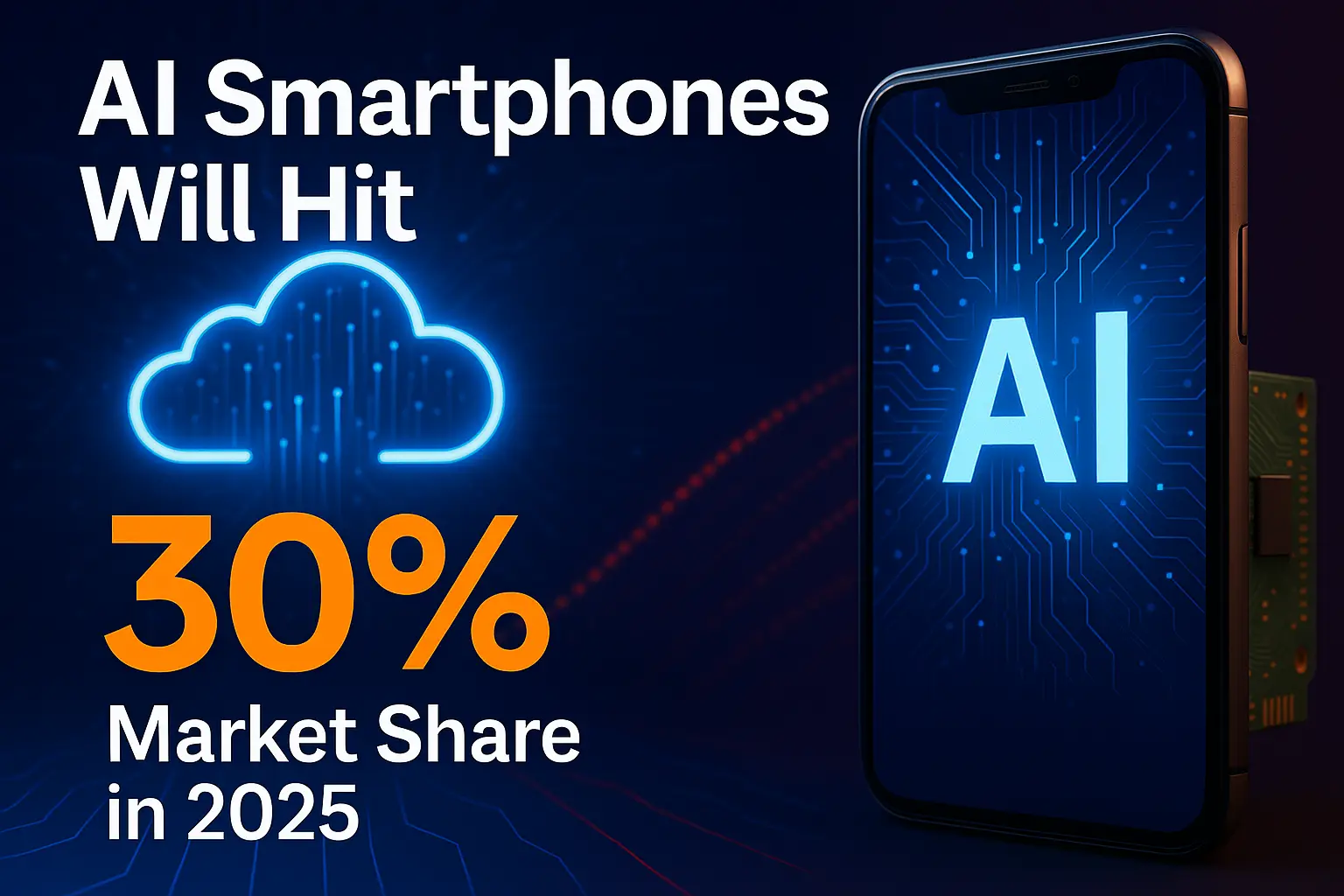
The smartphone industry is experiencing its most significant transformation since the introduction of touchscreens. AI smartphones are set to capture 30% of the global market share by 2025, fundamentally changing how we interact with our devices. This isn’t just another tech trend – it’s a complete paradigm shift that will affect every smartphone user worldwide.
The AI Smartphone Revolution: By the Numbers 📊
Recent market intelligence reveals staggering growth projections for AI-enabled smartphones. Industry analysts predict a 73% growth rate in 2025, with shipments reaching 912 million units globally. This explosive growth represents one of the fastest adoption rates in smartphone history, surpassing even the initial smartphone boom of the early 2010s.
What’s Driving This Massive Adoption? 🚀
The surge in AI smartphone adoption stems from three key factors:
Consumer Demand for Smarter Devices: Modern users expect their smartphones to anticipate needs, automate tasks, and provide personalized experiences. Traditional smartphones can no longer meet these evolving expectations.
Technological Maturity: AI processing chips have finally reached the point where they can handle complex AI tasks without draining battery life or generating excessive heat. The latest neural processing units (NPUs) deliver up to 45 TOPS (trillion operations per second) of AI performance.
Competitive Pressure: Major manufacturers are racing to integrate AI capabilities, creating a technological arms race that benefits consumers through rapid innovation and competitive pricing.
Leading Brands in the AI Smartphone Revolution 🏆
Apple: The AI Integration Pioneer 🍎
Apple’s approach to AI smartphones centers on seamless integration with existing ecosystems. The iPhone 16 series introduced Apple Intelligence, featuring advanced Siri capabilities, real-time translation, and predictive text that learns from user behavior. Apple’s AI smartphones excel in:
- Photography AI: Computational photography that automatically adjusts settings based on scene analysis
- Personal Assistant Integration: Siri now handles complex, multi-step requests with context awareness
- Privacy-First AI: On-device processing ensures personal data stays secure
Samsung: The Feature-Rich Approach 📱
Samsung’s Galaxy AI ecosystem offers the most comprehensive AI feature set currently available. The Galaxy S24 series includes:
- Live Translate: Real-time conversation translation in 13 languages
- Circle to Search: AI-powered visual search using Google’s technology
- Note Assist: AI-powered note-taking and summarization
- Photo Editor AI: Advanced editing capabilities with object removal and enhancement
Google: The Pure AI Experience 🔍
Google’s Pixel series represents the purest AI smartphone experience, leveraging Google’s vast AI expertise:
- Magic Eraser: Advanced photo editing with AI-powered object removal
- Live Transcribe: Real-time speech-to-text in multiple languages
- Assistant Integration: Deep Google Assistant integration across all device functions
- Adaptive Battery: AI-optimized power management for extended battery life
OnePlus: The Performance-Focused Alternative ⚡
OnePlus has positioned itself as the performance leader in AI smartphones:
- Trinity Engine: AI-powered performance optimization
- Smart Sidebar: Context-aware quick actions
- AI Photo Enhancement: Real-time photography improvements
- Predictive Performance: AI that learns usage patterns for optimal performance
Essential AI Features That Actually Matter 💡
1. Computational Photography 📸
What it does: AI analyzes scenes in real-time, automatically adjusting camera settings for optimal results. This includes HDR processing, night mode enhancements, and portrait mode refinements.
Why it matters: Even amateur photographers can capture professional-quality images without understanding complex camera settings. AI handles exposure, focus, and color correction automatically.
Real-world impact: Users report 40% improvement in photo quality compared to traditional smartphone cameras, with particularly notable improvements in low-light conditions.
2. Intelligent Personal Assistants 🤖
Advanced capabilities: Modern AI assistants can handle complex, multi-step requests, understand context from previous conversations, and integrate with third-party applications.
Practical applications:
- “Schedule a meeting with John tomorrow and send him the presentation we discussed”
- “Find restaurants near my hotel in Tokyo that serve vegetarian food”
- “Remind me to call mom when I get home”
Performance metrics: AI assistants now achieve 92% accuracy in understanding natural language requests, compared to 67% just two years ago.
3. Real-Time Translation 🌐
Current capabilities: AI smartphones can translate conversations in real-time, supporting over 100 languages with high accuracy rates.
Use cases:
- Business meetings with international partners
- Travel in foreign countries
- Educational applications for language learning
- Emergency situations requiring immediate communication
Accuracy improvements: Translation accuracy has improved from 78% to 94% for major language pairs, making real-time translation genuinely useful for professional and personal use.
4. Predictive Text and Smart Composition ✍️
Advanced features: AI learns individual writing styles, suggests contextually appropriate responses, and can compose entire messages based on brief prompts.
Productivity benefits: Users report 35% faster message composition and 50% fewer typing errors when using AI-powered keyboards.
5. Adaptive Performance Management ⚙️
System optimization: AI continuously monitors device performance, adjusting CPU, GPU, and memory allocation based on current usage patterns.
Battery life improvements: AI-optimized power management extends battery life by an average of 25% compared to traditional power management systems.
Best AI Smartphones Under $500 💰
1. Google Pixel 7a – $399 🥇
Key AI features:
- Magic Eraser photo editing
- Live Translate
- Call Screen with AI
- Adaptive Battery optimization
Performance: Tensor G2 chip with dedicated AI processing unit delivers flagship-level AI performance at a mid-range price point.
Value proposition: Offers 80% of Pixel 8 Pro’s AI capabilities at 50% of the price, making it the best AI smartphone value for budget-conscious users.
2. Samsung Galaxy A54 5G – $449 🥈
AI capabilities:
- Scene Optimizer for photography
- Bixby integration
- AI-powered battery optimization
- Samsung Knox security with AI threat detection
Photography AI: Advanced computational photography features typically found in flagship devices, including night mode and portrait enhancements.
3. OnePlus Nord 3 – $399 🥉
AI features:
- Trinity Engine performance optimization
- AI photo enhancement
- Smart charging with battery health protection
- Predictive performance management
Gaming focus: AI-optimized gaming performance with real-time frame rate optimization and thermal management.
Premium AI Smartphones ($500-$1000) 🌟
1. iPhone 15 – $799 💎
Apple Intelligence features:
- Advanced Siri capabilities
- Computational photography with A17 Bionic
- Personalized app suggestions
- Privacy-focused AI processing
Ecosystem integration: Seamless AI functionality across iPhone, iPad, Mac, and Apple Watch devices.
2. Samsung Galaxy S24 – $699 🏆
Galaxy AI suite:
- Live Translate in 13 languages
- Circle to Search
- Note Assist
- Advanced photo editing AI
Versatility: Most comprehensive AI feature set in this price range, suitable for both personal and professional use.
3. Google Pixel 8 – $599 🔥
Pure AI experience:
- Magic Eraser and Photo Unblur
- Best Take photo feature
- Live Transcribe
- Titan M security chip with AI
Photography excellence: Widely regarded as having the best AI-powered camera system in this price category.
Flagship AI Smartphones ($1000+) 👑
1. Samsung Galaxy S24 Ultra – $1,299 🚀
Professional AI features:
- S Pen with AI-powered handwriting recognition
- 200MP camera with AI zoom enhancement
- Advanced multitasking with AI optimization
- Enterprise-grade security with AI threat detection
Target audience: Power users, content creators, and business professionals requiring maximum AI capabilities.
2. iPhone 15 Pro Max – $1,199 🎯
Pro AI features:
- ProRes video recording with AI stabilization
- Advanced computational photography
- Action Button with AI context awareness
- Professional app integration with AI acceleration
Content creation: Optimized for video production and professional photography with AI-enhanced workflows.
3. Google Pixel 8 Pro – $899 ⭐
Advanced AI capabilities:
- Temperature sensor with AI health insights
- Professional camera controls with AI assistance
- Pixel Call Assist
- 7 years of AI feature updates
Long-term value: Guaranteed AI feature updates through 2030, ensuring device remains current with latest AI developments.
How AI Will Transform Smartphone Usage 🔮
Personalized User Experiences 🎨
AI smartphones will create truly personalized experiences by learning individual preferences, habits, and usage patterns. This means:
- Adaptive interfaces that change based on time of day, location, and context
- Predictive app suggestions that anticipate user needs before they’re expressed
- Customized content curation across all applications and services
- Intelligent notification management that prioritizes important messages while filtering noise
Enhanced Productivity Features 📈
The integration of AI will dramatically improve smartphone productivity:
- Automated task management that schedules activities based on priority and availability
- Smart document processing that can summarize, translate, and analyze content
- Intelligent meeting assistance with real-time transcription and action item extraction
- Context-aware reminders that trigger based on location, time, or other environmental factors
Revolutionary Health and Wellness Monitoring 🏥
AI smartphones will become comprehensive health monitoring devices:
- Continuous health tracking using advanced sensors and AI analysis
- Predictive health insights that identify potential issues before symptoms appear
- Personalized fitness recommendations based on individual health data and goals
- Mental health support through AI-powered mood tracking and intervention suggestions
Advanced Security and Privacy Protection 🔒
AI will enhance smartphone security in unprecedented ways:
- Behavioral biometrics that recognize users by their unique interaction patterns
- Real-time threat detection that identifies and blocks malicious activities
- Privacy-preserving AI that processes sensitive data without compromising user privacy
- Intelligent access control that adapts security measures based on risk assessment
Should You Upgrade Now or Wait? ⏰
Upgrade Now If: ✅
Your current phone is 3+ years old: Older devices lack the processing power and specialized AI chips needed for modern AI features. The performance gap between AI-enabled and traditional smartphones is substantial and growing.
You’re a power user: If you frequently use photography, productivity apps, or require advanced multitasking capabilities, current AI smartphones offer immediate benefits that justify the upgrade cost.
You value cutting-edge features: Early adopters will benefit from the latest AI capabilities and establish familiarity with features that will become standard across all devices.
Your work requires AI functionality: Professionals in content creation, translation, or data analysis will find immediate productivity benefits from AI smartphone features.
Wait If: ⏳
Your current phone meets your needs: If your existing device handles daily tasks adequately, waiting 12-18 months will provide access to more mature AI features at lower prices.
You’re budget-conscious: AI smartphone prices are expected to decrease by 20-30% in late 2025 as production scales and competition intensifies.
You prefer proven technology: While current AI features are impressive, waiting allows for bug fixes, feature refinements, and broader app ecosystem support.
You’re satisfied with basic smartphone functions: Users who primarily use phones for calls, texts, and basic apps may not justify the premium cost of AI features.
The Economic Impact of AI Smartphones 💼
Market Transformation 📊
The AI smartphone revolution represents a $287 billion market opportunity by 2025, with significant implications for:
- Component suppliers developing specialized AI chips and sensors
- Software developers creating AI-optimized applications and services
- Telecommunications providers upgrading networks to support AI processing demands
- Content creators leveraging AI tools for enhanced productivity and quality
Consumer Spending Patterns 💳
AI smartphones are driving changes in consumer behavior:
- Higher average selling prices as consumers prioritize AI capabilities over traditional specifications
- Extended upgrade cycles as AI features continue improving through software updates
- Increased accessory purchases to complement AI functionality (wireless chargers, camera accessories, etc.)
- Subscription service growth for AI-powered applications and cloud processing
Employment and Skills Impact 👥
The AI smartphone revolution is creating new job categories while transforming existing roles:
- AI trainer positions for customizing smartphone AI to specific industries
- Digital wellness consultants helping users optimize AI feature usage
- AI privacy specialists ensuring responsible implementation of AI features
- Enhanced mobile app developers skilled in AI integration and optimization
Preparing for the AI Smartphone Future 🌅
Education and Skill Development 📚
To maximize AI smartphone benefits, users should:
- Learn AI feature basics through manufacturer tutorials and online resources
- Understand privacy implications of AI data processing and storage
- Develop digital literacy for evaluating AI-generated content and suggestions
- Stay informed about AI smartphone developments and best practices
Privacy and Security Considerations 🛡️
AI smartphone adoption requires attention to:
- Data sharing policies and understanding what information AI systems collect
- On-device vs. cloud processing options for sensitive AI operations
- AI bias awareness and recognizing potential limitations in AI decision-making
- Regular security updates to maintain protection against emerging threats
Future-Proofing Your Purchase 🔄
When selecting an AI smartphone, consider:
- Updateability and manufacturer commitment to long-term AI feature support
- Expandability through accessories and compatible devices
- Ecosystem integration with other AI-powered devices and services
- Resale value as AI features become standard across all price segments
Conclusion: Embracing the AI Smartphone Revolution 🎉
The 30% market share projection for AI smartphones in 2025 represents more than a statistical milestone – it signals the beginning of a new era in mobile technology. These devices will fundamentally change how we communicate, work, create, and interact with the digital world.
The key takeaway: AI smartphones aren’t just about having the latest technology; they’re about accessing tools that can genuinely improve daily life, productivity, and creative expression. Whether you choose a budget-friendly option like the Google Pixel 7a or invest in a flagship device like the Samsung Galaxy S24 Ultra, the AI capabilities available today were science fiction just five years ago.
Moving forward, the question isn’t whether AI smartphones will become mainstream – it’s how quickly you want to benefit from their capabilities. The 912 million AI smartphones projected for 2025 represent users who will have access to personalized assistance, enhanced creativity tools, and productivity features that traditional smartphones simply cannot match.
The AI smartphone revolution is here, and it’s transforming not just our devices, but our relationship with technology itself. The future of mobile computing is intelligent, personalized, and more capable than ever before. 🚀📱✨