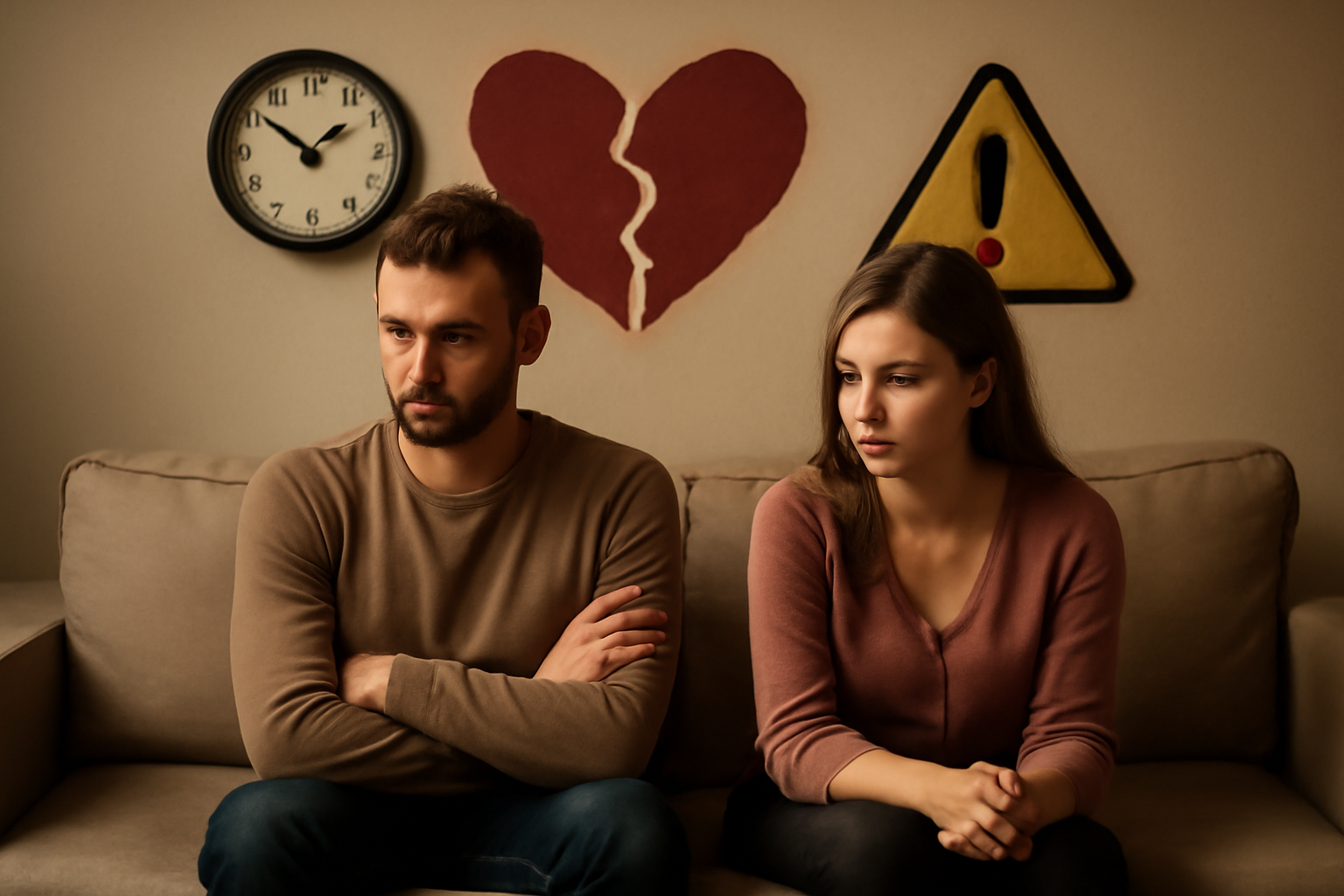
25 Warning Signs to Watch For 🚩💔
Love can be beautiful, but it can also blind us to dangerous patterns. In the euphoria of new romance or the comfort of familiar companionship, we might miss crucial warning signs that could save us from months or years of emotional turmoil. Understanding relationship red flags isn’t about becoming cynical—it’s about protecting your mental health, self-worth, and future happiness.
Whether you’re just starting to date someone new or questioning patterns in a long-term relationship, recognizing these warning signs early can be the difference between thriving in love and surviving in toxicity. 💪
What Are Relationship Red Flags? 🤔
Red flags in relationships are warning signs that indicate unhealthy or manipulative behavior. Examples include controlling behavior, lack of respect, love bombing, and emotional or physical abuse. These behaviors may start subtly but tend to become more problematic over time, potentially leading to toxic dynamics.
Think of red flags as your relationship’s early warning system—like storm clouds gathering before a hurricane. As Amy Morin, LCSW, a psychotherapist and author, tells us, red flags are crucial warning signs that someone isn’t ready to participate in a healthy relationship. They’re usually more about someone’s character, personality, or emotional maturity rather than quirks you can easily overlook.
The Psychology Behind Ignoring Red Flags 🧠
Why do smart, capable people stay in obviously unhealthy relationships? Research in behavioral science shows that relationships are tricky, and some red flags are practically invisible when we wear rose-colored glasses. During the honeymoon phase, our brains are flooded with feel-good chemicals like dopamine and oxytocin, making us more likely to rationalize concerning behaviors.
Recent psychological research reveals six major categories of relationship dealbreakers: Gross, Addicted, Clingy, Promiscuous, Apathetic, and Unmotivated. Understanding these patterns can help you recognize when attraction might be clouding your judgment.
25 Critical Relationship Red Flags You Can’t Ignore 🚨
Early Dating Red Flags (1-8)
1. Love Bombing 💣 Love bombing is when someone showers you with excessive attention and affection right from the start, which can be a sign of manipulation. They text constantly, buy expensive gifts immediately, and talk about your “perfect future together” after just a few dates. While this feels amazing initially, it’s often a manipulation tactic to gain control.
2. They Have No Close Friends or Family Relationships 👥 Not having any friends or close relationships can be a red flag in a guy or girl. It might indicate a sign of low capacity to bond and connect with people in general. Everyone has different social needs, but someone who consistently can’t maintain any meaningful relationships might struggle with empathy or accountability.
3. They Move Too Fast ⚡ Sometimes, this may be mistaken for something positive, but you should question it if the other person is accelerating the relationship. They want to be exclusive immediately, talk about moving in together within weeks, or pressure you to meet their family before you’re ready.
4. They Don’t Respect Your “No” 🚫 Listening to your instincts and honoring your boundaries are vital in the beginning stages of a relationship. Letting someone push your boundaries can land you in an unsafe situation or a toxic relationship. Whether it’s about sex, time, or personal space, someone who consistently pushes against your boundaries is showing they don’t respect your autonomy.
5. They’re Always the Victim in Their Stories 😥 When they talk about past relationships and getting relationship history, is nothing their problem, and is it always the other person’s problem? Everyone has exes with issues, but if they paint every former partner, boss, or friend as “crazy” or “toxic,” they might be the common denominator.
6. They Monitor Your Social Media Obsessively 📱 If your partner is constantly checking your location, using tracking and checking methods, or constantly questioning where you are & why you are there – this is control and it is unhealthy. This behavior often escalates from “cute” attention to suffocating surveillance.
7. Their Words Don’t Match Their Actions 🎭 A 2011 study explored broken promises in relationships and found that the most successful romantic partnerships were the ones in which both parties were committed to keeping their promises, no matter how small. They constantly cancel plans, show up late, or make commitments they don’t keep.
8. They’re Rude to Service Workers 😠 How are they treating the staff? Do their words match their actions? Someone who treats waiters, cashiers, or customer service representatives poorly is showing you how they handle people they perceive as “beneath” them—which could include you someday.
Communication Red Flags (9-16)
9. They Use Sarcasm as a Weapon 🗡️ A 2022 study found that frequent use of sarcasm to mock another person might be a sign of psychopathy. While occasional sarcasm is normal, constantly using it to belittle you or dismiss your feelings is emotional abuse disguised as humor.
10. You Can’t Disagree Without Drama 🎭 According to a 2023 study, the inability to dispute or challenge your partner is listed as one of the most common early signs of relationship violence. Healthy relationships require the ability to disagree respectfully. If every disagreement becomes a screaming match or silent treatment, that’s a problem.
11. They Gaslight You 🌪️ Gaslighting is a tactic in which a person, in order to gain more power, makes a victim question their reality. They deny things they clearly said or did, twist your words, or make you feel “crazy” for having legitimate concerns. This is psychological abuse that erodes your trust in your own perceptions.
12. They Give You the Silent Treatment ❄️ Signs of an unhealthy relationship include that they can’t see your side. If your partner can’t understand your perspective if you don’t agree with them, it might be time to say goodbye. Stonewalling—shutting down completely during conflict—is one of the strongest predictors of relationship failure.
13. They Never Apologize Genuinely 🚫 Everyone makes mistakes, but someone who never takes responsibility or offers hollow apologies (“I’m sorry you feel that way”) shows they don’t respect your feelings or the relationship.
14. They Dismiss Your Feelings Regularly 💔 Manipulative people can use gaslighting to minimize your feelings, as in “You’re blowing things way out of proportion.” Your emotions are valid, and a partner who consistently tells you you’re “too sensitive” or “overreacting” is invalidating your experience.
15. They Make Important Decisions Without You 🤝 In healthy relationships, decisions that affect both partners should involve both partners. Someone who makes unilateral choices about your shared life doesn’t see you as an equal partner.
16. They Can’t Handle Your Success 🏆 When one or both partners feel a constant need to compete with each other rather than support each other’s successes, that’s a sign of toxicity. A loving partner celebrates your achievements, not tries to diminish them or make everything about themselves.
Control and Manipulation Red Flags (17-21)
17. They Isolate You From Loved Ones 🏝️ Monitoring your interactions: Wanting to know where you are and who you’re with at all times. Isolating you: Trying to cut you off from friends, family, or activities to keep you to themselves. This gradual isolation is a classic abuse tactic designed to make you more dependent on them.
18. They Control Your Finances 💰 They insist on managing all the money, prevent you from working, or make you account for every penny you spend. Financial abuse is often overlooked but can be devastatingly effective at trapping someone in a relationship.
19. They Check Your Phone/Email Secretly 📧 Abusers often monitor their partner’s activities, including their phone, computer, and Internet use. Trust is the foundation of healthy relationships. Someone who secretly monitors your communications doesn’t trust you and doesn’t respect your privacy.
20. They Use Guilt as Manipulation 😔 Maybe they use guilt to twist you into staying around, despite the pain they cause you. They make you feel guilty for having friends, pursuing hobbies, or spending time away from them. This emotional manipulation keeps you constantly walking on eggshells.
21. They Threaten Self-Harm When You Try to Leave ⚠️ This is emotional blackmail at its worst. Someone who threatens suicide or self-harm to keep you in the relationship is using your compassion as a weapon. This behavior requires immediate professional intervention, not romantic commitment.
Behavioral Red Flags (22-25)
22. They Have Explosive Anger Issues 💥 Are you always walking on eggshells because you don’t know when your partner’s next insecurity will arise in the form of a fight or accusation? Everyone gets angry, but someone who regularly has disproportionate reactions to minor inconveniences or punches walls when upset is showing dangerous patterns.
23. They Have Addictive Behaviors They Won’t Address 🍷 When one partner struggles with addiction, whether to substances, gambling, or other behaviors, it can create a toxic environment filled with neglect, abuse, or enabling behaviors. Addiction affects the entire relationship, and someone unwilling to seek help is choosing their addiction over your wellbeing.
24. They’re Consistently Unreliable ⏰ Being late for appointments, not responding to phone calls and texts are just some of the annoying behavioral patterns that can lead to the sensation of not being able to rely on your partner at all. Reliability builds trust, and someone who consistently flakes or disappears when you need them most isn’t relationship material.
25. They Show No Empathy for Others 💔 They don’t care when others are hurt, show no remorse for their harmful actions, or seem incapable of understanding how their behavior affects people. Lack of empathy is often linked to narcissistic or antisocial personality traits that make healthy relationships impossible.
The Science Behind Toxic Relationships 🔬
Research shows that the Relationship Red Flags Scale measures five key factors: Monitoring Behaviors, Controlling Behaviors, Demeaning Behaviors, Threatening and Aggressive Behaviors, and Jealous and Possessive Behaviors. These categories help psychologists understand and predict relationship violence and abuse.
Studies on toxic relationships show they can cause inner conflict within oneself, leading to anger, depression, or anxiety, making it difficult for those involved to live productive and healthy lives. The psychological impact extends far beyond the relationship itself, affecting work performance, friendships, and overall life satisfaction.
Understanding that these patterns are well-documented can help you realize that what you’re experiencing isn’t normal, isn’t your fault, and definitely isn’t love. 💝
When Red Flags Become Black Flags ⚫
A black flag is a severe warning sign that indicates the relationship is incredibly unhealthy and possibly dangerous. Black flags often require immediate attention and action. These include:
- Physical violence of any kind 👊
- Sexual coercion or assault 😰
- Threats of violence against you or your loved ones ⚔️
- Complete isolation from all support systems 🚪
- Extreme financial control preventing you from leaving 💸
If you’re experiencing black flags, please prioritize your safety and reach out for professional help immediately.
How to Protect Yourself: Exit Strategies That Work 🛡️
Build Your Support Network
Talk to trusted friends and family about what’s going on. Let them know you need their support as you move forward. Don’t try to handle this alone—isolation makes everything harder.
Document Everything
If there were instances of abuse or other mistreatment documented through text messages, photos, phone calls, etc., create a safe place to store those—digitally or in hard copies—to have a record of what was occurring. This documentation can be crucial for legal protection or simply for reminding yourself why you left.
Create a Safety Plan
Be ready to leave at a moment’s notice. Keep the car fueled up and facing the driveway exit, with the driver’s door unlocked. Hide a spare car key where you can get to it quickly. If you’re in physical danger, having an escape plan ready can save your life.
Set Clear Boundaries
Being firm with yourself about your make-or-break boundaries eliminates questioning yourself when you realize it’s time to exit the relationship. Decide what you will and won’t tolerate, then stick to it.
Seek Professional Help
Counselors or therapists can provide support and strategies for ending a toxic relationship. They can also help you build self-esteem, develop healthier relationship patterns, and process your feelings in a safe environment.
The Road to Recovery: Healing After Toxicity 🌱
Leaving a toxic relationship isn’t the end—it’s the beginning of your healing journey. Understanding why the toxic relationship affected you as it did and exploring patterns that might have drawn you in can help prevent similar situations in the future.
Self-Care Isn’t Selfish 💆♀️ After leaving a toxic relationship, take time to reflect on the experience and learn from it. Understanding what went wrong and recognizing red flags can help you avoid similar situations in the future and build healthier relationships.
Rebuild Your Identity 🦋 Toxic relationships often leave us questioning who we are. Just like choosing the right technology for your needs, rebuilding yourself requires careful consideration of what truly serves your wellbeing. Take time to rediscover your interests, values, and dreams.
Learn to Trust Yourself Again 🔄 Start meditating and journaling to heal and calm your nervous system. Get back into hobbies or activities that feel fulfilling and just for you. Your intuition is your superpower—toxic relationships try to disconnect you from it, but it’s still there.
Warning Signs vs. Normal Relationship Challenges 🤔
Not every relationship problem is a red flag. Like troubleshooting technical issues, some relationship problems have solutions that both partners can work on together. Here’s the difference:
Normal Challenges: ✅
- Occasional disagreements about important topics
- Different communication styles that require compromise
- Stress from external factors affecting the relationship
- Growing pains as you learn to live together
- Different opinions on future plans that can be discussed
Red Flags: 🚩
- Consistent patterns of disrespect or manipulation
- Refusal to communicate or compromise
- Behavior that makes you feel unsafe or constantly anxious
- Attempts to control or isolate you
- Any form of abuse—emotional, physical, financial, or sexual
Resources for Getting Help 📞
If you’re experiencing relationship abuse or need support:
- National Domestic Violence Hotline: 1-800-799-7233 (available 24/7)
- Crisis Text Line: Text HOME to 741741
- National Sexual Assault Hotline: 1-800-656-4673
- LGBT National Hotline: 1-888-843-4564
Remember: Getting help isn’t giving up on love—it’s choosing to love yourself enough to demand better. 💪
Building Healthy Relationships: What to Look For Instead 💝
After understanding red flags, it’s important to recognize green flags—the signs of a healthy, loving relationship:
- Mutual respect and trust 🤝
- Open, honest communication 💬
- Support for each other’s goals and growth 🌟
- Healthy boundaries that are respected 🛡️
- Ability to resolve conflicts constructively 🔧
- Shared values and compatible life goals 🎯
- Physical and emotional safety 🏠
- Independence within togetherness 🦋
- Joy and laughter together 😊
- Feeling better about yourself when you’re with them ✨
The Bottom Line: You Deserve Better 👑
You deserve a loving and healthy relationship. You are worthy of being seen, heard, and valued—at all times. Recognizing relationship red flags isn’t about becoming paranoid or cynical—it’s about developing the wisdom to distinguish between love and manipulation.
True love doesn’t require you to:
- Lose yourself
- Walk on eggshells
- Justify someone’s cruel behavior
- Sacrifice your dreams
- Accept disrespect
Just as you wouldn’t accept a constantly crashing computer or settle for technology that doesn’t serve your needs, don’t accept a relationship that consistently makes your life worse instead of better.
Trust your instincts. Honor your worth. Choose partners who celebrate you, not ones who try to diminish you. Your future self will thank you for having the courage to demand the love you deserve. 💖
Remember: It’s never too late to start over, set boundaries, or choose yourself. Every day is a new opportunity to build the life—and love—you truly deserve. 🌅
If you’re currently in a dangerous situation, please prioritize your safety and reach out for professional help immediately. You’re not alone, and there are people trained to help you navigate this safely.