
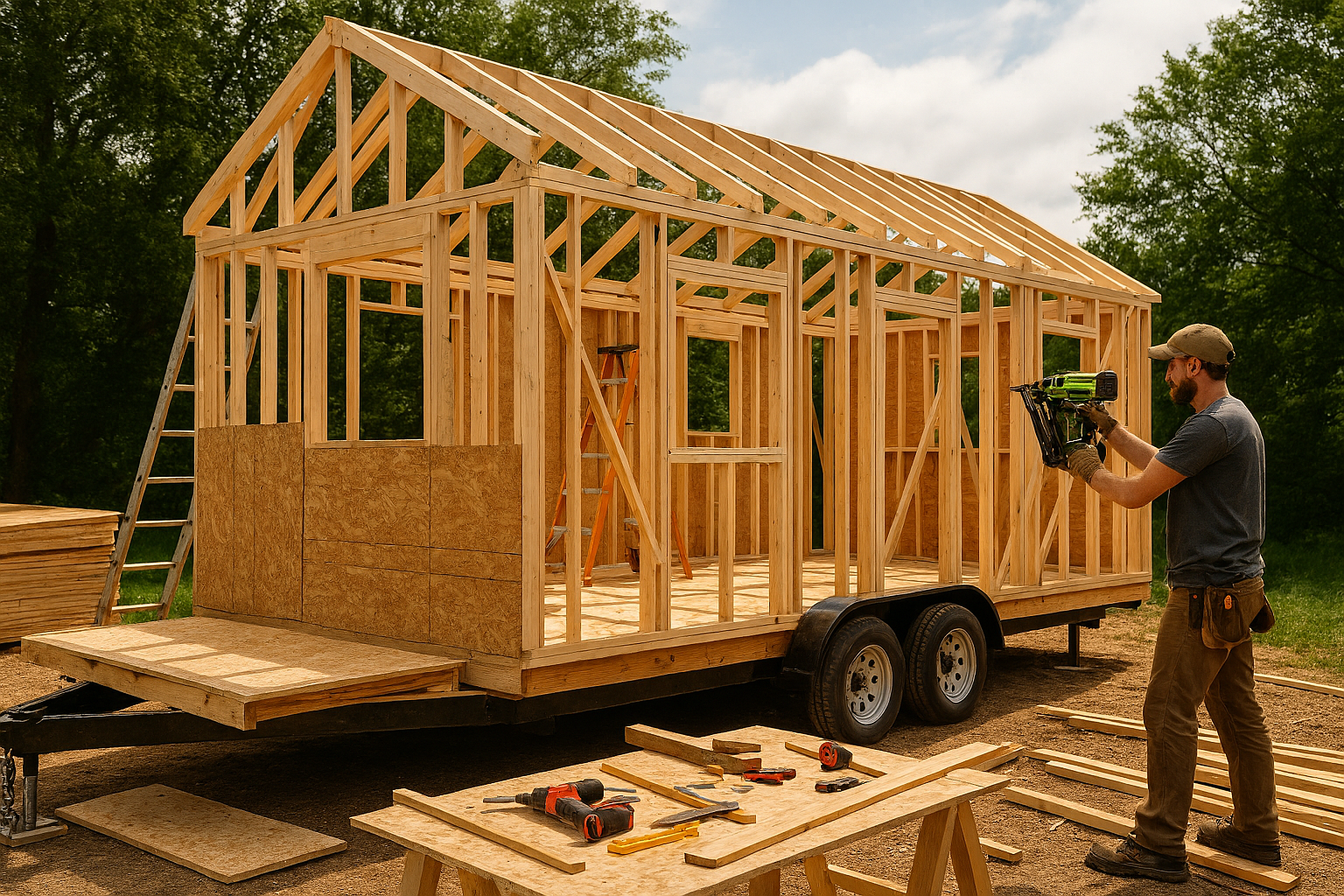
Build Your Dream Home for $35K 🏡✨
Forget everything you think you know about homeownership! Tiny house construction has completely revolutionized the way we think about building homes in 2025. While traditional houses are costing $428,700 on average, savvy builders are creating stunning, fully-functional dream homes for just $35,000! 💰
Picture this: you could own your home outright before your 30th birthday, travel anywhere you want, and live completely debt-free. Sound impossible? Not anymore! The tiny house movement has exploded into a $5.61 billion industry, and thousands of people are discovering that bigger definitely isn’t always better.
The best part? You don’t need to be a construction expert to build your own tiny house. With the right guidance, materials, and determination, you can create a custom home that perfectly fits your lifestyle – all while spending less than most people pay for a single year of rent! 🎯
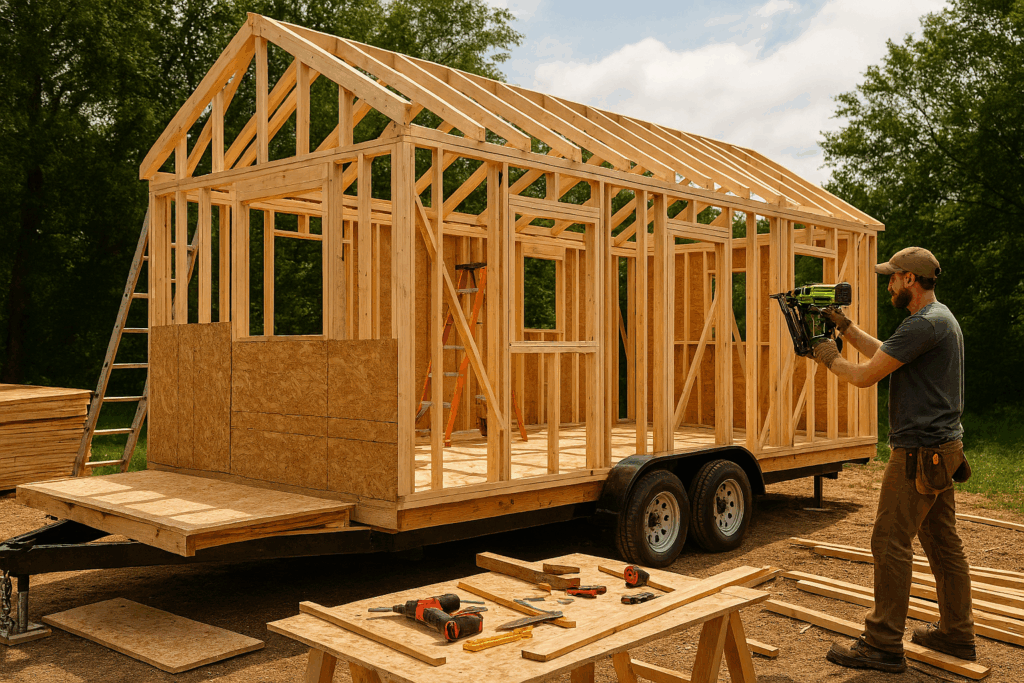
Why Tiny House Construction is Taking the World by Storm 🌟
The housing crisis has pushed millions of Americans out of traditional homeownership, but tiny house construction offers an incredible alternative. Think about it – why spend 30 years paying off a massive mortgage when you could build your dream home in just 4-6 months for the price of a luxury car?
Here’s what’s driving this incredible movement:
Real people are getting real results! Take Precious Price, who built a 296-square-foot backyard tiny home for exactly $35,000 in 2021. She now rents it out for $1,200 per month, generating passive income that most traditional investments can’t match. Or consider the couple from California who sold their traditional home and built a custom tiny house, allowing them to travel the country while maintaining their remote work lifestyle.
The numbers are absolutely staggering – tiny house costs average $30,000 to $70,000 to build, with prices ranging from $150 to $450 per square foot. Compare that to traditional homes at over $400,000, and you’ll understand why smart people are choosing to go tiny!
The $35,000 Tiny House Construction Blueprint 📋
Let me break down exactly how you can build an amazing tiny home for $35,000 – this isn’t some fantasy number, it’s a realistic budget that hundreds of people have successfully achieved.
Foundation and Structure ($8,000-$12,000) 🏗️
Your foundation options:
- Trailer foundation: $4,500-$9,000 for a quality trailer that can handle highway speeds
- Permanent foundation: $5,000-$8,000 for concrete slab or pier foundation
- Framing materials: $3,000-$4,000 for dimensional lumber and sheathing
Labor costs for framing typically range from $4,000 to $10,000, depending on the complexity of the design, but DIY builders can save thousands by doing this work themselves.
Essential Building Materials ($15,000-$20,000) 🔨
Structural components:
- Lumber and framing: 2x4s, plywood, OSB sheathing ($3,000-$4,000)
- Roofing: Metal roofing with proper underlayment ($2,000-$3,500)
- Insulation: Spray foam or fiberglass batts ($1,500-$2,500)
- Exterior siding: Cedar, vinyl, or metal panels ($2,500-$4,000)
- Windows and doors: Energy-efficient options ($2,000-$4,000)
Interior finishing:
- Flooring: Engineered hardwood or luxury vinyl ($1,000-$2,000)
- Interior walls: Tongue and groove or panel siding ($1,500-$2,500)
- Kitchen cabinets: Custom built-ins ($2,000-$3,000)
- Bathroom fixtures: Compact toilet, shower, sink ($1,500-$2,500)
Utilities and Systems ($7,000-$10,000) ⚡
Electrical system: $1,500-$2,500 for basic wiring and fixtures Plumbing: $2,000-$3,000 for water supply and waste systems
HVAC: $1,500-$2,500 for mini-split or propane heating Appliances: $2,000-$2,500 for apartment-sized fridge, cooktop, washer/dryer
Permits and Professional Services ($2,000-$3,000) 📋
Building permits typically cost $900-$2,500 depending on your location. Factor in another $500-$1,000 for any required professional inspections or specialized trade work you can’t DIY.
Pro money-saving tip: Just like understanding budget management strategies helps maximize savings, careful planning and phased construction can keep your tiny house project on budget!
Step-by-Step Tiny House Construction Process 🚧
Phase 1: Planning and Design (Weeks 1-4) 📐
Before you swing a single hammer, invest serious time in planning. Building a tiny house is completely doable! You simply need to plan, be open to understanding the process thoroughly, and prepare to learn from others’ mistakes.
Essential planning steps:
- Research local zoning laws and building codes
- Create detailed floor plans and elevations
- Apply for necessary permits and approvals
- Source and purchase materials
- Set up your build site with proper access
Design considerations for success:
- Maximize vertical space with lofts and high ceilings
- Plan for multi-functional furniture and storage
- Consider natural lighting and ventilation
- Design for your specific climate conditions
- Plan utility routing and connections
Phase 2: Foundation and Framing (Weeks 5-8) 🔨
Whether you choose wheels or a permanent foundation, this phase sets the stage for everything that follows.
For trailer-based builds:
- Level your trailer and add necessary anchors
- Install subfloor with proper insulation
- Frame walls, roof, and any dormers or extensions
- Install roof sheathing and temporary weather protection
For foundation builds:
- Pour concrete slab or install pier foundation
- Frame floor system with proper moisture barriers
- Construct wall and roof framing
- Install structural sheathing for strength and weather resistance
Phase 3: Major Systems Installation (Weeks 9-12) 🔧
This is where your tiny house really starts feeling like a home!
Electrical rough-in: Install all wiring, outlets, and fixtures before closing up walls Plumbing rough-in: Run supply and drain lines, install shower pan HVAC installation: Set up heating/cooling systems and ductwork Insulation: Fill all cavities with proper insulation materials
Important note: Many codes require professional work for electrical and plumbing. Budget $2,000-$4,000 for these trades if you can’t DIY safely.
Phase 4: Exterior Finishing (Weeks 13-16) 🎨
Protect your investment with quality exterior materials:
Roofing installation: Metal roofing is attractive, but more importantly can stand up to very high winds – essential for mobile tiny houses. Siding application: Cedar, vinyl, or fiber cement for weather protection Window and door installation: Focus on energy efficiency and proper sealing Exterior trim and finishing: Details that make your house look professional
Phase 5: Interior Build-Out (Weeks 17-20) 🏠
Transform your shell into a beautiful living space:
Drywall or interior paneling: Create finished walls and ceilings Flooring installation: Choose durable, easy-maintenance options Kitchen construction: Custom cabinets and countertops Bathroom finishing: Tile work, fixtures, and storage solutions Built-in furniture: Maximize space with custom storage solutions
Financing Your $35K Tiny House Dream 💳
Traditional mortgages won’t work for most tiny houses, but that doesn’t mean you’re out of options! Smart builders use these creative financing strategies:
Personal Loans: The Most Flexible Option 📊
Personal loans can be used for nearly anything and can be taken out in just about any amount between $1,000 and $100,000. With good credit, you can secure rates as low as 8.99% for tiny house construction.
Personal loan advantages:
- No collateral required (unsecured)
- Fast approval and funding
- Flexible use of funds
- Terms up to 7-12 years available
RV Loans: For Mobile Tiny Houses 🚐
If your tiny house meets RV certification standards, you could qualify for an RV loan with better terms than personal loans.
RV loan benefits:
- Lower interest rates than personal loans
- Longer terms (10-20 years)
- Higher loan amounts available
- Specialized lenders understand mobile homes
Builder Financing: One-Stop Shopping 🏪
Many tiny house builders offer in-house financing with competitive rates and terms specifically designed for tiny house purchases.
Home Equity Options: Leverage Your Current Home 🏡
If you own a traditional home, you can tap into your equity to fund your tiny house project through a HELOC or home equity loan.
Just like smart financial planning requires understanding different investment options, successful tiny house financing means exploring all available options to find the best fit for your situation.
Choosing the Perfect Tiny House Design 🎨
Your design choices will dramatically impact both your construction costs and daily living experience. Here are the most popular and practical tiny house styles for 2025:
Classic Cabin Style: Timeless Appeal 🏘️
Think cozy mountain retreat with board-and-batten siding, metal roofing, and large windows. This style typically costs $30,000-$45,000 and offers excellent resale value.
Modern Minimalist: Sleek and Efficient 🔲
Clean lines, large windows, and contemporary materials create stunning modern tiny homes. Budget $35,000-$50,000 for this style with premium finishes.
Rustic Farmhouse: Charming Character 🌾
Shiplap siding, barn doors, and vintage fixtures create incredible charm. Often the most budget-friendly option at $25,000-$40,000 using reclaimed materials.
Mobile Adventure Base: Built for Travel 🚐
Designed specifically for life on the road with lightweight materials, aerodynamic design, and robust construction. Expect $40,000-$55,000 for a quality mobile home.
Legal Considerations: Navigating Zoning and Codes ⚖️
This is crucial – don’t skip this section! Tiny house construction exists in a complex legal landscape that varies dramatically by location.
Understanding Zoning Laws 🗺️
Tiny house regulations and codes may vary by city, town, or county. Some jurisdictions are tiny-house friendly, while others have restrictive minimum square footage requirements.
Tiny-house friendly locations:
- California: Most cities allow tiny houses as ADUs
- Texas: Several counties specifically permit tiny homes under 400 sq ft
- Colorado: Many areas allow tiny houses with proper permits
- Florida: Growing acceptance in many municipalities
Building Code Compliance 📏
Tiny houses must be 400 square feet or smaller, with a minimum ceiling height of 6 feet 8 inches in most IRC-compliant jurisdictions.
Key code requirements:
- Minimum ceiling heights (usually 6’8″)
- Emergency egress windows in sleeping areas
- Proper electrical and plumbing installation
- Adequate ventilation and lighting
- Structural engineering for wind and seismic loads
Permit Strategy 📋
For permanent foundations: Apply for standard residential building permits For mobile homes: May be classified as RVs or park models For ADUs: Often streamlined permitting as accessory structures
Smart Material Choices That Save Money 💡
The secret to staying under $35,000 is making smart material choices that balance cost, durability, and functionality.
Structural Materials: Build Smart, Not Expensive 🏗️
Lumber selection: Dimensional lumber like 2x4s are the foundation of most tiny house framing. Buy in bulk during off-season for 15-30% savings.
Sheathing options: OSB costs significantly less than plywood but provides similar structural performance. Budget $800-$1,200 for complete sheathing.
Insulation strategy: Fiberglass batts cost between $0.50 and $1 per square foot, while spray foam insulation costs upwards of $2 per square foot. Choose based on your climate and budget.
Money-Saving Material Hacks 💰
Reclaimed and salvaged materials: Building with repurposed materials can create a tiny house that’s 99% repurposed materials by cost. Check local demolition sites, Habitat for Humanity ReStores, and Craigslist for amazing deals.
Bulk purchasing: Team up with other builders to buy materials in bulk and split costs.
Seasonal shopping: Buy materials during winter months when demand is lower.
Direct from manufacturer: Skip the middleman on specialty items like metal roofing and windows.
Off-Grid vs On-Grid: Choosing Your Utility Strategy ⚡
Your utility decisions will significantly impact both your construction budget and ongoing living costs.
Grid-Connected Tiny Houses 🔌
Connecting to municipal utilities offers convenience and reliability but requires access to infrastructure.
Grid connection costs:
- Electrical hookup: $1,000-$3,000 depending on distance
- Water connection: $2,000-$5,000 for new service
- Sewer connection: $3,000-$8,000 for tap-in fees
- Monthly utilities: $100-$200 for tiny house usage
Off-Grid Independence: Ultimate Freedom 🌞
Off-grid tiny houses provide the freedom to live virtually anywhere without reliance on traditional power and water systems.
Off-grid systems:
- Solar power: $5,000-$8,000 for complete system with batteries
- Water collection: $1,500-$3,000 for rainwater harvesting setup
- Waste management: $2,000-$4,000 for composting toilets and greywater systems
- Backup power: $1,000-$2,000 for generator or additional batteries
Off-grid advantages:
- Complete location flexibility
- No monthly utility bills
- Energy independence during outages
- Reduced environmental impact
- Simplified permitting in some areas
The technology for off-grid living has advanced tremendously. Modern solar systems are incredibly efficient, and battery storage has become much more affordable. Many tiny house owners report spending less than $50 per month on off-grid utilities compared to $150-$300 for grid connections.
DIY vs Professional Construction: Making the Right Choice 🤔
One of the biggest decisions in tiny house construction is how much work you’ll do yourself versus hiring professionals.
Full DIY Construction: Maximum Savings 🔧
Going the DIY route can save you up to 50 percent on labor costs, but requires significant time investment and construction knowledge.
DIY advantages:
- Potential savings of $15,000-$25,000
- Complete creative control over every detail
- Incredible sense of accomplishment
- Learning valuable construction skills
- Flexible timeline based on your availability
DIY requirements:
- Basic construction knowledge or willingness to learn
- Access to tools and workspace
- 500-1,000 hours of available time
- Physical ability for construction work
- Patience for problem-solving and learning
Hybrid Approach: Smart Outsourcing 🏗️
Most successful tiny house builders use a hybrid approach – DIYing what they can handle and hiring professionals for specialized work.
Typically DIY:
- Framing and basic carpentry
- Insulation installation
- Interior finishing and painting
- Cabinet construction and installation
- Landscaping and site preparation
Usually hire professionals:
- Electrical rough-in and final connections
- Plumbing installation and testing
- HVAC system installation
- Roofing (if complex or steep)
- Foundation work (for permanent builds)
Professional Construction: Peace of Mind 👷
Working with experienced tiny house builders costs more upfront but offers significant advantages.
Professional benefits:
- Faster construction timeline (2-4 months vs 6-12 months DIY)
- Code compliance guarantee
- Warranty coverage on workmanship
- Access to bulk material pricing
- Professional tool and equipment access
Typical professional costs:
- Basic build: $50,000-$80,000 turn-key
- Custom design: $70,000-$120,000 with premium finishes
- Luxury tiny house: $100,000-$200,000 with high-end everything
Maximizing Space: Design Hacks That Actually Work 📏
In tiny house construction, every square inch matters! Here are proven strategies for creating a spacious feeling in a compact footprint:
Vertical Space Mastery 📈
Loft optimization: Most tiny houses use lofts for sleeping, but smart designs incorporate multiple loft levels for different functions.
Storage walls: Floor-to-ceiling storage solutions can hold incredible amounts while maintaining clean aesthetics.
High ceilings: Minimum ceiling height requirements are 6 feet 8 inches, but building higher creates a more spacious feel.
Multi-Functional Design Elements 🔄
Transforming furniture: Tables that fold into walls, stairs with built-in storage, and beds that convert to seating.
Hidden storage: Every nook and cranny becomes valuable storage space with smart design.
Outdoor living integration: Decks, patios, and outdoor kitchens effectively double your living space.
Light and Color Psychology 💡
Natural light maximization: Large windows and skylights make spaces feel dramatically larger.
Color strategy: Light colors reflect light and create openness, while strategic dark accents add depth.
Mirror placement: Strategically placed mirrors can visually double your space.
This attention to spatial design parallels the importance of optimizing digital workspaces, much like setting up an efficient home office requires thoughtful planning and organization.
Essential Tools and Equipment for Construction 🛠️
You don’t need a full contractor’s workshop, but having the right tools makes tiny house construction much easier and more professional.
Must-Have Power Tools ⚡
Circular saw: Essential for cutting lumber, plywood, and siding ($100-$200) Drill/driver combo: For all fastening needs ($80-$150)
Miter saw: Perfect cuts for trim and finish work ($200-$400) Jigsaw: Curved cuts and window/door openings ($60-$120) Nail gun: Speeds up framing and finishing work ($150-$300)
Hand Tools That Matter 🔨
Quality measuring tools: 25-foot tape measure, 4-foot level, chalk line Cutting tools: Sharp chisels, utility knives, hand saws Fastening tools: Hammer, screwdrivers, socket set Safety equipment: Safety glasses, hearing protection, work gloves
Specialized Tiny House Tools 🎯
Kreg pocket hole jig: Creates incredibly strong joints for custom cabinetry ($100-$200) Laser level: Ensures perfect alignment for all installations ($150-$300) Oscillating multi-tool: Perfect for tight spaces and detail work ($80-$150)
Tool budget: Plan $1,500-$3,000 for a complete tool set, or consider renting expensive tools for short-term use.
Tiny House Construction Challenges and Solutions ⚠️
Every tiny house construction project faces unique challenges. Here’s how to overcome the most common problems:
Weather and Climate Considerations 🌦️
Moisture management: Tiny houses are more susceptible to moisture problems due to their size and occupancy density.
Solutions:
- Install proper vapor barriers
- Use high-quality insulation
- Ensure adequate ventilation
- Choose moisture-resistant materials
- Plan for condensation management
Structural Integrity for Mobile Homes 🚛
Mobile tiny houses face unique structural challenges from road vibration and wind forces.
Engineering requirements:
- Proper trailer attachment points
- Flexible utility connections
- Aerodynamic design considerations
- Weight distribution planning
- Secure cabinet and fixture mounting
Space Optimization Challenges 📦
Working in tight spaces makes construction more difficult and time-consuming.
Strategies:
- Plan construction sequence carefully
- Use smaller tools when possible
- Pre-assemble components outside when feasible
- Allow extra time for tight-space work
- Consider modular construction approaches
Smart Technology Integration in Tiny Houses 📱
Modern tiny houses aren’t just small – they’re smart! Integrating technology can dramatically improve functionality and efficiency.
Home Automation Systems 🏠
Smart lighting: LED systems with smartphone control for ambiance and energy efficiency Climate control: Programmable thermostats and smart mini-split systems
Security systems: Compact cameras and smart locks for peace of mind Entertainment: Projector systems and hidden speakers for big-screen experiences
Energy Management Technology ⚡
Smart electrical panels: Monitor and control energy usage in real-time Battery monitoring: Track solar system performance and battery health Smart appliances: Energy-efficient devices that communicate with your power system
The integration of smart technology in tiny houses mirrors the broader trend toward smart home automation, making small spaces incredibly efficient and user-friendly.
Tiny House Construction Mistakes to Avoid 🚫
Learn from others’ expensive mistakes! These common errors can blow your budget and timeline:
Planning Phase Mistakes 📅
Inadequate research: Not understanding local codes before starting construction Underestimating costs: Failing to budget for permits, tools, and unexpected expenses
Poor design choices: Creating layouts that don’t work for daily living Utility planning: Not considering how you’ll connect to or provide utilities
Construction Phase Errors 🔨
Foundation problems: Improper leveling or inadequate tie-downs for mobile homes Moisture issues: Poor vapor barrier installation leading to mold and rot Electrical mistakes: Code violations that require expensive corrections Weight miscalculations: Building too heavy for safe road travel
Finishing Phase Pitfalls 🎨
Inadequate storage: Not planning enough storage for daily living needs Poor material choices: Using materials that won’t hold up to tiny house living Insufficient lighting: Creating dark, cramped-feeling spaces Ventilation problems: Not providing adequate fresh air circulation
The Business Side: Tiny House Construction as Investment 💼
Smart investors are discovering that tiny house construction offers incredible opportunities beyond just personal housing.
Rental Income Potential 💰
Airbnb success: Tiny houses can generate $80-$200 per night on platforms like Airbnb, often earning $2,000-$4,000 per month in good locations.
Long-term rentals: Monthly rentals typically range from $800-$1,500 depending on location and amenities.
Tiny House Construction Business 🏢
The tiny house industry offers opportunities for:
- Custom builders: Experienced contractors earning $75,000-$150,000 annually
- Design services: Architects and designers specializing in small spaces
- Materials suppliers: Specialized tiny house components and kits
- Consulting services: Helping others navigate the complex planning process
Real Estate Development 🏘️
Tiny house communities: Developers creating entire communities of tiny homes ADU construction: Adding tiny houses as accessory dwelling units on existing properties Vacation rental properties: Building tiny house resorts and glamping facilities
Sustainable Building Practices in Tiny House Construction 🌱
Tiny houses naturally have a smaller environmental footprint, but you can make yours even more sustainable with smart choices.
Eco-Friendly Material Selection ♻️
Reclaimed lumber: Beautiful and environmentally responsible Recycled steel: For framing and roofing applications
Natural insulation: Sheep’s wool, cotton, or cellulose options Low-VOC finishes: Protect indoor air quality with non-toxic paints and stains
Energy Efficiency Optimization 🔋
Super-insulation strategies: Achieving R-30+ in walls and R-50+ in roofs Passive solar design: Orienting your home to maximize natural heating and cooling High-performance windows: Triple-pane windows with low-E coatings Energy recovery ventilation: Maintaining air quality while minimizing energy loss
Water Conservation Systems 💧
Rainwater harvesting: Rainwater collection systems involving large cisterns or holding tanks that can be above or below ground
Greywater recycling: Reusing shower and sink water for irrigation Low-flow fixtures: Maximizing efficiency in limited water systems Composting toilets: Eliminating the need for traditional sewage systems
Advanced Construction Techniques for Tiny Houses 🔬
Take your tiny house construction to the next level with these advanced building methods:
Structural Insulated Panels (SIPs) 🏗️
SIPs are rated at double or triple the strength of stick building and excel with side winds and earthquake type situations.
SIPs advantages:
- Faster construction (frame in 2 days vs weeks)
- Superior insulation performance
- Incredible structural strength
- Precise factory manufacturing
- Reduced thermal bridging
Modular Construction Approaches 🧩
Building components off-site and assembling on location can dramatically reduce construction time and improve quality control.
Modular benefits:
- Weather-independent construction
- Better quality control
- Faster assembly on-site
- Reduced site preparation requirements
- Easier transportation of completed sections
Alternative Building Systems 🆕
Steel framing: Lighter weight and pest-resistant for mobile applications Shipping container conversions: Structural integrity with industrial aesthetics Earthship principles: Passive solar and thermal mass strategies adapted for tiny spaces
Technology Tools for Modern Tiny House Construction 💻
Leverage technology to make your build more efficient and professional:
Design and Planning Software 📐
SketchUp: Free 3D modeling perfect for visualizing your design AutoCAD: Professional drafting for detailed construction plans Chief Architect: Specialized home design software with tiny house templates
Project Management Tools 📋
Construction scheduling apps: Keep your build on timeline and budget Material tracking: Monitor deliveries and inventory Progress documentation: Photo timelines for insurance and resale
Digital integration tip: Just like understanding cloud computing basics helps with modern business efficiency, using digital tools makes construction projects more organized and successful.
Building Information Modeling (BIM) 🏗️
Advanced builders are using BIM software to:
- Detect conflicts before construction begins
- Optimize material usage and reduce waste
- Coordinate complex systems installations
- Generate accurate cost estimates
Tiny House Communities: Finding Your Tribe 🤝
One of the biggest advantages of tiny house construction is joining the incredible community of like-minded individuals.
Established Tiny House Communities 🏘️
Types of communities:
- Planned developments: Purpose-built tiny house neighborhoods
- Eco-villages: Sustainable communities with shared resources
- RV parks: Traditional parks welcoming tiny houses
- Private land: Shared private property with multiple tiny houses
Community Benefits 💫
Shared resources: Common areas, workshops, and utilities Social connections: Like-minded neighbors who share your values Knowledge sharing: Learn from experienced tiny house dwellers
Group purchasing: Bulk buying power for materials and supplies Support systems: Help with construction, maintenance, and challenges
Creating Your Own Community 🌟
Many tiny house enthusiasts are organizing their own communities:
- Land partnerships: Pooling resources to purchase larger properties
- Cooperative development: Shared development costs and responsibilities
- Intentional communities: Building around shared values and lifestyles
The Future of Tiny House Construction 🚀
The tiny house construction industry continues to evolve rapidly with new technologies, materials, and approaches.
Emerging Trends for 2025 📈
Prefab innovation: Factory-built components arriving 90% complete Smart home integration: AI-powered systems optimized for small spaces Sustainable materials: Bio-based and recycled content materials Modular expandability: Designs that can grow with changing needs
Technology Integration 🔬
3D printing: Custom components and even entire wall systems Virtual reality: Design and walkthrough capabilities before construction
Drone surveying: Site analysis and progress monitoring IoT integration: Connected systems for monitoring and control
Market Evolution 📊
The tiny house market is maturing with:
- Professional standards: Better building codes and certification programs
- Financial products: Specialized lending and insurance options
- Community planning: Municipal support for tiny house developments
- Mainstream acceptance: Growing recognition as legitimate housing option
Maintenance and Long-Term Ownership 🔧
Tiny house construction doesn’t end when you move in – proper maintenance ensures your investment lasts decades.
Regular Maintenance Schedule 📅
Monthly tasks:
- Check for air leaks and moisture issues
- Test electrical and plumbing systems
- Inspect exterior for damage or wear
- Clean and maintain appliances
Seasonal tasks:
- Inspect and clean gutters and drainage
- Check roof and siding for damage
- Service HVAC systems and change filters
- Winterize plumbing if needed
Annual tasks:
- Professional electrical and plumbing inspection
- Roof and structural assessment
- Exterior staining or painting touch-ups
- Deep cleaning and system maintenance
Mobile Home Considerations 🚐
Road-ready maintenance:
- Tire and brake inspection before travel
- Secure all interior items and appliances
- Check trailer hitch and safety chains
- Verify weight distribution and limits
Travel preparation:
- Drain water systems to prevent freezing
- Secure or remove exterior items
- Check clearance heights and route planning
- Prepare for utility disconnections
Financial Planning for Your Tiny House Project 💰
Successfully completing tiny house construction for $35,000 requires careful financial planning and smart money management.
Budget Breakdown Strategy 📊
Phase 1 expenses (25% of budget): $8,750
- Plans and permits
- Site preparation
- Foundation or trailer
- Initial materials
Phase 2 expenses (40% of budget): $14,000
- Framing materials
- Roofing and siding
- Windows and doors
- Major system rough-ins
Phase 3 expenses (25% of budget): $8,750
- Interior finishes
- Appliances and fixtures
- Final electrical and plumbing
- Exterior finishing
Phase 4 expenses (10% of budget): $3,500
- Final inspections and permits
- Landscaping and site work
- Tools and equipment purchases
- Contingency for unexpected costs
Money-Saving Strategies 🎯
Seasonal construction: Build during slower construction seasons for better material prices and contractor availability.
Bulk purchasing: Team up with other builders to buy materials in bulk and split costs.
Sweat equity: Every hour you contribute saves $25-$50 in labor costs.
Phased construction: Build in stages as money becomes available rather than financing everything upfront.
Material sourcing: Use repurposed materials and salvage materials to build for under $1,500 in some cases.
The same principles that apply to smart personal finance also work for construction budgeting – careful planning and disciplined execution lead to success.
Real-World Tiny House Construction Success Stories 🌟
Let me share some inspiring examples of people who’ve successfully completed tiny house construction projects:
The $35,000 Dream Home: Precious Price’s Story 💫
Precious Price built a 296-square-foot backyard tiny home for exactly $35,000, which was finished in 2021. Her prefabricated structure approach included labor and materials, proving that the $35,000 budget is absolutely achievable.
Key success factors:
- Chose a proven prefab design to reduce complexity
- Handled site preparation and finishing work herself
- Connected to existing home utilities to save on infrastructure
- Created immediate rental income of $1,200/month
The Ultra-Budget Build: Robin Greenfield’s $1,500 Miracle 🎯
Robin Greenfield managed to build a 100 sq. ft. tiny house for under $1,500, using nearly 100% repurposed materials.
His incredible approach:
- Sourced 99% of materials from reclaimed sources
- Used pallets for flooring foundation
- Fence panels for siding
- Metal roofing from salvage yards
- Created just 30 pounds of waste during entire construction
The Professional Builder Success: California Tiny House Company 🏗️
Pat Mosley and his son Nick founded California Tiny House in 2014 to create small, affordable homes ranging from 200-350 sq. ft.
Their winning formula:
- Factory construction for quality control
- Mobile designs for maximum flexibility
- Focus on code compliance and road worthiness
- Strong, smart construction using advanced materials
Technology and Innovation in Modern Construction 🔬
Tiny house construction benefits enormously from technological advances that make building easier, faster, and more efficient.
Advanced Building Materials 🧱
Structural insulated panels (SIPs): Faster assembly with superior performance Engineered lumber: Stronger and more consistent than traditional lumber Advanced composites: Lightweight, durable materials perfect for mobile applications Smart glass: Windows that automatically adjust for privacy and energy efficiency
Construction Technology 📱
Mobile apps: Detailed construction guides and measurement tools right on your phone AR visualization: See your finished home before construction begins Digital measuring: Laser measuring tools that sync with design software Time-lapse documentation: Track your progress and create marketing content
The same technological revolution transforming computing and AI is also revolutionizing how we build homes.
Marketing Your Tiny House (If You’re Building to Sell) 📢
If you’re planning to build tiny houses as a business, effective marketing is crucial for success.
Visual Storytelling Strategy 📸
Professional photography: High-quality images showcasing your craftsmanship Video tours: Walkthrough videos demonstrating space efficiency
Time-lapse construction: Document your build process for social media Before/after transformations: Show the power of smart design
Digital Marketing Channels 💻
Social media presence: Instagram and Pinterest are perfect for tiny house content YouTube channel: Tutorial and build documentation videos Website portfolio: Professional showcase of your work and capabilities Email marketing: Stay connected with potential customers and past clients
Understanding social media psychology helps create content that resonates with your target audience.
Networking and Partnerships 🤝
Tiny house communities: Build relationships within the movement Real estate partnerships: Work with agents specializing in alternative housing Builder networks: Collaborate with other contractors and suppliers Media relationships: Get featured in tiny house publications and shows
Overcoming Common Construction Obstacles 🛣️
Every tiny house construction project encounters challenges. Here’s how successful builders overcome them:
Material Sourcing Challenges 📦
Supply chain issues: Plan for potential delays and have backup suppliers Quality control: Inspect all materials upon delivery
Storage logistics: Secure, weather-protected storage for materials Transportation: Plan for delivering large items to your build site
Weather and Seasonal Challenges 🌤️
Construction delays: Build weather delays into your timeline Material protection: Proper storage prevents weather damage
Seasonal pricing: Buy materials during off-peak seasons for savings Climate considerations: Choose materials appropriate for your local weather
Skill Development Needs 📚
Learning curve: Allow time to develop necessary construction skills Safety training: Proper safety practices prevent accidents and delays Tool proficiency: Practice with tools before starting critical work Problem-solving: Develop troubleshooting skills for unexpected issues
Cost-Effective Utilities and Systems ⚡
Smart utility planning can save thousands in both construction and ongoing costs.
Electrical System Optimization 🔌
Energy-efficient lighting: LED systems use 75% less energy than traditional bulbs Smart electrical panels: Monitor usage and prevent overloads Efficient appliances: ENERGY STAR appliances sized for tiny living Solar-ready wiring: Prepare for future solar installation even if not installing initially
Plumbing System Efficiency 💧
On-demand water heating: Tankless systems save space and energy Low-flow fixtures: Reduce water usage without sacrificing performance Greywater systems: Greywater from showers and sinks can be safely disposed of using a greywater filtration system Compact bathroom solutions: Space-saving fixtures designed for small spaces
HVAC Solutions for Small Spaces 🌡️
Mini-split systems: Efficient heating and cooling for tiny spaces Radiant floor heating: Comfortable and space-efficient Ventilation planning: Proper air circulation prevents moisture problems Zoned climate control: Different temperature zones for optimal comfort
Understanding technology integration in small spaces is similar to optimizing digital tools for productivity – it’s all about choosing the right solutions for your specific needs.
Tiny House Construction Timeline and Project Management ⏰
Proper project management makes the difference between a successful build and a costly disaster.
Realistic Timeline Expectations 📅
Professional builds: 2-4 months for custom construction DIY builds: 6-12 months working part-time Hybrid approach: 4-8 months with professional help for complex work
Factors affecting timeline:
- Weather and seasonal conditions
- Permit approval processes
- Material availability and delivery
- Your skill level and available time
- Complexity of design and systems
Project Management Best Practices 📊
Phase-based scheduling: Break construction into manageable phases Material coordination: Time deliveries to match construction progress Quality checkpoints: Inspect work before moving to next phase Budget tracking: Monitor expenses against original budget Progress documentation: Photos and notes for insurance and reference
Communication and Coordination 📞
Contractor management: Clear expectations and regular check-ins Permit coordination: Stay in communication with building departments Neighbor relations: Keep neighbors informed about construction activities Family coordination: Manage expectations and involve family in appropriate tasks
Advanced Design Considerations for Maximum Functionality 🎯
Expert tiny house construction goes beyond basic shelter to create truly functional living spaces.
Space Planning Psychology 🧠
Traffic flow: Design pathways that feel natural and unobstructed Visual sight lines: Open views create spacious feelings Activity zones: Separate areas for sleeping, working, and relaxing Flexibility needs: Spaces that can transform for different uses
Storage System Design 📦
Vertical storage: Floor-to-ceiling solutions maximize capacity Hidden storage: Under-stair, under-bed, and wall-integrated options Seasonal storage: Plan for items used infrequently Accessibility: Ensure frequently used items are easily reachable
Natural Environment Integration 🌿
Site orientation: Position for optimal sun exposure and views Outdoor connections: Seamless indoor-outdoor living transitions
Landscape integration: Tiny house that complements natural surroundings Privacy considerations: Thoughtful placement and screening
The same attention to detail that makes home organization systems successful applies to tiny house spatial planning.
Conclusion: Your Tiny House Construction Journey Starts Now! 🎉
Tiny house construction represents one of the most exciting opportunities in modern housing. For just $35,000, you can build a custom home that’s completely debt-free, environmentally sustainable, and perfectly suited to your lifestyle.
The global tiny house market is projected to reach incredible heights, and early adopters are positioning themselves for both personal fulfillment and financial success. Whether you’re looking to escape the rat race, achieve financial freedom, or simply live more sustainably, tiny house construction offers a proven path to success.
Your next steps:
- Research local zoning laws and building codes in your area
- Create a detailed budget and secure financing
- Choose between DIY, hybrid, or professional construction approach
- Design your perfect tiny house layout and systems
- Source materials and begin your construction journey
Remember, every expert was once a beginner. The tiny house community is incredibly supportive, and there are more resources available today than ever before. From detailed building plans to YouTube tutorials to local workshops, you have everything you need to succeed.
The question isn’t whether you can build a tiny house for $35,000 – thousands of people have already proven it’s possible. The real question is: are you ready to take control of your housing situation and build the life you actually want to live?
Your dream home is waiting. The only thing standing between you and $35,000 tiny house construction success is the decision to start. What are you waiting for? 🏡✨
Ready to begin your tiny house journey? Start researching your local zoning laws today, and take the first step toward building your dream home for a fraction of what traditional housing costs. The tiny house revolution is here – and there’s never been a better time to join it!
Just like people are discovering new ways to earn money through technology, tiny house construction opens up incredible possibilities for affordable homeownership and alternative living arrangements.
Whether you’re motivated by financial freedom, environmental consciousness, or simply the desire for a simpler life, tiny house construction for $35,000 makes the impossible possible. Your future self will thank you for taking this bold step toward housing independence! 🌟