
Which Internet is Faster for Rural Areas? 🚀
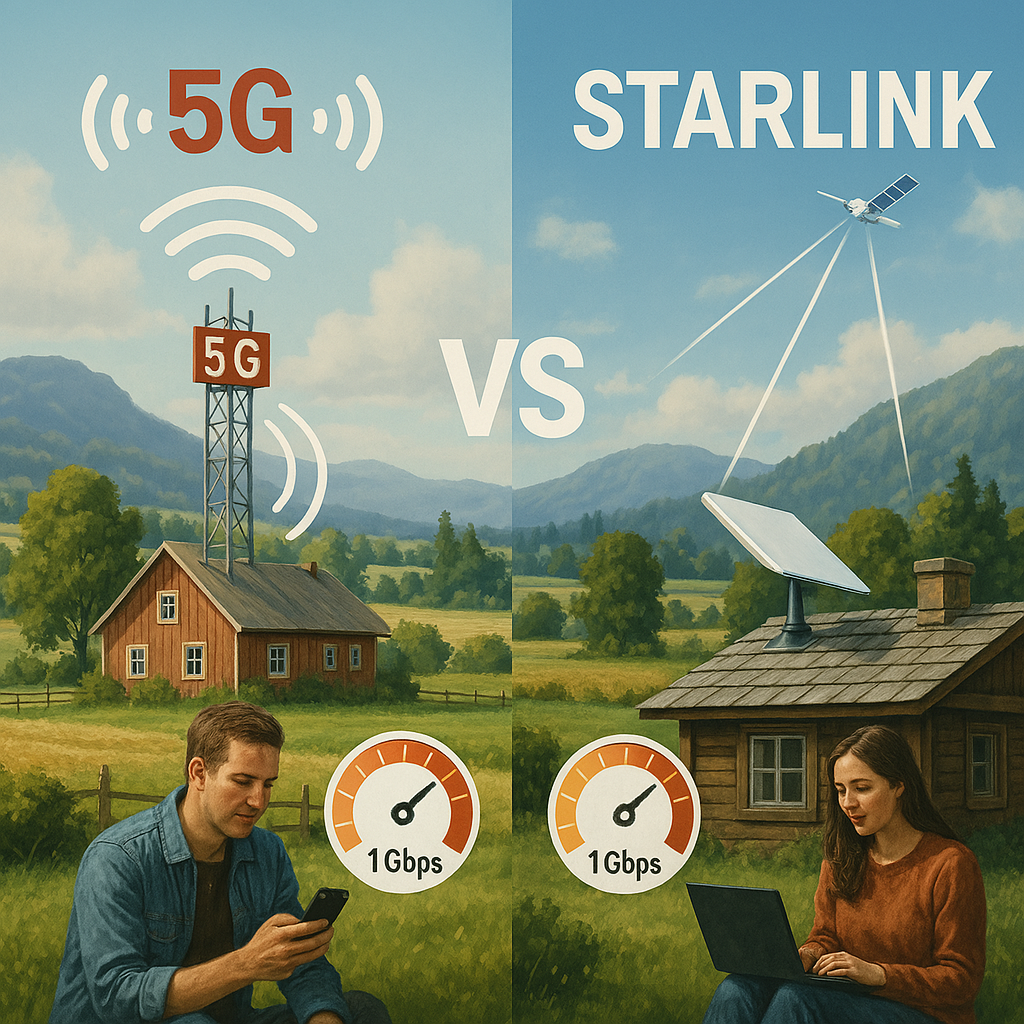
Living in rural areas shouldn’t mean dealing with snail-pace internet anymore! 📡 If you’re tired of buffering videos and dropped video calls, you’ve probably heard about two game-changing technologies: 5G wireless internet and Starlink satellite internet. But which one actually delivers faster speeds where you need them most?
The short answer? 5G can deliver blazing speeds up to 2 Gbps when available, while Starlink typically offers 50-250 Mbps. But here’s the catch – availability makes all the difference in rural areas. Let’s dive deep into what really matters for your internet needs! 🏡
The Rural Internet Struggle is Real 😤
For decades, rural Americans have been stuck with terrible internet options. While city folks enjoy lightning-fast fiber connections, rural residents often deal with:
- Dial-up speeds that make downloading a single song take forever
- Unreliable DSL connections that barely reach 10 Mbps
- Expensive satellite internet with brutal data caps and sky-high latency
- Limited provider choices with zero competition driving prices down
But 2025 is different! Both 5G and Starlink are revolutionizing rural connectivity, giving you real options for the first time. The question isn’t whether you should upgrade – it’s which technology fits your needs and budget better. 💰
What Makes 5G Special for Rural Areas? 📶
5G isn’t just “faster 4G” – it’s a complete game-changer for rural internet access. Here’s why it’s causing such excitement:
Lightning-Fast Speeds When Available
According to OpenSignal data, T-Mobile demonstrated the fastest average 5G download speeds at 238.3Mbps, placing them ahead of Verizon’s 136.5Mbps and AT&T’s 155.1Mbps. In optimal conditions, some users see speeds exceeding 1 Gbps! 🔥
Three Types of 5G Coverage
Not all 5G is created equal. Understanding the differences helps explain why your experience might vary:
- Low-band 5G (600-700 MHz): Great for rural coverage but only 20% faster than 4G
- Mid-band 5G (2.5-3.5 GHz): The sweet spot! Mid-band 5G offers the best balance, covering wide areas with speeds fast enough for telehealth, remote work, and streaming without requiring a tower every mile.
- High-band/mmWave 5G (24-53 GHz): Super fast but short range – mostly for cities
Lower Infrastructure Costs
Unlike fiber optic cables that need trenching for miles, 5G operates on a spectrum of radio frequencies, enabling it to transmit data at incredibly high speeds. Its deployment typically involves installing small cell sites that can be placed on existing infrastructure, like buildings and streetlights, making it less cumbersome and more cost-effective to expand into rural areas compared to laying down miles of cable or fiber.
Real-World Rural Performance
While 5G promises impressive speeds, real-world performance varies significantly. Weather conditions, network congestion, and distance from towers all impact performance. Rural users might experience speeds ranging from 72 Mbps to 245 Mbps, depending on local conditions.
Starlink: Internet from Space 🛰️
Elon Musk’s Starlink has grabbed headlines for good reason. This isn’t your grandfather’s satellite internet!
Low Earth Orbit Makes the Difference
Traditional satellite internet uses satellites 22,000 miles above Earth. Starlink’s satellites orbit just 550 kilometers up, dramatically reducing lag time and boosting speeds.
Impressive Speed Performance
Starlink satellite internet offers download speeds ranging from 50 to 250 Mbps, while 5G networks offer more impressive average download speeds between 50 Mbps and 2Gbps. While not as fast as top-tier 5G, these speeds crush traditional satellite options.
Universal Coverage
Here’s Starlink’s biggest advantage: Starlink can be set up and used almost anywhere in the U.S., its top download speeds vary from state to state, which you can check with Starlink’s speed map. If you can see the sky, you can get Starlink! 🌌
Growing Network Capacity
With thousands of satellites already in orbit and more launching regularly, Starlink’s network keeps improving. However, Starlink’s subscriber network is growing, and congestion issues may begin to surface and degrade performance.
Speed Showdown: The Real Numbers 🏁
Let’s get into the nitty-gritty speed comparison that matters most:
Download Speeds
- 5G: 50 Mbps to 2 Gbps (varies dramatically by location and carrier)
- Starlink: 50-250 Mbps (more consistent across locations)
Upload Speeds
- 5G: Generally excellent, often 50+ Mbps in good coverage areas
- Starlink: 10-50 Mbps typically
Latency (Ping) – Crucial for Gaming and Video Calls
This is where things get interesting for online gaming and real-time applications:
5G networks typically have latency in the 35-45 millisecond range, giving gamers a reasonably smooth experience. Starlink, by contrast, can hover between 40-70 milliseconds.
With 5G, you can expect a latency of about 35-45ms over a wired Ethernet connection, or slightly higher using Wi-Fi. On the other hand, while Starlink users can see similar numbers at times, it’s not uncommon for users in certain areas to see a ping of 60-80ms or even higher.
Network Capacity and Congestion
5G’s network capacity is enormous (up to 1,000x that of 4G) with traffic-optimizing technologies like network slicing. This means better performance when lots of people are online simultaneously.
Coverage Reality Check: Where Can You Actually Get These Services? 🗺️
This is the million-dollar question for rural residents!
5G Rural Coverage in 2025
The truth about 5G availability isn’t always pretty:
5G Availability has improved much faster in urban areas than in rural ones. However, there’s progress happening. We’ve invested billions to bring the largest, fastest, most advanced 5G network to big cities and small towns across America.
Current 5G Coverage Stats:
- T-Mobile leads with the most extensive 5G network
- In Q4 2021 the difference in 5G Availability scores between U.S. urban and rural was only 5.7 percentage points — this gap has increased to 10.3 percentage points in Q2 2023.
- Many rural areas still only have low-band 5G (limited speed improvements over 4G)
Starlink Availability
The main selling point of most satellite internet is availability, and while it was initially hard to get ahold of, anyone can now buy a kit online or from select retailers.
Starlink wins the coverage game hands down – if you have a clear view of the sky, you can get service. No waiting for infrastructure buildout! ✅
Cost Comparison: What You’ll Actually Pay 💸
Budget is crucial for most rural families, so let’s break down the real costs:
5G Home Internet Costs
- T-Mobile: $35-70/month (with mobile plan discount)
- Verizon: $25-70/month (with qualifying mobile service)
- AT&T: $55-70/month
- Equipment: Usually free or low-cost rental ($300-1,000 if purchased)
- Setup: Typically DIY, very simple
Starlink Costs – The Expensive Reality
Starlink internet for residential users starts at $120 per month. Starlink Roam internet plans cost $150 per month.
Breaking Down Starlink Expenses:
- Standard Residential: $120/month
- Residential Lite: $80/month (slower during peak hours)
- Equipment Fee: $349-599 (one-time)
- Shipping: $50
- Potential Congestion Charges: $100-500 in high-demand areas
The monthly cost remains unchanged—$80 for residential lite and $120 for standard residential plans. Customers will receive a 30-day trial with a full refund option, but must return the equipment
Total First-Year Costs
- 5G: $420-840 (just monthly service with discount)
- Starlink: $1,800+ (including equipment and service)
This one’s really no contest—any 5G home internet service is going to be significantly more affordable than Starlink (or any other satellite provider, for that matter).
Real-World Performance: What Users Actually Experience 🎮
Gaming Experience
Starlink’s low latency and high-speed connectivity make it suitable for competitive online gaming, although occasional high ping and packet loss may affect some games.
The difference might be minimal for casual gaming, but professional or competitive players could notice those extra milliseconds—especially if Starlink’s dish does a satellite handoff mid-game.
Winner for Gaming: 5G (when available) due to more consistent latency
Streaming and Entertainment
Both services handle 4K streaming well, but there are differences:
- 5G: The digital entertainment sector demonstrates significant changes because of 5G network deployment. The combination of high-speed bandwidth and minimal latency enables rural residents to stream high-definition content and play real-time multiplayer games and at the same time experience virtual reality without interruptions.
- Starlink: Yes, Starlink’s reliable speeds support high-quality streaming, making it a viable option for gamers who wish to broadcast their gameplay on platforms like Twitch and YouTube Gaming.
Work from Home and Video Conferencing
Remote workers can participate in Zoom calls without any interruptions or delays. Both services support modern remote work needs, though 5G typically offers more consistent performance.
Weather Resilience
- 5G: Generally stable in various weather conditions
- Starlink: Its performance can also be affected by heavy rain, snow or dense foliage.
The Verdict: Which Should You Choose? 🤔
Choose 5G Home Internet If:
✅ It’s available in your area (check carrier coverage maps!) ✅ You want lower costs – significantly cheaper than Starlink ✅ You need consistent low latency for gaming or real-time apps ✅ You want simple setup – just plug in and go ✅ You have multiple heavy internet users in your household
Choose Starlink If:
✅ 5G isn’t available where you live ✅ You live in extremely remote areas with zero cellular coverage ✅ You need truly portable internet (RV lifestyle, remote work locations) ✅ You can afford the higher costs and equipment investment ✅ You have a clear view of the sky for satellite reception
Looking Ahead: The Future of Rural Internet 🔮
Neither 5G nor fiber will completely dominate rural internet in 2025. Instead, these technologies will complement each other to create comprehensive rural connectivity solutions.
What’s Coming:
- 5G expansion continues: More towers going up in rural areas throughout 2025-2026
- Starlink improvements: New satellites and ground stations reducing costs
- Hybrid solutions: Some providers offering both technologies
- Government support: Federal funding accelerating rural broadband deployment
Industry Competition Heating Up
Competition between these technologies drives innovation, improves service quality, and reduces costs. Rural residents now have high-speed internet options that match those of their urban counterparts.
Making Your Decision: Practical Steps 📋
Step 1: Check Actual Availability
Don’t rely on general coverage maps! Contact providers directly and ask about service at your specific address.
Step 2: Test Before Committing
- 5G: Many carriers offer trial periods
- Starlink: Try Starlink for 30 days, and if you don’t like it, you can return your hardware for a full refund.
Step 3: Consider Your Usage Patterns
- Light internet use (browsing, email): Either service works
- Heavy streaming/gaming: 5G preferred if available
- Remote work: Both work, but 5G offers more consistency
- Multiple users: 5G’s higher capacity is better
Step 4: Budget Reality Check
Calculate total costs over 2-3 years, including equipment and monthly fees. The price difference adds up quickly!
Final Thoughts: The Rural Internet Revolution is Here! 🎉
We’re living through the biggest rural internet transformation in history. Rural communities now have access to various internet options, including 5G wireless, fixed wireless, and advanced satellite internet, which are crucial for bridging the digital divide and facilitating modern services like education and healthcare.
The bottom line? If 5G is available in your area, it is a much faster wireless internet option. But if you’re in a truly remote location where 5G signals can’t reach, Starlink provides an excellent alternative that crushes traditional satellite options.
Your best bet is checking availability first, then comparing actual costs and performance in your area. Either way, you’re getting access to internet speeds that would have been unimaginable in rural areas just a few years ago! 🌟
Don’t wait – the digital divide is closing fast, and these technologies are only getting better and more affordable. Whether you choose 5G or Starlink, you’re investing in connecting your rural home or business to the modern world.
Have you tried either 5G or Starlink in your rural area? Share your experience in the comments below! Your real-world insights help other rural residents make the best choice for their internet needs. 📝✨