
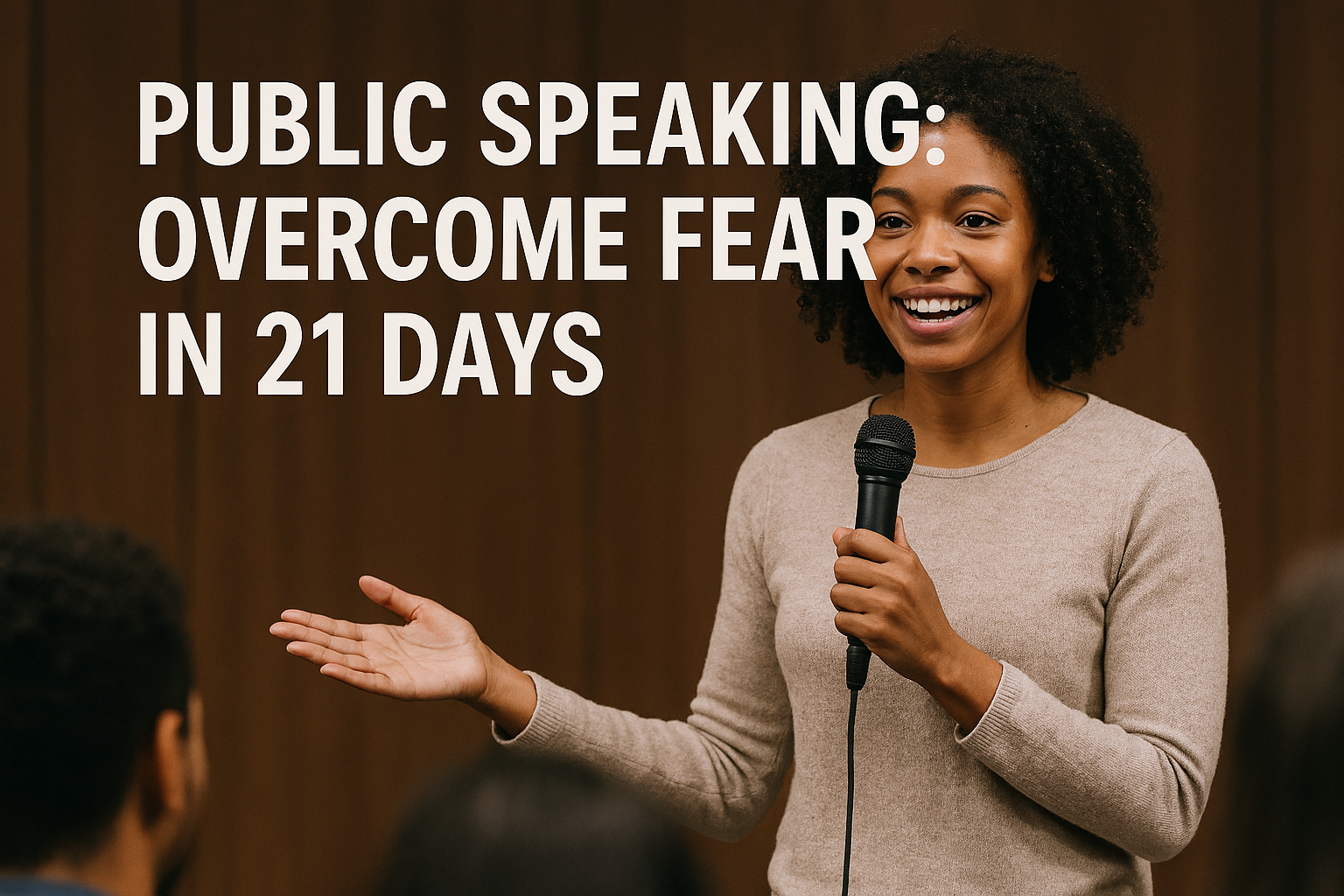
Why Most People Fear Public Speaking (And Why It’s Totally Normal) 😨
Break free from glossophobia and transform your communication skills with proven strategies that work!
Have you ever felt your heart race, palms sweat, and mind go completely blank at the thought of speaking in front of others? You’re definitely not alone! 😰 Recent studies in 2025 show that approximately 77% of the general population experiences some level of fear regarding public speaking, making it more frightening than death itself for many people.
But here’s the exciting news: public speaking fear can be overcome in just 21 days with the right approach, practice exercises, and mindset shifts! 🚀 This comprehensive guide will walk you through a proven system that has helped thousands transform from nervous speakers into confident communicators.
About 77% of the population has symptoms of anxiety caused by public speaking situations, and there’s actually a scientific reason behind this widespread fear. Our brains are wired to perceive speaking in front of groups as a potential threat, triggering what experts call the “fight-or-flight” response.
The shocking statistics that might surprise you:
- Approximately 40% of the population experiences a strong fear of public speaking
- Around 20 million Americans, or about 6% of the population, say that they have at least one social phobia, including a fear of public speaking
- The fear of public speaking can impair wages by 10% and hinder promotion to higher positions by 15%
- Only 8% of individuals with public speaking fears seek professional help
The fear often stems from several psychological factors:
- Fear of judgment – Worrying about what others think
- Past traumatic experiences – Bad memories from childhood or school
- Perfectionism – Setting impossibly high standards
- Lack of experience – Simply not having enough practice
The Science Behind the 21-Day Transformation 🧠
Why 21 days? Research in neuroscience shows that it takes approximately 21 days to form new neural pathways and habits. The Neuroscience Of Performance Psychology explains that relief from this fear is within reach through consistent practice and evidence-based techniques.
Professional speaking coaches and therapists have discovered that within 4 weeks, people can literally transform from terrified speakers to confident presenters. The key is following a structured approach that gradually builds confidence while addressing both the mental and physical aspects of speaking anxiety.
Your 21-Day Public Speaking Transformation Plan 📅
Week 1: Foundation Building (Days 1-7)
Day 1-2: Self-Assessment and Mindset Work Start by identifying your specific triggers and creating your personal “anxiety hierarchy.” Good hierarchies usually have anywhere from 8-12 items, running the entire gamut from comfort to peak challenge.
Day 3-4: Breathing and Relaxation Techniques Practice deep breathing by inhaling through your nose for four counts, holding for four counts, and exhaling through your mouth for six counts. This simple technique helps manage anxiety and project your voice effectively.
Day 5-7: Mirror Practice Practicing in front of a mirror allows you to observe your body language and work on your non-verbal communication. Start with simple introductions and gradually increase complexity.
Week 2: Skills Development (Days 8-14)
Day 8-10: Voice and Delivery Work Recording yourself speaking can provide valuable insights into your vocal tone, pace, and overall delivery. Focus on speaking slower than feels natural – speaking too fast tells your audience that you don’t think what you have to say has much value.
Day 11-12: Body Language and Presence The use of space is one way we make a statement about our confidence when we’re speaking in front of a group. Practice power poses and work on maintaining confident posture.
Day 13-14: Impromptu Speaking Practice Create a list of random topics or use an AI tool to generate some, then set a timer for one minute and speak about a topic without any preparation. This builds quick thinking skills and reduces dependency on scripts.
Week 3: Real-World Application (Days 15-21)
Day 15-17: Small Group Practice Start with trusted friends or family members. Form a practice group with friends or colleagues to create a supportive environment for feedback and improvement.
Day 18-19: Constructive Embarrassment Exercises Constructive embarrassment is a practice where you purposefully put yourself in an embarrassing situation. This might sound scary, but it’s incredibly effective at reducing sensitivity to social judgment.
Day 20-21: Public Speaking Opportunities Seek out real speaking opportunities like community meetings, work presentations, or local groups. The goal is to apply everything you’ve learned in an authentic setting.
5 Game-Changing Practice Exercises That Actually Work 💪
Exercise 1: The Reframe Technique
Harvard Business School professor Alison Wood Brooks found that participants who reframed their anxiety as excitement performed much better. Next time you feel nervous, simply tell yourself “I’m excited” instead of “I’m nervous.”
Exercise 2: Focus on Your Audience, Not Yourself
The best speakers don’t focus on themselves before going on stage. They don’t obsess about their nerves, their looks, or how they’ll be perceived. Instead, they focus on how they will help their audience.
Exercise 3: The News Anchor Game
Your class/group are broadcasters, anchor people for a news show. The news is whatever has happened during the day. This fun exercise helps you practice the standard news format while building confidence with familiar topics.
Exercise 4: Two Truths and a Lie
Each speaker is to stand so that everyone can see them clearly and share 3 things about themselves on a theme you set. Two of the things they say are to be true. The third is not. This develops fluency and helps you learn about body language.
Exercise 5: Connect the Dots
Connect the Dots gives people the opportunity to practice. It doesn’t matter how disparate the “dots” or ideas appear to be, a way can be found to link them. This improves transition skills and logical thinking.
Finding Real Speaking Opportunities to Practice 🌟
Join Toastmasters International Through our global community of 14,000+ clubs, Toastmasters offers a unique blend of professional and personal development opportunities. With 270,000+ members worldwide, it’s the most accessible way to practice in a supportive environment.
Professional Benefits of Toastmasters:
- “I have been promoted at my job six times since becoming a Toastmaster”
- For just $60 USD every six months (plus a one-time $20 USD new member fee)
- Both in-person and online options available
Other Practice Opportunities:
- Local community groups and meetups
- Work presentations and team meetings
- Religious or spiritual communities
- Volunteer organizations
- Online speaking groups and virtual events
Just like choosing the right AI tools for productivity, selecting the right speaking opportunities can dramatically accelerate your progress. Start small and gradually work up to larger audiences.
The Technology Edge: Modern Tools for Confidence Building 💻
Virtual Reality Training The VR4PS system was tested for improving public speaking skills. Through repetition, the fear is minimized. VR applications allow you to practice in realistic environments without real-world consequences.
Recording and Analysis Tools Similar to how we analyze different AI chatbots for their strengths, recording your practice sessions helps identify areas for improvement. Use your smartphone or computer to record practice sessions and analyze:
- Vocal variety and pace
- Body language and gestures
- Eye contact and engagement
- Filler words and pauses
Apps and Online Resources
- Confident Public Speaker – Guided meditation and relaxation
- Speeko – AI-powered speech coaching
- Orai – Real-time feedback on your speaking
- VirtualSpeech – VR public speaking practice
Overcoming Common Obstacles and Setbacks 🚧
When Progress Feels Slow Most people who stutter show progress, only to experience some level of regression – a talk that is more difficult than expected, fear, or a return of physical struggle. This is completely normal!
The Strategic Recovery Process:
- Document Objectively – Record what happened without emotional interpretation
- Identify Triggers – Determine specific elements that contributed to increased anxiety
- Extract Lessons – Identify 2-3 concrete learnings from the experience
- Adjust Your Approach – Modify preparation or delivery based on insights
- Reengage Quickly – Schedule another speaking opportunity within 7-14 days
Common Mindset Traps to Avoid:
- Catastrophizing – “If I make a mistake, it will ruin my reputation”
- Mind-Reading – “The audience thinks I’m incompetent”
- All-or-Nothing Thinking – “If I’m not perfectly polished, the presentation is a failure”
- Personalization – “That bored-looking person is reacting to my poor delivery”
Professional Benefits: Why This Investment Pays Off 💰
The career impact of overcoming public speaking fear is substantial:
Financial Benefits:
- Approximately 45% of people have either rejected a promotion or refrained from applying for a job due to glossophobia
- Up to 92% of surveyed respondents agree that excellent presentation skills are crucial to work success
- Confident speakers earn higher salaries and advance faster
Professional Skills Development:
- Leadership presence and authority
- Better team communication and collaboration
- Increased networking opportunities
- Enhanced credibility and expertise recognition
Just as choosing between different laptop options requires understanding your specific needs, developing public speaking skills opens doors across all industries and career paths.
Success Stories: Real Transformations in 21 Days 🌈
Sarah, Marketing Manager: “I went from hiding in meetings to leading presentations. The 21-day approach gave me structure and daily wins that built real confidence.”
Mike, Software Engineer: “As an introvert, speaking terrified me. But following this system, I presented at my first tech conference within a month!”
Lisa, Teacher: “I thought I was confident until I had to speak to parents. This guide helped me become the presenter I never thought I could be.”
These success stories mirror what we see with technology adoption – like how people overcome initial hesitation with new devices once they understand the benefits and have proper guidance.
Advanced Techniques for Continued Growth 🚀
Cognitive Reframing Techniques When it comes to all the approaches to overcoming fear of public speaking, cognitive reframing provides the deepest long-term change. This involves changing the thought patterns that maintain speaking anxiety.
The Power of Storytelling Creating a compelling story is cited as the most challenging part of public speaking preparation by 46% of surveyed respondents. Focus on developing authentic, engaging narratives that connect with your audience.
Mastering Nonverbal Communication Research has shown that communication in public speaking is 55% non-verbal, 38% vocal, and 7% words. Your body language and voice tone matter more than most people realize.
Building Your Support Network 🤝
Find Your Speaking Buddy Having a “confidence buddy” can be a powerful way to boost your self-esteem. This person, whether a friend, family member, or mentor, can provide encouragement, feedback, and accountability.
Professional Development Communities
- Industry associations and professional groups
- Online communities and forums
- Local business networks
- Alumni associations from your school
Similar to how cloud security requires multiple layers of protection, building speaking confidence benefits from multiple sources of support and practice opportunities.
Measuring Your Progress: 21-Day Milestones ✅
Week 1 Goals:
- Complete self-assessment and create anxiety hierarchy
- Master basic breathing techniques
- Comfortable speaking to mirror for 2-3 minutes
Week 2 Goals:
- Record and analyze practice sessions
- Demonstrate improved body language and vocal variety
- Successfully complete impromptu speaking exercises
Week 3 Goals:
- Present to small group with confidence
- Handle Q&A sessions effectively
- Seek and present at real speaking opportunity
Success Indicators:
- Reduced physical symptoms (less sweating, trembling)
- Improved sleep before speaking events
- Positive feedback from practice partners
- Voluntary participation in speaking opportunities
Maintenance Mode: Keeping Your Skills Sharp 🔄
Monthly Speaking Goals Set a goal to speak publicly at least once per month. This could be:
- Work presentations or team meetings
- Community organization participation
- Industry conference presentations
- Online webinars or virtual events
Continuous Learning Resources
- Books on public speaking and communication
- TED Talks and presentation analysis
- Professional speaking coaches and workshops
- Advanced Toastmasters programs and competitions
Technology Integration Just as we need to stay updated with the latest tech tools, maintaining speaking skills requires ongoing practice with new formats and technologies, including virtual presentations and social media speaking opportunities.
Common Mistakes to Avoid (Learn from Others!) ⚠️
Over-Preparation Trap While preparation is important, 90% of the anxiety felt before making a presentation stems from a lack of preparation, but over-preparing can actually increase anxiety by raising the stakes too high.
Avoidance Patterns Around 15% of people completely avoid situations where they have to speak in public. This only strengthens the fear over time.
Perfectionism Paralysis Remember that good communication is never perfect, and nobody expects you to be perfect. Focus on connection and value delivery, not flawless performance.
Ignoring Physical Symptoms All people feel some physiological reactions like pounding hearts and trembling hands. Do not associate these feelings with the sense that you will perform poorly.
Your Next Steps: Taking Action Today! 🎯
Day 1 Action Items:
- Complete the fear assessment and create your anxiety hierarchy
- Schedule daily 10-minute practice sessions for the next 21 days
- Find one speaking opportunity for week 3 (mark it on your calendar!)
- Join a local Toastmasters club or online speaking group
- Set up your recording system for practice sessions
Weekly Check-ins:
- Review progress against milestones
- Adjust techniques based on what’s working
- Celebrate small wins and improvements
- Plan next week’s challenges and opportunities
Remember: By clarifying your end goal, setting clear public speaking goals, taking consistent action, and reflecting along the way, you can make this the year you finally discover how to overcome public speaking anxiety.
Final Thoughts: Your Speaking Journey Starts Now! 🌟
Overcoming the fear of public speaking in 21 days isn’t just possible—it’s a proven system that has transformed thousands of lives. With time, practice and dedication, you can learn to build confidence as a public speaker and overcome your fear.
The journey from fear to confidence is like upgrading from an older technology to something more powerful—it requires learning new systems, but the benefits are transformational. Every day you practice, every small step you take, brings you closer to the confident speaker you’re meant to be.
Your speaking transformation starts today. The audience is waiting to hear your unique voice, your valuable insights, and your authentic message. Don’t let fear rob you of the opportunities, connections, and success that confident communication brings.
Take that first step. Record that first practice session. Schedule that first speaking opportunity. Your future self will thank you for the courage you show today! 🎤✨
Ready to transform your speaking fears into speaking superpowers? Your 21-day journey begins now!
Remember: Public speaking is a skill, not a talent. Like any skill, it improves with practice, patience, and the right techniques. You’ve got this! 💪