
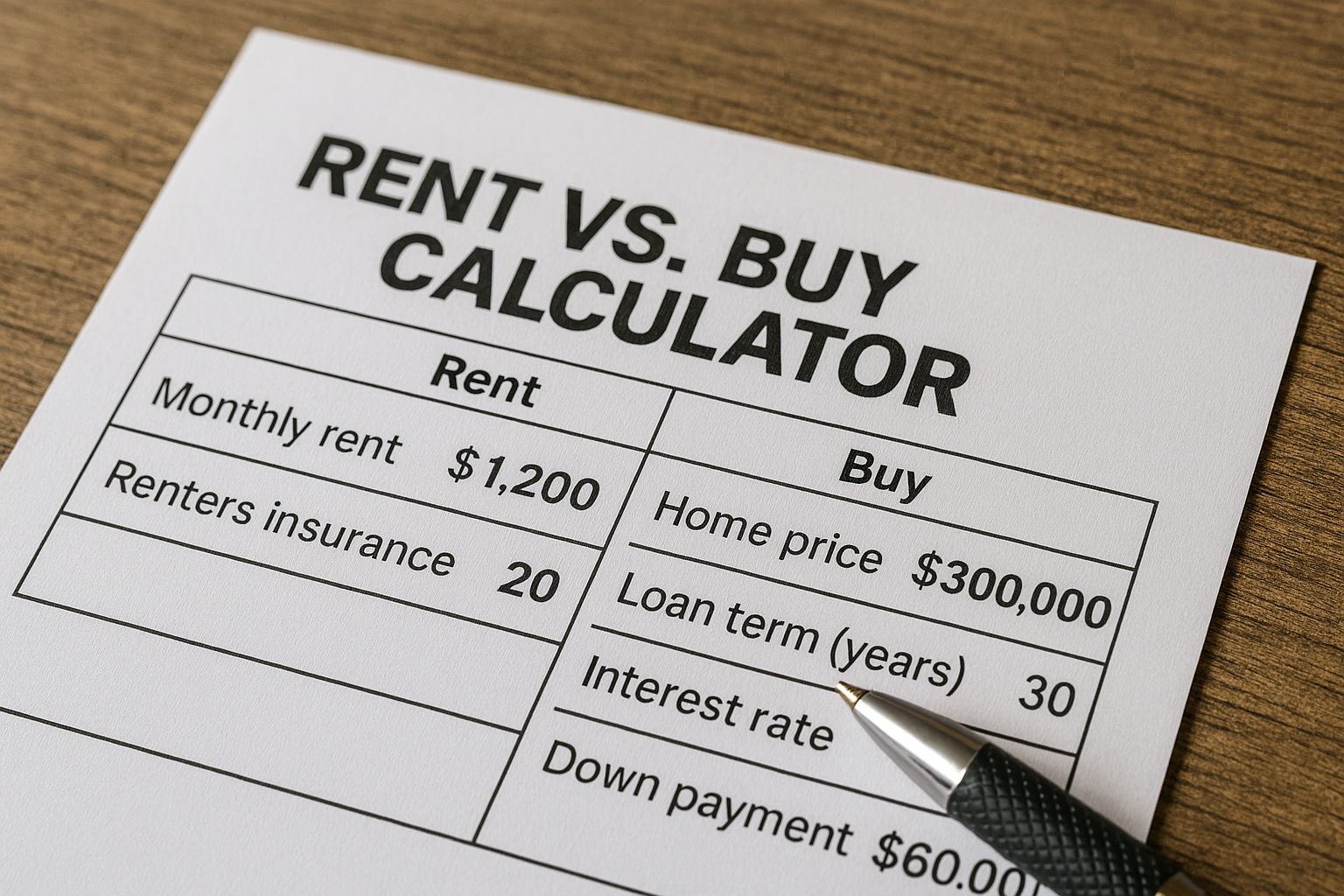
The Honest Truth About 2025 Housing Market 🏠
Bottom Line Up Front: In 2025, renting costs 38% less than buying nationally, with rent vs buy calculators showing break-even points now extending beyond 10+ years in most major cities. But the right choice depends entirely on your specific situation, timeline, and local market conditions.
The housing market in 2025 has thrown everyone a curveball! 🎯 If you’re sitting there wondering whether to keep throwing money at rent or take the plunge into homeownership, you’re definitely not alone. With mortgage rates hovering around 6.5-7% and home prices still sky-high, this decision has never been more complex.
Let me walk you through everything you need to know about rent vs buy calculators, what they’re really telling us in 2025, and how to make the smartest decision for YOUR situation.
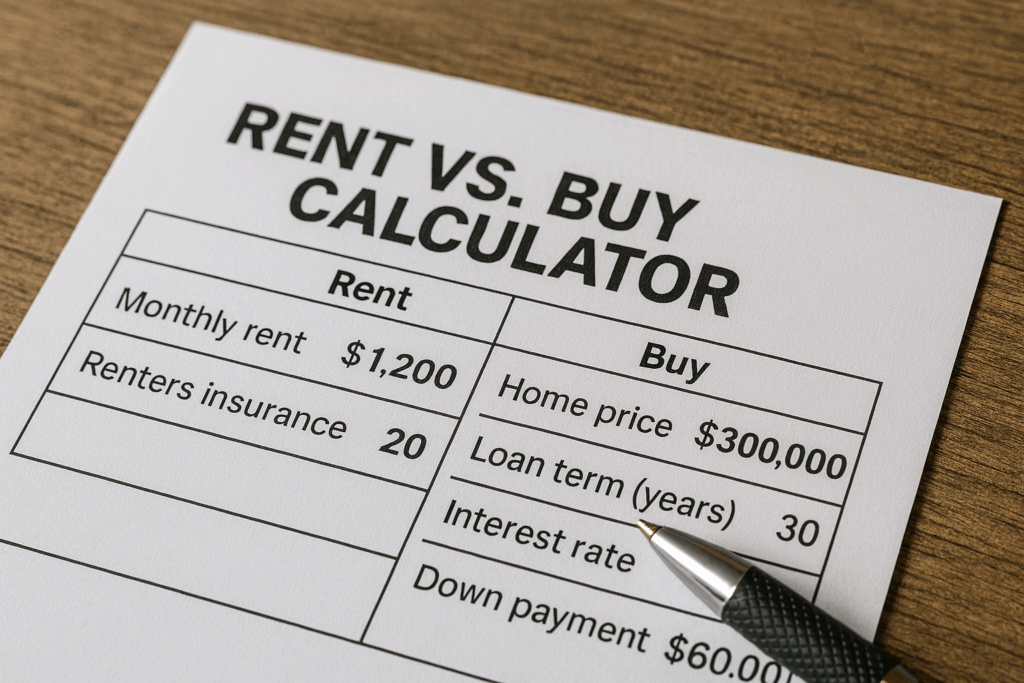
Why Everyone’s Talking About Rent vs Buy Calculators Right Now 📊
Here’s the deal – the math has completely shifted from just a few years ago. Remember when everyone said “renting is just throwing money away”? Well, 2025 is telling a different story:
The shocking reality: Renting is cheaper than buying in ALL 50 major U.S. metro areas for the first time in decades! 😱
According to the latest Bankrate analysis, the average mortgage payment (including taxes and insurance) costs 38% more than average rent nationally. In tech hubs like San Francisco, buying costs nearly 191% more per month than renting!
But here’s where it gets interesting – this doesn’t mean buying is always wrong. It just means the timeline has changed dramatically.
What Rent vs Buy Calculators Actually Tell You (And What They Don’t) 🔍
Think of rent vs buy calculators as your financial GPS – they’ll point you in the right direction, but they can’t account for every twist and turn in your personal journey.
Here’s what these calculators typically factor in:
- Monthly mortgage payments vs monthly rent
- Down payment opportunity costs
- Property taxes and insurance
- Maintenance and repair costs
- Home appreciation rates
- Investment returns on saved money
- Tax implications
But they often miss these crucial factors:
- Your actual lifestyle priorities
- Job stability and relocation likelihood
- Local market volatility
- Emotional value of homeownership
- Flexibility needs
The most popular calculators right now are from NerdWallet, Zillow, and The New York Times. Each uses slightly different assumptions, which is why you might get varying results.
Breaking Down the 2025 Housing Market Reality 📈
Let’s get real about what’s happening in the housing market right now:
Mortgage Rates: Currently sitting at 6.5-7%, with experts predicting they’ll stay in this range through 2025. The days of 3% rates? Those are ancient history for now.
Home Prices: Still elevated but showing signs of cooling. The median home price nationally is around $425,000, though this varies wildly by location.
Inventory: Finally starting to improve! We’re seeing more homes on the market, longer listing times, and more price reductions – all good news for buyers.
Rent Trends: Much more stable than buying costs, with most areas seeing modest increases of 3-5% annually.
City-by-City Breakdown: Where Renting vs Buying Makes Sense 🌆
The rent vs buy equation looks totally different depending on where you live. Here’s the honest breakdown:
Cities Where Renting Wins Big (Break-even 15+ years):
- San Francisco: Takes 30+ years to break even on buying
- San Jose: Similar tech hub premium
- Seattle: Tech boom pricing renters out of buying
- New York City: Over 18 years to break even
- Los Angeles: Premium coastal pricing
Cities Where Buying Makes More Sense (Break-even under 7 years):
- Surprise, Arizona: Homeowners actually pay $321 LESS per month than renters
- Pittsburgh: Break-even at just 11% premium over renting
- Cleveland: Rust Belt affordability
- Detroit: Recovery market opportunities
- Many Florida markets: No state income tax helps
The Sweet Spot Cities (Break-even 7-12 years):
- Austin: Tech growth balanced with reasonable costs
- Denver: Mountain lifestyle with decent math
- Atlanta: Southern affordability with job growth
The 5-Year Projection: What’s Coming Next 🔮
Looking ahead to 2025-2030, here’s what housing experts are predicting:
Mortgage Rates: Expected to gradually decline to 6.3-6.5% by end of 2025, potentially reaching 6% by 2027 if the economy cooperates.
Home Prices: Modest growth of 2-4% annually, much more sustainable than the crazy pandemic years.
Rent Growth: Steady 3-4% increases annually, pretty predictable.
Supply: New construction ramping up, with 1.68 million new units projected annually through 2029.
The key insight? If you’re planning to stay somewhere 5+ years, the math starts favoring buying in more markets. But if you’re in a high-cost coastal area, renting might make sense even longer-term.
Interactive Calculator Factors That Actually Matter 🎯
When you’re playing around with these calculators, here are the inputs that make the biggest difference in your results:
1. Down Payment Amount This is huge! Every dollar you put down reduces your monthly payment but also represents money you can’t invest elsewhere. Most calculators assume 20% down, but many buyers put down much less.
2. Home Appreciation Rate The default is usually 3-5% annually, but this varies wildly by market. San Francisco might see 7%+ while some Midwest markets see 2%.
3. Investment Return Rate If you rent and invest the difference, what return do you expect? The S&P 500 historically returns about 10% annually, but don’t count on that every year.
4. How Long You’ll Stay This is the make-or-break factor. Most calculators show buying wins if you stay 7+ years, but in expensive markets, it might be 15+ years.
The Hidden Costs Nobody Talks About 💰
Here’s where rent vs buy calculators sometimes fall short – they don’t always capture the full picture of hidden costs:
Buying Hidden Costs:
- Closing costs (2-5% of purchase price)
- Moving costs
- Immediate repairs and improvements
- Higher utility bills (bigger space)
- Property tax increases over time
- HOA fees
- Time cost of maintenance
Renting Hidden Costs:
- Application fees and deposits
- Potential rent increases
- No tax benefits
- No equity building
- Restrictions on improvements
- Moving costs when lease ends
Real-World Calculator Scenarios: Three Different Stories 📝
Let me show you how this plays out for three different situations:
Scenario 1: Sarah, Tech Worker in Austin
- Home price: $450,000
- Monthly rent: $2,200
- Plans to stay: 8 years
- Result: Break-even at 6.5 years, buying wins
Scenario 2: Mike, Teacher in San Francisco
- Home price: $1,200,000
- Monthly rent: $3,500
- Plans to stay: 5 years
- Result: Break-even at 20+ years, renting wins big
Scenario 3: Jessica, Marketing Manager in Pittsburgh
- Home price: $180,000
- Monthly rent: $1,100
- Plans to stay: 10 years
- Result: Break-even at 3 years, buying is a no-brainer
See how different each situation is? This is why generic advice doesn’t work.
Smart Money Moves for 2025 💡
Based on current market conditions and expert predictions, here are the smartest strategies:
If You’re Leaning Toward Buying:
- Get pre-approved now while you shop (rates can change quickly)
- Consider new construction for potential rate buydowns
- Look at slightly less trendy neighborhoods for better value
- Factor in all costs, not just monthly payments
- Have an emergency fund beyond your down payment
If Renting Makes More Sense:
- Actually invest the difference (don’t just spend it!)
- Consider a high-yield savings account for your “would-be” down payment
- Keep an eye on market changes – conditions shift
- Negotiate rent increases based on market comparisons
- Build flexibility into your lease terms
Technology and Tools: Beyond Basic Calculators 🔧
The best rent vs buy analysis goes beyond simple calculators. Here are some advanced tools and approaches:
Spreadsheet Deep Dives: Create your own model with your specific assumptions about appreciation, investment returns, and costs.
Monte Carlo Analysis: Some advanced calculators run thousands of scenarios with different market conditions.
Tax Optimization Tools: Factor in your specific tax situation, including potential deductions.
For tech-savvy individuals, exploring cloud-based financial planning tools can provide more sophisticated analysis capabilities.
The Emotional Factor: What Numbers Can’t Capture ❤️
Here’s something every rent vs buy calculator misses – the emotional and lifestyle factors that might matter more than pure economics:
Homeownership Benefits:
- Pride of ownership and customization freedom
- Stability and community connection
- Forced savings through mortgage payments
- Protection against rent increases
Renting Benefits:
- Ultimate flexibility for career changes
- No maintenance headaches
- Ability to live in prime locations affordably
- Lower stress during market downturns
Sometimes the “wrong” financial choice is the right life choice, and that’s perfectly okay!
Market Timing: Should You Wait? ⏰
One of the biggest questions in 2025: should you wait for better conditions?
Reasons to wait:
- Mortgage rates might drop further
- More inventory coming to market
- Potential price corrections in overheated markets
Reasons not to wait:
- Perfect timing is impossible
- Rates might not drop significantly
- Good properties still get snapped up quickly
- Your life circumstances matter more than market timing
The truth? If you find the right place at a price you can afford, and you’re planning to stay 5+ years, market timing is probably less important than you think.
Regional Market Differences: Location Is Everything 🗺️
The rent vs buy equation varies dramatically by region. Here’s what’s driving differences across the country:
West Coast: Tech money inflating prices, but rents staying relatively reasonable Southwest: Population growth driving both rents and prices up Southeast: Best overall value for buying, especially Florida and Texas Northeast: High costs across the board, but strong job markets Midwest: Hidden gems with affordable buying opportunities
For professionals in the tech industry, understanding cloud computing market trends can help predict which markets might see continued growth.
Building Your Personal Housing Strategy 🎯
Instead of just using one calculator, here’s how to build a comprehensive strategy:
Step 1: Use 3-4 different calculators to get a range of outcomes Step 2: Stress-test your assumptions (what if rates go up 1%?) Step 3: Factor in your personal timeline and career plans Step 4: Consider worst-case scenarios for both renting and buying Step 5: Make a decision and don’t look back!
Common Calculator Mistakes to Avoid ❌
I see people make these mistakes all the time:
- Using national averages instead of local market data
- Forgetting about opportunity cost of down payment
- Underestimating maintenance costs
- Overestimating home appreciation
- Not factoring in moving costs
- Ignoring tax implications
- Forgetting about PMI if putting less than 20% down
The 2025 Bottom Line: What This All Means for You 🎯
Here’s my honest take after analyzing all the data:
Renting makes sense if:
- You’re in an expensive coastal market
- You might move in the next 5 years
- You’re not ready for the responsibility of homeownership
- You can actually invest the difference consistently
Buying makes sense if:
- You’re in a moderate-cost market
- You’re planning to stay 7+ years
- You have stable income and emergency funds
- You want the stability and pride of ownership
The truth nobody wants to admit: For most people in most markets in 2025, the financial difference between renting and buying isn’t as dramatic as you might think. Your personal situation, timeline, and preferences matter way more than trying to optimize every dollar.
Action Steps: What to Do Right Now 🚀
Ready to make a decision? Here’s your action plan:
- Run the numbers using at least 3 different calculators with your specific local data
- Talk to a local real estate agent to understand your market conditions
- Get pre-qualified for a mortgage to understand your real buying power
- Compare actual properties – look at what you’d rent vs what you’d buy
- Factor in your timeline – be honest about how long you’ll stay
- Consider your stress tolerance – can you handle market volatility?
- Make a decision and move forward – perfect timing doesn’t exist
The housing market in 2025 is challenging, but it’s not impossible. Whether you rent or buy, the most important thing is making a decision that aligns with your life goals, financial situation, and timeline.
Remember, there’s no universally “right” answer – only what’s right for YOU in your specific situation. Use these calculators as guides, not gospel, and don’t let analysis paralysis keep you from moving forward with your life! 🏠✨
Looking for more tech and financial insights? Check out our comprehensive guides on AI tools for professionals and making smart technology decisions to optimize your digital lifestyle.