
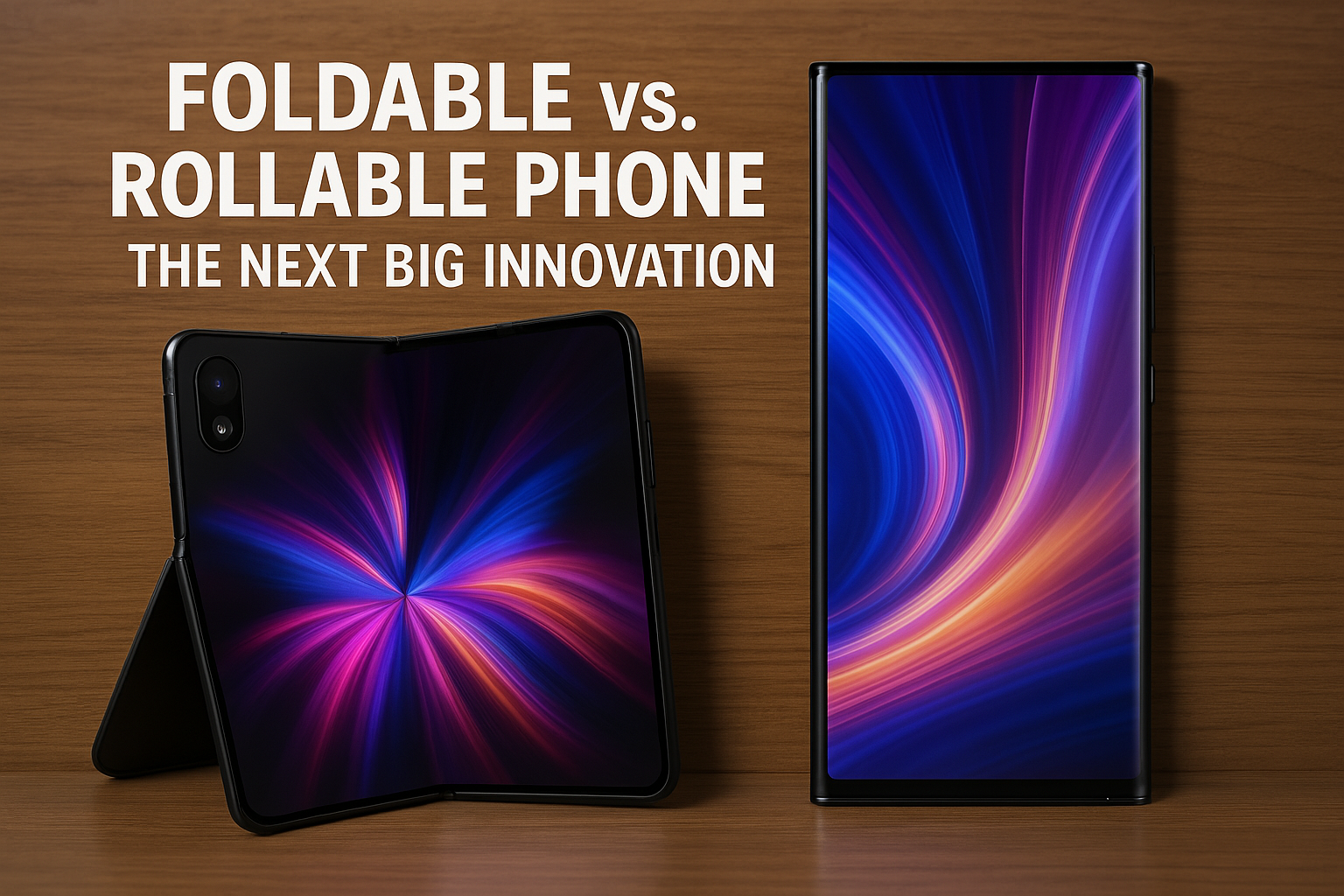
The Next Big Innovation 📱✨
The smartphone revolution is far from over! 🚀 Just when we thought we’d seen everything, tech giants are pushing boundaries with bendable screens that seemed impossible just a decade ago. Today, we’re diving deep into the fascinating world of foldable and rollable phones – two technologies that are reshaping how we think about mobile devices.
What Are Foldable Phones Really All About? 🤔
Foldable phones aren’t just regular smartphones with a fancy hinge. These innovative devices feature flexible OLED displays that can literally bend in half without breaking. Think of it like having a tablet that magically transforms into a pocket-sized phone!
The Samsung Galaxy Z Fold series and Google Pixel Fold have shown us what’s possible when you combine cutting-edge display technology with clever engineering. These devices typically fold along a central crease, giving you a compact phone experience on the outside and a tablet-like screen when opened up.
But here’s the thing – foldable phones come in different flavors. You’ve got book-style folds like the Galaxy Z Fold, and flip-style designs like the Galaxy Z Flip that remind us of those nostalgic clamshell phones from the early 2000s. Each design serves different user needs and preferences.
The magic happens in the ultra-thin glass and polymer layers that make up these flexible displays. Manufacturers have spent billions perfecting the technology to ensure these screens can handle thousands of folds without degrading. Pretty impressive, right? 💪
Enter the World of Rollable Phones 🌟
Now, rollable phones take flexibility to a whole new level! Instead of folding, these devices feature screens that can extend or retract like a scroll. Imagine pulling out your phone screen like you’re unrolling a piece of paper – that’s the rollable phone experience.
Companies like LG (before they exited the mobile market) and Oppo have showcased rollable prototypes that expand from a standard phone size to a tablet-sized display with just a button press or gesture. The screen literally rolls up inside the device body, stored on a flexible cylinder mechanism.
The technology behind rollable displays is even more complex than foldables. These devices need precise motor systems, flexible circuit boards, and incredibly durable screen materials that can handle constant rolling and unrolling motions. It’s like having a high-tech scroll in your pocket! 📜
The Battle of Practicality: Daily Use Scenarios 🏃♂️
Let’s talk real-world usage because that’s what matters most to actual users like you and me.
Foldable phones excel in multitasking scenarios. Picture this: you’re watching a YouTube video on one half of the screen while texting your friends on the other half. Or maybe you’re taking notes during a video call – the larger screen real estate makes everything more comfortable and productive.
The durability factor has improved dramatically over the past few years. Early foldable phones had issues with screen protectors peeling and hinges collecting dust, but newer models feature better sealing and more robust materials. Samsung’s latest Z Fold can handle over 200,000 folds, which translates to about 5 years of normal usage.
Rollable phones, on the other hand, offer seamless screen expansion without the visible crease that foldables have. When you need more screen space for reading, gaming, or watching videos, you simply extend the display. The transition is smooth and creates an uninterrupted viewing experience.
However, rollable technology is still in its infancy compared to foldables. The mechanical complexity of rolling mechanisms raises questions about long-term durability and repairability. Plus, dust and debris could potentially interfere with the rolling mechanism more easily than foldable hinges.
Gaming and Entertainment: Which Wins? 🎮
For mobile gamers and entertainment enthusiasts, both technologies offer unique advantages.
Foldable phones provide that tablet-like gaming experience when opened up. Racing games, strategy games, and mobile RPGs feel more immersive on the larger screen. The crease in the middle might be noticeable in some games, but most users adapt quickly and barely notice it during intense gaming sessions.
Rollable phones promise an even better entertainment experience since there’s no crease interrupting the display. Movie watching becomes more cinematic, and games can utilize the full extended screen without any visual interruptions. The gradual screen expansion also means you can adjust the display size based on your content – smaller for reading, larger for videos.
Battery life becomes crucial for both device types. Larger screens consume more power, and the additional mechanical components in both foldables and rollables can impact overall battery performance. However, manufacturers are addressing this with larger battery capacities and more efficient processors.
The Price Reality Check 💰
Let’s be honest – neither foldable nor rollable phones are budget-friendly options right now. Foldable phones typically start around $1,000 and can go up to $2,000 or more for premium models. That’s serious money for a smartphone!
The high prices reflect the complex manufacturing processes, specialized materials, and relatively low production volumes. As with any new technology, early adopters pay premium prices for being first to experience these innovations.
Rollable phones, when they become commercially available, will likely command even higher prices initially due to their more complex mechanical systems and newer technology. Expect them to start well above the current foldable phone price range.
However, history shows us that prices typically drop as technology matures and production scales up. Remember how expensive the first smartphones were? Now you can get capable Android phones for under $300. The same price trajectory will likely happen with flexible display technology over the next 5-10 years.
Design and Build Quality Considerations 🏗️
The engineering challenges for both device types are mind-boggling. Foldable phones need hinges that are both strong and smooth, flexible displays that won’t crack under stress, and software that adapts seamlessly to different screen configurations.
Build quality has improved significantly since the first-generation foldable phones. Modern devices feature better materials, improved hinge designs, and more sophisticated testing procedures. Samsung, for example, puts their foldable phones through rigorous testing that simulates years of usage in accelerated timeframes.
Rollable phones face even greater engineering challenges. The rolling mechanism needs to be precise, quiet, and reliable over thousands of cycles. The flexible display must maintain consistent image quality throughout the rolling process, and the device must remain thin and portable even with the complex internal mechanics.
Water resistance is another consideration. While some foldable phones now offer IPX8 ratings, the mechanical nature of both foldables and rollables makes complete waterproofing more challenging than traditional smartphones.
Software and User Experience Evolution 📲
The software experience is where these devices really shine or struggle. Both foldable and rollable phones require sophisticated software that can adapt to changing screen sizes and orientations.
Android has evolved significantly to support foldable devices. Features like app continuity (where apps seamlessly transition between folded and unfolded states) and multi-window management have become much more refined. Google has worked closely with manufacturers to optimize the Android experience for flexible displays.
Rollable devices will need even more advanced software adaptation since the screen size can change gradually rather than just switching between two states. Apps will need to dynamically adjust their layouts as the screen expands or contracts, creating new possibilities for user interaction but also new challenges for developers.
The user interface design for both device types requires rethinking traditional smartphone interactions. How do you handle notifications when the screen is folded? How do apps behave when the display is partially extended? These questions drive innovation in user experience design.
Market Adoption and Consumer Response 📊
Consumer adoption of foldable phones has been slower than initially predicted, but it’s steadily growing. Early concerns about durability and high prices have given way to curiosity and gradual acceptance as the technology improves.
Samsung dominates the foldable phone market, with other manufacturers like Google, OnePlus, and Huawei offering their own interpretations. Each brand brings unique features and design philosophies to the foldable space.
Rollable phones haven’t reached mass market availability yet, but consumer interest is high based on concept demonstrations and prototypes. The promise of seamless screen expansion without visible creases appeals to many potential users who find foldable designs compromising.
Professional users, content creators, and productivity enthusiasts tend to be early adopters of both technologies. The additional screen real estate and unique form factors offer genuine advantages for specific use cases.
Future Predictions and Industry Trends 🔮
The flexible display market is expected to grow exponentially over the next decade. Research firms predict that foldable phone shipments will reach 50 million units annually by 2027, while rollable devices may capture significant market share by 2030.
Manufacturing costs are decreasing as production processes improve and component suppliers scale up. This trend suggests that both foldable and rollable phones will become more affordable and accessible to mainstream consumers within the next 5 years.
Innovation continues at a rapid pace. We’re seeing development of tri-fold devices, rollable phones with multiple expansion directions, and even concepts for phones with both folding and rolling capabilities. The boundaries between tablets, phones, and laptops are becoming increasingly blurred.
Battery technology and processor efficiency improvements will address current limitations around power consumption and performance. 5G integration and AI-powered features will make these devices even more capable and appealing to consumers.
Environmental and Sustainability Concerns 🌱
The environmental impact of flexible display technology is a growing consideration. These devices use more complex materials and manufacturing processes than traditional smartphones, potentially increasing their carbon footprint.
However, the longevity argument is compelling. If a single foldable or rollable device can replace both a phone and a tablet, the overall environmental impact might be lower than owning separate devices. The key is ensuring these devices have long lifespans and can be properly recycled.
Manufacturers are increasingly focusing on sustainable materials and production methods. Some companies are exploring biodegradable components and more efficient recycling processes for flexible displays.
Repairability remains a challenge for both device types. The complex mechanical systems and specialized display technologies make repairs more difficult and expensive than traditional smartphones. This raises questions about device longevity and electronic waste.
The Verdict: Which Technology Will Dominate? 🏆
Both foldable and rollable phones represent exciting directions for mobile technology, but they serve slightly different needs and preferences.
Foldable phones offer immediate practicality with proven technology that’s already available to consumers. They provide genuine utility improvements for multitasking, productivity, and entertainment while maintaining reasonable durability and battery life.
Rollable phones promise a more elegant solution to the flexible display concept, with seamless screen expansion and no visible creases. However, they’re still largely conceptual, with significant engineering challenges to overcome before mass market availability.
The winner might not be a single technology but rather a diverse ecosystem where both foldables and rollables coexist, serving different user preferences and use cases. Some users will prefer the book-like folding experience, while others will gravitate toward the smooth expanding rollable design.
Market forces, manufacturing economics, and consumer preferences will ultimately determine which technology becomes dominant. But one thing’s certain – the age of rigid, unchanging smartphone screens is coming to an end.
The future of mobile devices is flexible, adaptable, and more exciting than ever before! Whether you choose a foldable phone today or wait for rollable technology to mature, you’re witnessing a fundamental shift in how we interact with our digital devices. 🌟
The smartphone in your pocket represents over a decade of incremental improvements, but foldable and rollable phones represent revolutionary leaps forward. These aren’t just phones with bendable screens – they’re glimpses into a future where our devices adapt to our needs rather than forcing us to adapt to their limitations.
As prices continue to drop and technology continues to improve, flexible display phones will likely become as common as touchscreens are today. The question isn’t whether this technology will succeed, but rather how quickly it will transform the entire mobile industry.
So, are you ready for a phone that transforms before your eyes? The future is unfolding – literally! 📱✨