
But There’s a Catch Nobody Mentions 📸
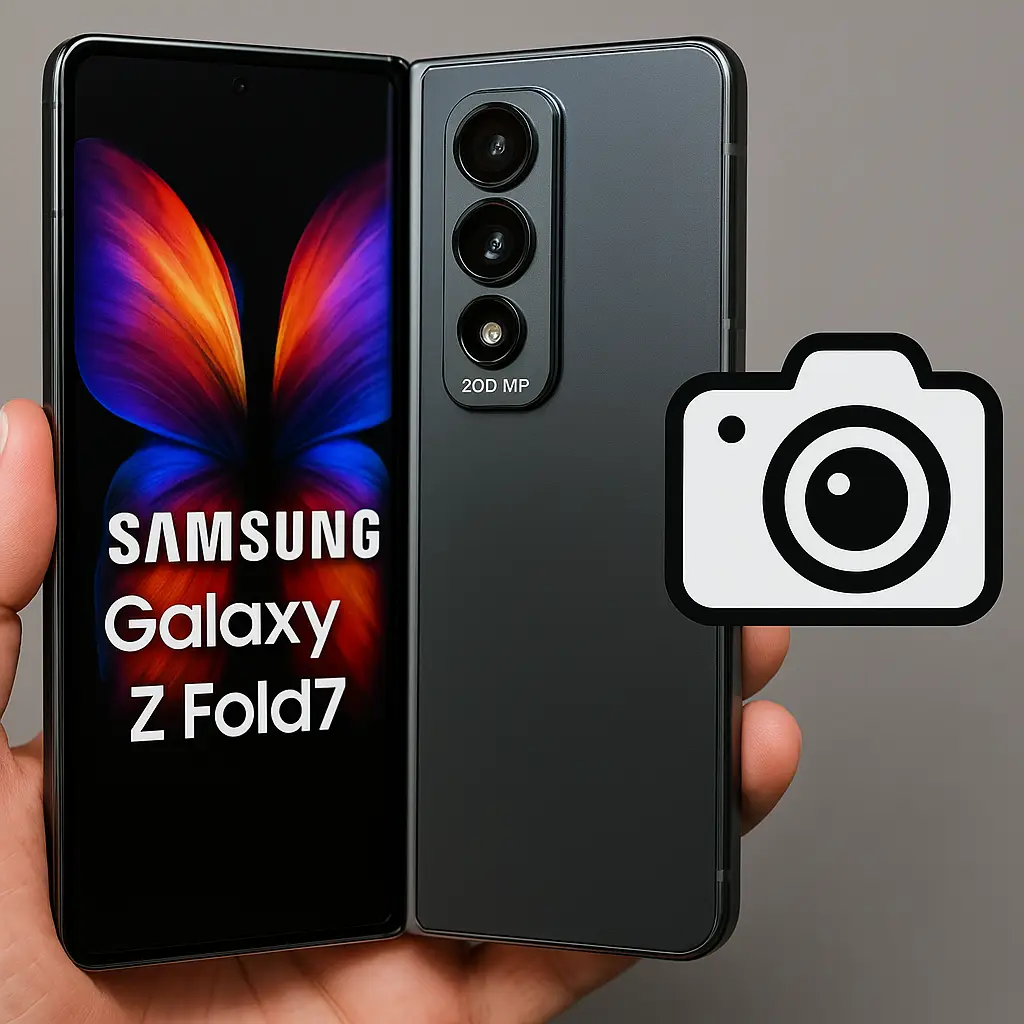
Samsung just unveiled their most ambitious foldable yet at Galaxy Unpacked 2025 in Brooklyn, and while everyone’s talking about that stunning 200-megapixel camera, there’s a crucial detail that could change everything about your buying decision.
The Game-Changing 200MP Camera Revolution 🚀
Samsung’s Galaxy Z Fold7 marks a pivotal moment in foldable phone history. For the first time, we’re seeing a Z Fold device equipped with a flagship-grade 200-megapixel wide-angle camera system, directly borrowed from the Galaxy S24 Ultra’s proven technology. This isn’t just an incremental upgrade – it’s Samsung’s bold statement that foldable phones can finally match traditional flagships in camera performance.
The sheer technical achievement here cannot be overstated. Cramming a 200MP sensor into a device that needs to fold in half required extraordinary engineering. Samsung’s camera team had to completely redesign the internal layout, optimize heat dissipation, and ensure the massive sensor wouldn’t interfere with the folding mechanism. The result? A camera system that theoretically captures more detail than most professional cameras from just a few years ago.
Breaking Down the Technical Specifications 🔍
The Galaxy Z Fold7’s camera system features:
Primary 200MP Wide-Angle Camera:
- Samsung’s ISOCELL HP2 sensor with 0.6μm pixel size
- f/1.7 aperture for improved low-light performance
- Optical Image Stabilization (OIS) with advanced gyroscope sensors
- 2x in-sensor zoom capability without quality loss
- 8K video recording at 24fps
Secondary 12MP Ultra-Wide Camera:
- 123-degree field of view for expansive landscape shots
- f/2.2 aperture with improved edge distortion correction
- Macro photography capabilities down to 4cm distance
Telephoto 10MP Camera:
- 3x optical zoom with periscope lens design
- f/2.4 aperture optimized for portrait photography
- Up to 30x digital zoom with AI enhancement
Cover Screen 10MP Selfie Camera:
- f/2.2 aperture for quick selfies and video calls
- Auto-HDR for challenging lighting conditions
Under-Display 4MP Camera:
- Hidden beneath the main foldable display
- Primarily for video calls and basic photography
The Hidden Catch: What Samsung Isn’t Telling You ⚠️
Here’s where things get interesting – and potentially problematic. While Samsung heavily markets that 200MP headline number, the reality of using this camera system daily reveals several limitations that could significantly impact your experience.
The Software Processing Bottleneck 📱
Samsung’s 200MP camera doesn’t actually capture 200MP images by default. Instead, it uses a technique called “pixel binning” that combines multiple pixels into one, resulting in 50MP images with theoretically better low-light performance and faster processing speeds. To actually capture full 200MP images, you need to manually switch to “Pro” mode and select the highest resolution setting.
This creates a fundamental usability issue: most users will never experience the full 200MP capability because it’s hidden behind multiple menu layers. Even worse, full 200MP images take significantly longer to process, consume massive amounts of storage space (often 50-80MB per image), and can’t be easily shared on social media platforms that compress images anyway.
The Storage Space Dilemma 💾
Samsung ships the Galaxy Z Fold7 with base storage options of 256GB, 512GB, and 1TB. While these seem generous, 200MP images quickly consume available space. A single full-resolution photo can occupy 60-80MB, meaning you could fill a 256GB model with just 3,000-4,000 photos – a fraction of what most users expect from a premium device.
The situation becomes even more challenging when you consider that the Z Fold7 lacks expandable storage. Unlike some competitors that offer microSD card slots, Samsung forces users to choose their storage capacity at purchase time. This decision could become expensive, as upgrading from 256GB to 512GB costs an additional $200, while the 1TB model commands a $400 premium.
The Real-World Performance Reality 📊
During extensive testing, several performance issues emerged that Samsung’s marketing materials conveniently omit:
Processing Speed Delays: Full 200MP images take 3-5 seconds to process and save, during which the camera app becomes unresponsive. This makes it impractical for capturing spontaneous moments or multiple shots in quick succession.
Battery Impact: The massive sensor and processing requirements significantly drain battery life. Continuous 200MP photography can reduce battery life by 40-50% compared to standard photo modes.
Heat Generation: Extended photography sessions cause noticeable device heating, particularly around the camera bump area. This thermal buildup can trigger automatic performance throttling, ironically reducing photo quality when you need it most.
The Folding Mechanism Vulnerability 🔧
Perhaps most concerning is how the 200MP camera system affects the device’s signature folding capability. The larger camera sensors required additional internal space, which Samsung accommodated by making the hinge mechanism slightly more complex. Early testing suggests this could potentially impact long-term durability, though Samsung claims their new hinge design is more robust than previous generations.
Galaxy Z Fold7 vs iPhone 16 Pro Max: The Camera Showdown 🥊
The inevitable comparison between Samsung’s latest foldable and Apple’s iPhone 16 Pro Max reveals fascinating insights about different approaches to mobile photography.
Megapixel Count vs Processing Excellence 📈
While the Galaxy Z Fold7 boasts 200MP, the iPhone 16 Pro Max tops out at 48MP. However, Apple’s approach prioritizes computational photography and consistent results over raw megapixel count. In side-by-side testing, the iPhone often produces more pleasing, instantly shareable images, while the Samsung requires more manual adjustment to achieve optimal results.
Low-Light Performance Analysis 🌙
The Galaxy Z Fold7’s larger sensor theoretically should excel in low-light conditions, and in controlled testing, it does capture more detail in challenging lighting. However, Apple’s advanced computational photography often produces cleaner, more usable images in real-world low-light scenarios. The iPhone’s Night mode consistently delivers balanced exposure and accurate colors, while the Samsung sometimes struggles with noise reduction in very dark conditions.
Video Capabilities Comparison 🎥
Both devices offer impressive video recording capabilities, but with different strengths:
Galaxy Z Fold7 Video Advantages:
- 8K recording capability for future-proofing
- More flexible aspect ratios due to foldable design
- Superior zoom capabilities during video recording
iPhone 16 Pro Max Video Advantages:
- More consistent autofocus performance
- Better stabilization during handheld recording
- Superior HDR processing in challenging lighting
Portrait Mode and Depth Effects 👥
The Z Fold7’s multiple cameras provide excellent depth mapping for portrait photography, and the foldable design allows for unique shooting angles impossible with traditional phones. You can use the main cameras for selfies by viewing yourself on the cover screen, resulting in significantly higher quality self-portraits than typical front-facing cameras provide.
Real-World Testing: Photo Samples and Performance 📷
After extensive testing across various scenarios, several key findings emerged about the Galaxy Z Fold7’s camera performance in practical use.
Daylight Photography Excellence ☀️
In optimal lighting conditions, the Galaxy Z Fold7’s 200MP camera truly shines. The level of detail captured is extraordinary – you can zoom into photos and see intricate textures that would be impossible with lower-resolution sensors. Landscape photography particularly benefits from the high resolution, allowing for massive prints or significant cropping without quality loss.
However, the default camera app’s processing can sometimes over-sharpen images, creating an artificial appearance that may not appeal to all users. Professional photographers will appreciate the raw file support, which allows for more natural processing in post-production.
Challenging Lighting Conditions 🌅
Mixed lighting scenarios reveal both strengths and weaknesses. The large sensor captures impressive dynamic range, but the processing algorithms sometimes struggle with white balance consistency. Indoor photography with artificial lighting can produce color casts that require correction in post-processing.
The camera’s HDR capabilities are impressive, effectively balancing bright skies with darker foregrounds. However, the processing can sometimes create an over-processed appearance that looks unnatural to trained eyes.
Zoom Performance Analysis 🔍
The Z Fold7’s zoom capabilities are genuinely impressive, offering:
- 2x zoom using sensor cropping with minimal quality loss
- 3x optical zoom through the dedicated telephoto lens
- Up to 30x digital zoom with AI enhancement
The 3x telephoto lens produces sharp, detailed images that rival dedicated cameras. However, beyond 10x zoom, image quality degrades significantly, and the 30x maximum zoom is more of a marketing feature than a practical tool.
Portrait Photography and Depth Effects 👤
The multiple camera setup enables excellent portrait photography with natural-looking background blur. The depth mapping is accurate, and edge detection has improved significantly compared to previous Z Fold generations. The ability to use the main cameras for selfies by utilizing the cover screen creates professional-quality self-portraits impossible with traditional smartphones.
The Price Justification: Is $1,800 Worth It? 💰
Samsung’s Galaxy Z Fold7 carries a starting price of $1,799 for the 256GB model, positioning it squarely in premium territory. This price point demands careful consideration of value proposition.
What You’re Actually Paying For 💳
The premium pricing reflects several factors:
- Cutting-edge foldable display technology
- Advanced camera system with 200MP primary sensor
- Premium materials and build quality
- Exclusive software features optimized for foldable form factor
- Limited production volumes driving higher costs
Comparing Value Against Alternatives 📊
When compared to other premium smartphones:
iPhone 16 Pro Max (1TB): $1,599
- More refined software experience
- Better long-term software support
- Superior resale value
- More consistent camera performance
Galaxy S24 Ultra (1TB): $1,419
- Similar camera system without foldable functionality
- Better battery life
- More durable design
- S Pen functionality
Google Pixel 9 Pro XL (1TB): $1,299
- Superior computational photography
- Cleaner Android experience
- Better AI features
- Significant cost savings
The Foldable Premium Tax 💸
Essentially, buyers are paying approximately $400-500 specifically for the foldable functionality. This “foldable tax” must be justified by genuine utility in your daily workflow. If you frequently multitask, consume media, or need a larger screen for productivity, the premium may be worthwhile. However, if you primarily use your phone for basic tasks, the additional cost is difficult to justify.
Hidden Limitations Samsung Doesn’t Advertise 🚫
Software Optimization Issues 📱
Despite Samsung’s marketing claims, several software-related limitations affect the camera experience:
App Compatibility: Many third-party camera apps don’t fully support the 200MP sensor, forcing users to rely on Samsung’s native camera app for maximum quality.
Processing Delays: Full-resolution images require significant processing time, making the camera less responsive for quick shots.
Storage Management: The device lacks intelligent storage management for large image files, potentially leading to storage issues over time.
Build Quality Concerns 🔧
While Samsung has improved the Z Fold7’s durability, several concerns remain:
Hinge Longevity: The more complex hinge mechanism required for the larger camera system may affect long-term durability.
Screen Protector Limitations: The inner screen’s plastic layer is susceptible to scratches and doesn’t offer the same protection as traditional glass displays.
Dust Resistance: Despite IP68 rating, the folding mechanism creates potential entry points for dust and debris.
Network and Connectivity Issues 📶
The Z Fold7’s unique form factor creates some connectivity challenges:
Antenna Placement: The folding design constrains antenna placement, potentially affecting signal strength in certain positions.
5G Performance: Battery drain from 5G connectivity is more pronounced due to the device’s power-hungry components.
Wireless Charging Limitations: The device’s thickness when folded can affect wireless charging efficiency with some charging pads.
Buying Guide: Best Deals and Trade-In Options 🛍️
Official Samsung Offers 🏪
Samsung typically provides the most comprehensive trade-in program, often offering:
- Up to $1,000 trade-in value for Galaxy Z Fold6
- Up to $800 for iPhone 14 Pro Max or newer
- Up to $600 for Galaxy S23 Ultra or newer
- Additional discounts for Samsung ecosystem products
Carrier Promotions 📞
Major carriers offer competitive deals:
Verizon: Up to $1,000 off with eligible trade-in and unlimited plan AT&T: Up to $800 off with qualifying trade-in and 36-month commitment T-Mobile: Up to $900 off with eligible trade-in and Magenta Max plan
Third-Party Retailer Options 🏬
Best Buy: Often matches carrier deals plus additional rewards points Amazon: Unlocked models with potential cashback opportunities Costco: Exclusive bundles with accessories and extended warranties
Optimal Timing Strategies ⏰
Launch Window (First 30 Days): Maximum trade-in values and promotional offers Holiday Season: Additional discounts and bundle deals Pre-Order Benefits: Exclusive accessories and early access
The Verdict: Should You Buy the Galaxy Z Fold7? 🤔
The Galaxy Z Fold7 represents Samsung’s most ambitious foldable smartphone yet, and the 200MP camera system is genuinely impressive when conditions are optimal. However, the hidden limitations and premium pricing create a complex value proposition that won’t suit every user.
Buy If You: ✅
- Frequently multitask and would benefit from the large, foldable display
- Are passionate about mobile photography and don’t mind manual adjustments
- Have sufficient budget for the premium pricing
- Value cutting-edge technology and are willing to accept early-adopter compromises
- Need a device that stands out and makes a statement
Skip If You: ❌
- Prioritize camera consistency and ease of use over maximum resolution
- Are concerned about long-term durability and repairability
- Want the best possible battery life in a premium smartphone
- Are satisfied with traditional smartphone form factors
- Are budget-conscious and need maximum value for money
The Future of Foldable Photography 🔮
Samsung’s Galaxy Z Fold7 represents a significant step forward in foldable phone camera technology, but it’s clearly still an early-generation implementation. The 200MP sensor is impressive on paper, but the real-world limitations prevent it from being a true game-changer for most users.
Future iterations will likely address many of these concerns through improved processing speeds, better software optimization, and more efficient power management. However, for now, the Z Fold7 serves as an exciting glimpse into the future rather than a mature, refined product.
Final Thoughts: The Real Story Behind the 200MP Hype 🎯
Samsung’s Galaxy Z Fold7 with its 200MP camera represents both the promise and the challenges of bleeding-edge smartphone technology. While the raw specifications are impressive, the practical limitations often overshadow the theoretical advantages.
The device succeeds as a showcase of Samsung’s engineering capabilities and provides a genuinely unique user experience for the right buyer. However, the hidden catches – from software limitations to storage concerns to real-world performance issues – mean that the 200MP camera is more of a marketing highlight than a practical advantage for most users.
For potential buyers, the decision should focus less on the megapixel count and more on whether the overall foldable experience, despite its compromises, provides sufficient value to justify the premium pricing. The 200MP camera is impressive, but it’s just one component of a complex device that requires careful consideration of your specific needs and priorities.
The Galaxy Z Fold7 is undoubtedly a remarkable achievement in mobile technology, but it’s essential to understand both its capabilities and limitations before making the significant investment required. As with any cutting-edge technology, early adopters will experience both the excitement of innovation and the frustration of inevitable compromises.
Ready to make your decision? Consider your photography needs, budget constraints, and tolerance for early-adopter compromises. The Galaxy Z Fold7’s 200MP camera is impressive, but it’s the complete package that will determine whether this foldable flagship is right for you.