
Vitamin D3 vs D2: Which One Should You Actually Take? 🌟💊
Picture this: You’re standing in the supplement aisle, staring at two bottles of vitamin D. One says D2, the other D3. Both promise to boost your vitamin D levels, but which one actually delivers? Here’s the truth that most people don’t know – vitamin D3 appears to be more effective at increasing levels of vitamin D in the blood Vitamin D2 Is Much Less Effective than Vitamin D3 in Humans | The Journal of Clinical Endocrinology & Metabolism | Oxford Academic, and this difference could seriously impact your health.
After diving deep into the latest research, I’m about to reveal why vitamin D3 vs D2 isn’t just another marketing gimmick – it’s a choice that affects how well your body absorbs and uses this crucial nutrient. Whether you’re battling winter blues, worried about bone health, or just trying to optimize your wellness routine, understanding this difference could be a game-changer for your health journey.
The Shocking Truth About Vitamin D Deficiency 😱
Before we dive into the vitamin D3 vs D2 debate, let’s talk about why this matters so much. Get this – vitamin D deficiency is ridiculously common! We’re talking about millions of people walking around with low levels, feeling tired, achy, and not even realizing why.
The crazy part? You need vitamin D so your body can use calcium and phosphorus to build bones and support healthy tissues Vitamin D and Depression: A Critical Appraisal of the Evidence and Future Directions – PMC. Without enough of it, you’re basically building your house on sand. And here’s where it gets interesting – not all vitamin D supplements are created equal. That’s where our vitamin D3 vs D2 showdown begins!
What’s the Real Difference Between Vitamin D2 and D3? 🤔
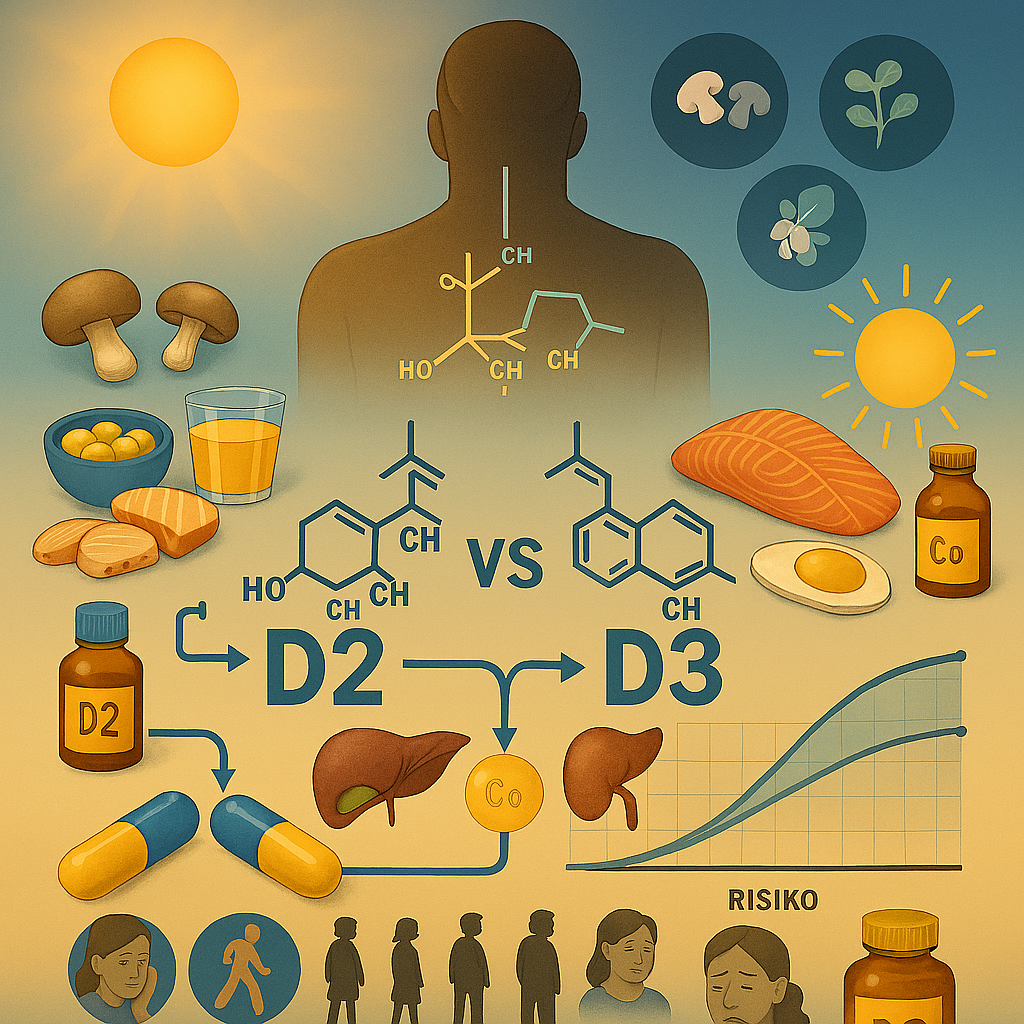
Let me break this down in a way that actually makes sense. Think of vitamin D2 (ergocalciferol) as the plant-based cousin – it comes from mushrooms and fortified foods. Vitamin D3 (cholecalciferol)? That’s the animal-based superstar your skin makes when you catch some rays.
Here’s where things get juicy: The liver metabolizes vitamin D2 into 25-hydroxyvitamin D2 and vitamin D3 into 25-hydroxyvitamin D3 Vitamin D2 vs. D3: What’s the Difference?. Sounds technical, right? But here’s what it means for you – your body processes these two forms differently, and that difference is HUGE for your health.
The research is pretty mind-blowing. The quantitative analysis suggested higher efficacy of cholecalciferol than ergocalciferol in improving total 25(OH)D Relative Efficacy of Vitamin D2 and Vitamin D3 in Improving Vitamin D Status: Systematic Review and Meta-Analysis – PMC. Translation? D3 kicks D2’s butt when it comes to raising your vitamin D levels!
The Science Behind Absorption Rates (Prepare to Be Amazed!) 🔬
Okay, let’s geek out for a minute because this is where vitamin D3 vs D2 gets really interesting. Studies have shown some jaw-dropping differences in how these vitamins perform in your body.
One study found that Vitamin D(2) potency is less than one third that of vitamin D(3) Vitamin D2 is much less effective than vitamin D3 in humans – PubMed. Wait, what?! That’s right – D2 is basically the underachiever of the vitamin D world. And it gets worse for D2. Not only is it less potent, but it also doesn’t stick around as long in your system.
Want more proof? A vitamin D2 injection alone was associated with the smallest increase in serum concentration by a mean of 3.2 ng/ml Effectiveness of vitamin D2 compared with vitamin D3 replacement therapy in a primary healthcare setting: a retrospective cohort study – PMC, while D3 showed significantly better results. If you’re taking vitamin D2 thinking you’re getting the same benefits as D3, you might want to reconsider!
Real-World Effectiveness: D3 Takes the Crown 👑
Let’s talk real results. When researchers compared vitamin D3 vs D2 in actual people (not just lab rats), the findings were crystal clear. Most studies show that vitamin D3 is more effective than vitamin D2 at raising blood levels of calcifediol Vitamin D2 vs. D3: What’s the Difference?.
But here’s something super interesting – your body type might affect how well these vitamins work! People with higher body mass index (BMI) may respond differently to vitamin D supplements Vitamin D vs D2 vs D3: What’s the difference between them?. For folks with a BMI over 25, the difference between D2 and D3 becomes less dramatic. Still, D3 generally comes out on top.
Health Benefits: Why This Choice Matters 💪
Now, let’s get to the good stuff – what can the right vitamin D do for you? The benefits are honestly mind-blowing:
Bone Health and Beyond
We all know vitamin D is crucial for bones, but did you know it’s also a total immune system superstar? As the vitamin D receptor is expressed on immune cells (B cells, T cells and antigen presenting cells), it basically helps your body’s defense system work properly.
Mental Health Magic
Here’s where things get really interesting. Research has shown that vitamin D might play an important role in regulating mood and decreasing the risk of depression. If you’ve been feeling down, especially during those dark winter months, low vitamin D could be part of the problem.
Some studies even suggest that vitamin D3 significantly enhanced positive affect and there was some evidence of a reduction in negative affect. That’s science-speak for “it might make you happier”!
Fighting Off the Bad Stuff
Your immune system needs vitamin D like a car needs oil. Without it, things just don’t run smoothly. Research shows vitamin D helps your body fight off infections and may even help prevent certain chronic diseases. That’s why getting the best form of vitamin D matters so much!
Side Effects and Safety: What You Need to Know ⚠️
Before you run out and buy a mega-dose of D3, let’s talk safety. Good news first – Side effects from taking vitamin D at recommended doses are rare Vitamin D3 Uses, Side Effects & Warnings. But like anything, too much of a good thing can be problematic.
Here’s what to watch out for:
Common Side Effects (Usually from Taking Too Much):
- Metallic taste in your mouth
- Upset stomach
- Nausea
- Increased thirst
- Muscle weakness
The key is finding the right dose. The recommended daily allowance is 400–800 IU (10–20 micrograms), but common supplemental doses range from 1,000–2,000 IU The 8 Best Vitamin D Supplements for 2025. Always start with the recommended dose and work with your healthcare provider if you think you need more.
The Toxicity Truth
Yes, vitamin D toxicity is real, but Vitamin D toxicity is rare, but it can lead to hypercalcemia Vitamin D Supplements (Decara, Pediatric D-Vite, and others): Uses, Side Effects, Interactions, Pictures, Warnings & Dosing – WebMD. This basically means too much calcium in your blood, which is definitely not fun. The good news? It’s pretty hard to overdose if you stick to normal supplement doses.
Cost Comparison: Getting the Most Bang for Your Buck 💰
Let’s talk money because supplements can add up! Generally, D2 is cheaper to produce, which is why you’ll often find it in fortified foods. But here’s the thing – if D3 is more effective, you might actually save money in the long run by choosing the more potent option.
Think about it: if D3 is nearly 10 times more potent than D2 Vitamin D2 is much less effective than vitamin D3 in humans – PubMed in some measures, you’d need way more D2 to get the same results. That “cheaper” bottle might not be such a bargain after all!
When shopping for supplements, expect to pay anywhere from $10-30 for a quality D3 supplement. With those high CPC rates of $3-6 for vitamin D supplements, you know companies are investing serious money in marketing – but now you know which one is actually worth it!
Special Considerations: Who Needs What? 🎯
Not everyone’s vitamin D needs are the same. Let me break down some special situations:
For Vegetarians and Vegans
If you’re plant-based, you might be thinking D2 is your only option. Not true! Vegan D3, however, is derived from algae or lichen, making it suitable for those who avoid animal products Vitamin D vs D2 vs D3: What’s the difference between them?. So you can still get the benefits of D3 without compromising your values.
For People with Darker Skin
This is super important: Dark-skinned people have a high level of melanin, a substance in the body that darkens eyes, skin, and hair, which can prevent proper vitamin D absorption from sunlight. This means supplementation might be even more crucial.
For Older Adults
As we age, our skin becomes less efficient at making vitamin D from sunlight. Plus, For adults over 70 years old, the RDA is 800 IU per day The 8 Best Vitamin D Supplements for 2025 – that’s higher than for younger adults!
During Winter Months
Let’s be real – unless you’re living on a tropical island, winter sun isn’t doing much for your vitamin D levels. vitamin D levels tend to be lower when people have less exposure to sunlight Vitamin D and Depression: Where is all the Sunshine? – PMC, which is why winter supplementation becomes crucial.
Making the Smart Choice: Your Action Plan 🎯
Alright, let’s cut to the chase. Based on all this research, here’s your vitamin D3 vs D2 action plan:
1. Choose D3 for Maximum Effectiveness
The evidence is overwhelming – vitamin D3 is more efficacious at raising serum 25(OH)D concentrations than is vitamin D2 Vitamin D – Mayo Clinic. Unless you have a specific reason to choose D2, D3 is your best bet.
2. Get Your Levels Tested
Before you start popping pills, get a blood test. Knowing your baseline helps you figure out exactly how much you need. Many people are surprised to find they’re deficient!
3. Take It with Fat
Remember, vitamin D is fat-soluble. it’s best to take vitamin D supplements with a meal containing fat, such as olive oil or peanut butter 8 Best Vitamin D Supplements, Pharmacist-Ranked for 2025 | U.S. News. A little avocado toast, anyone?
4. Consider Your Lifestyle
If you’re indoors most of the day, live in a northern climate, or always wear sunscreen (which you should!), you probably need more vitamin D than you think.
5. Be Consistent
Taking vitamin D sporadically won’t cut it. Make it part of your daily routine, just like brushing your teeth.
Frequently Asked Questions About Vitamin D3 vs D2 ❓
Q: Can I take both D2 and D3 together? A: While it’s not harmful, there’s really no point. Since D3 is more effective, stick with that unless your doctor specifically recommends D2.
Q: How long does it take to see results? A: Most people start feeling better within a few weeks, but it can take 2-3 months to fully correct a deficiency.
Q: Is prescription vitamin D better than over-the-counter? A: If someone has low vitamin D levels in their blood, their primary care provider may recommend taking a more concentrated supplement (50,000 IU) Vitamin D2 vs. Vitamin D3: Key Differences and Which to Choose – GoodRx. But for most people, OTC D3 works great.
Q: Can I get enough vitamin D from food alone? A: Unless you’re eating fatty fish every day, probably not. it may be difficult to get adequate amounts of this vitamin from your diet alone Vitamin D2 vs. D3: What’s the Difference?.
The Bottom Line: D3 Wins the Vitamin D3 vs D2 Battle 🏆
After analyzing mountains of research, the verdict is clear: vitamin D3 is the best form of vitamin D for most people. It’s more potent, stays in your system longer, and does a better job of raising your vitamin D levels.
Whether you’re looking to boost your immune system, improve your mood, or just maintain healthy bones, choosing D3 over D2 is a no-brainer. Sure, D2 might be cheaper, but when it comes to your health, effectiveness matters more than saving a few bucks.
Remember, vitamin D deficiency is no joke. It can affect everything from your bones to your brain. So don’t just grab any vitamin D off the shelf – make the smart choice and go for D3. Your body will thank you!
Take Action Today! 💪
Ready to optimize your vitamin D levels? Here’s what to do right now:
- Check your current vitamin D supplement – is it D2 or D3?
- Schedule a blood test to know your vitamin D levels
- Switch to D3 if you’re currently taking D2
- Take it consistently with a meal containing fat
Your health transformation starts with small, smart choices. Choosing the right vitamin D is one of them. Don’t wait for deficiency symptoms to appear – be proactive about your health today!
Remember: While vitamin D3 is generally superior to D2, always consult with your healthcare provider before making significant changes to your supplement routine, especially if you have existing health conditions or take other medications.
Want to learn more about optimizing your health? Check out our guide on managing anxiety without medication or discover the science behind better sleep. For those interested in overall wellness, our article on intermittent fasting for beginners might be just what you need!