
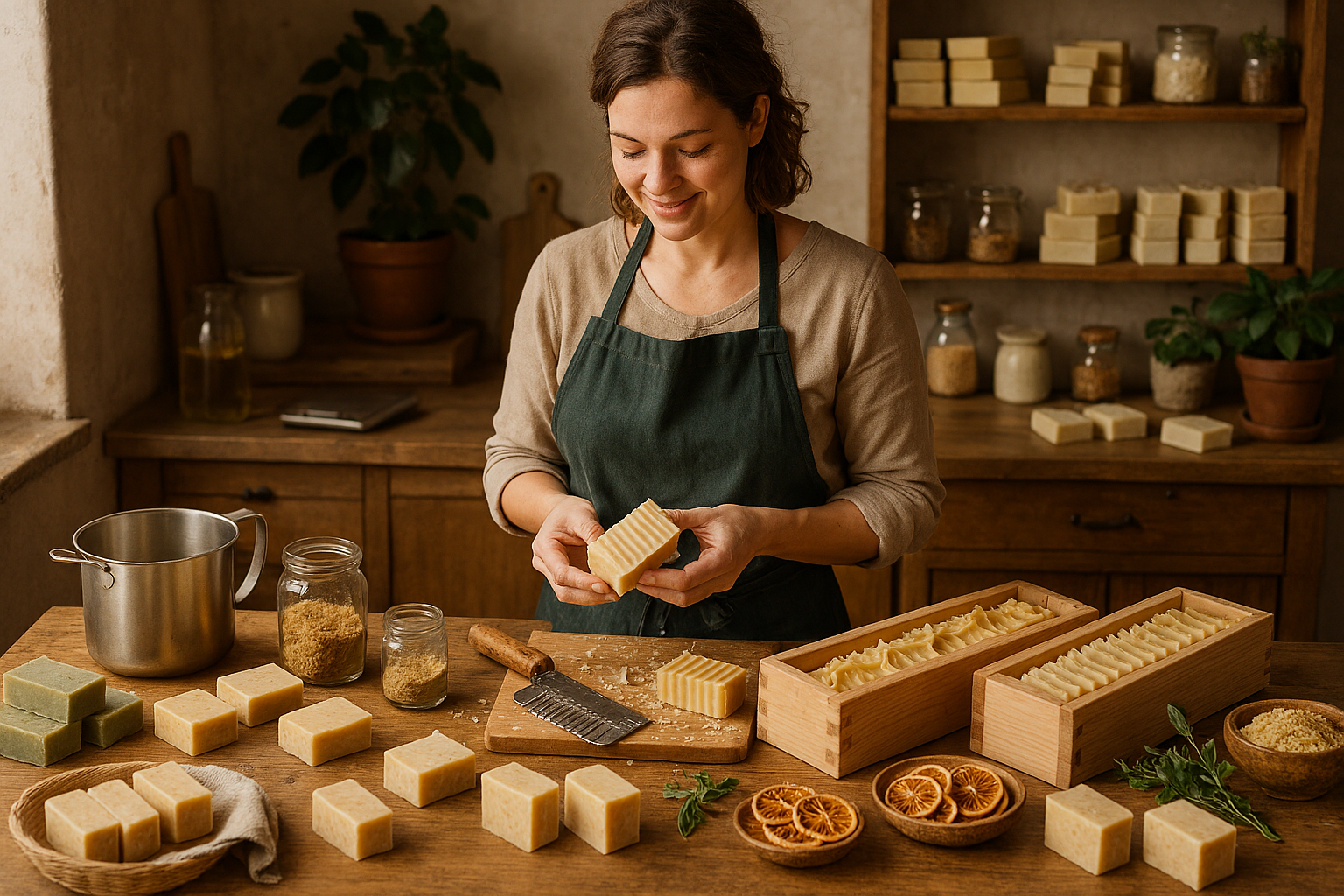
Soap Making Business: Natural Soaps from Kitchen to $50K/Year 🧼✨
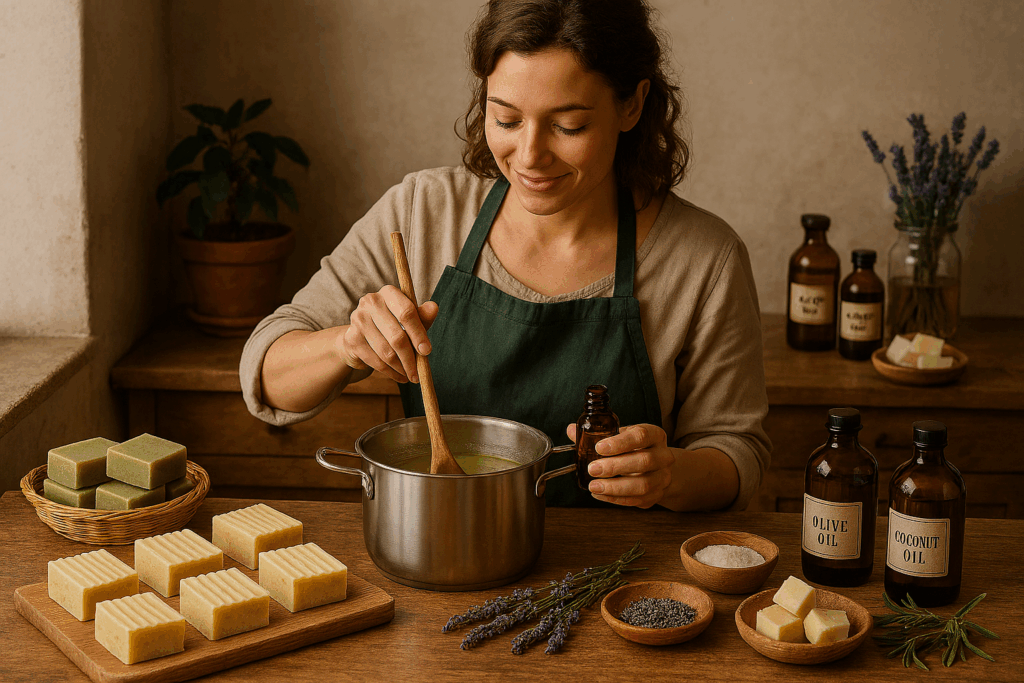
Picture this: You’re in your kitchen, stirring a fragrant mixture of olive oil, coconut oil, and lavender essential oil. Within hours, you’ve created beautiful, natural soap bars that will sell for $8-15 each. What started as a weekend hobby could become your ticket to earning $50,000 per year or more! 💰
The soap making business has absolutely exploded in 2025, with the global handmade soap market reaching $289.13 million and projected to grow at an impressive 6.51% annually through 2032. This isn’t just another crafting trend – it’s a legitimate business opportunity that’s attracting thousands of entrepreneurs worldwide.
Why the Soap Making Business is Your Golden Opportunity 🌟
Here’s what nobody tells you about the soap industry: while everyone’s obsessing over complex tech startups, soap makers are quietly building profitable businesses with profit margins of 25% to 50%. Some successful soap entrepreneurs report profit margins as high as 70% when selling directly to consumers!
The numbers don’t lie. The global soap market size is projected to grow from $50.68 billion in 2025 to $76.45 billion by 2032, exhibiting a CAGR of 6.05% during the forecast period. But here’s the kicker – within this massive market, handmade and artisanal soaps are experiencing the fastest growth.
Why now is the perfect time to start:
- Consumer demand for natural, chemical-free products is at an all-time high ⬆️
- 64% of consumers now prefer chemical-free soaps over commercial brands 🌿
- E-commerce has made it easier than ever to reach customers globally 🌍
- Low startup costs (as little as $1,000) make it accessible to anyone 💸
- Multiple revenue streams: retail, wholesale, courses, and private label 📊
Just like how smart entrepreneurs are leveraging AI tools to build their businesses, savvy soap makers are using modern marketing strategies to scale traditional crafts into six-figure operations.
Real Success Stories That Will Inspire You 💪
Let me share some mind-blowing success stories that prove this isn’t just a pipe dream:
Outlaw Soaps: Danielle started with just $13.72 in supplies and now generates $23,000+ monthly revenue. Her secret? Creating soaps that tap into customers’ love for adventure and breaking free from the mundane.
The Little Soap Company: Emma Heathcote-James was told “You’ll never make a living out of soap,” but proved everyone wrong. Starting at her kitchen table, she built a national brand now stocked in Waitrose, Sainsbury’s, Tesco, and Boots!
Fizzy Soaps: Isabella Lin turned creative soap designs into a thriving business by crafting soaps that look like milkshakes and bubble tea. She built hundreds of thousands of TikTok followers and regularly sells out her products.
Success Pattern Alert: Notice how these successful soap makers didn’t just make soap – they created experiences, told stories, and built communities around their brands!
Understanding Your Soap Making Business Options 🔍
Method 1: Cold Process Soap Making (The Artisan’s Choice) ❄️
Cold process is where the magic happens! You’re literally creating soap from scratch using oils, lye, and water through the chemical process of saponification.
Advantages:
- Complete control over ingredients and formulation 🎯
- Higher profit margins (you control costs completely) 💰
- Endless customization possibilities 🎨
- Professional credibility and authenticity 👑
- Longer-lasting, harder bars that customers love ⭐
Time Investment:
- Active working time: 2-3 hours per batch
- Cure time: 4-6 weeks before selling
- Learning curve: 2-3 months to master basics
Profit Potential: $5-15 per bar with 60-70% profit margins
Method 2: Melt and Pour (The Quick Start Option) ⚡
Perfect for beginners or those who want to focus on design and marketing rather than chemistry.
Advantages:
- No lye handling required (safer for beginners) 🛡️
- Ready to use in 24 hours ⏰
- Great for intricate designs and layers 🎭
- Kid-friendly option for family businesses 👨👩👧👦
- Lower initial learning curve 📈
Considerations:
- Limited ingredient control (pre-made bases) ⚠️
- Lower profit margins (higher base costs) 📉
- Less differentiation from competitors 🔄
Setting Up Your Soap Making Business: The Foundation 🏗️
Legal Requirements and Regulations 📋
Understanding soap regulations is crucial for your success. The FDA has specific requirements that determine how your soap is classified:
For “True Soap” Classification:
- Must be made primarily of alkali salts of fatty acids ✅
- Cleaning action must come from these ingredients ✅
- Must be labeled and marketed only as soap ✅
If you make cosmetic claims (moisturizing, deodorizing), your soap becomes a cosmetic under FDA regulation, requiring different labeling and safety standards.
Pro Tip: Start simple with basic cleaning claims, then expand as you learn the regulations. Just like mastering cybersecurity fundamentals before tackling advanced threats, understanding basic soap regulations protects your business foundation.
Business Structure and Setup 🏢
Recommended Business Structure:
- LLC (Limited Liability Company): Most popular choice for soap makers
- Protects personal assets from business liabilities 🛡️
- Simple tax structure and operational flexibility 📊
- Professional credibility with suppliers and customers 🎯
Essential Business Setup Steps:
- Register your business name and LLC
- Get an EIN (Employer Identification Number)
- Open a business bank account
- Obtain necessary permits and licenses
- Set up business insurance (liability coverage essential!)
Insurance: Your Financial Safety Net 🔒
Don’t skip this! Soap making involves chemical processes and customer safety. General liability insurance typically costs $500-$1,000 annually, but one lawsuit could destroy your entire business.
Coverage you need:
- General liability insurance ($1-2 million recommended)
- Product liability coverage
- Business property insurance (for equipment and inventory)
The Money Side: Costs, Pricing, and Profit Potential 💸
Startup Investment Breakdown
Lean Startup (Under $2,000):
- Basic soap making equipment: $300-500
- Initial ingredient inventory: $400-600
- Molds and packaging supplies: $200-400
- Business registration and insurance: $300-500
- Marketing and branding: $200-500
Professional Setup ($3,000-6,000):
- Professional equipment (larger mixers, more molds): $1,000-2,000
- Premium ingredient inventory: $800-1,200
- Professional packaging and labeling: $500-800
- Comprehensive insurance and legal setup: $400-800
- Professional website and marketing: $800-1,200
Scaling Operation ($8,000-15,000):
- Commercial-grade equipment: $2,000-4,000
- Large inventory and storage setup: $2,000-3,000
- Professional facility rental/setup: $2,000-4,000
- Comprehensive business infrastructure: $2,000-4,000
Pricing Strategy That Actually Works 💰
Here’s where most soap makers get it wrong – they price based on what others are charging instead of their actual costs and desired profit margins.
Cost Calculation Formula:
- Material Costs: Calculate cost per bar including oils, lye, fragrance, colorants
- Labor Costs: Pay yourself at least $20-30/hour (never work for free!)
- Overhead: Include utilities, insurance, packaging, marketing (add 20% buffer)
- Profit Margin: Apply 2.5-4x markup for retail pricing
Real-World Pricing Examples:
- Basic bars: $3-6 each (suitable for volume sales)
- Premium/specialty bars: $7-12 each (organic, unique ingredients)
- Luxury/custom bars: $10-20 each (special occasions, gifts)
- Wholesale pricing: $2-4 per bar (bulk orders to retailers)
Success Secret: Focus on value, not just price. Position your soaps as health and wellness products, not just cleaning items.
Most Profitable Soap Making Niches in 2025 🎯
Organic and Natural Soap Lines 🌿
The organic soap market is projected to grow from USD 2.54 billion in 2025 to USD 4.17 billion by 2032, exhibiting a CAGR of 7.33%. Consumers are willing to pay premium prices for organic, chemical-free alternatives.
Hot Organic Trends:
- Palm oil-free formulations (environmental concern) 🌴
- Zero-waste packaging solutions ♻️
- Therapeutic essential oil blends 💆♀️
- Vegan and cruelty-free certifications 🐰
Specialty Target Markets 🌟
Men’s Grooming Market: Growing rapidly with specific scent preferences and packaging needs. Think woodsy, masculine scents and rugged packaging.
Baby and Sensitive Skin: Parents pay premium prices for gentle, natural formulations. Unscented or mildly scented options with organic ingredients.
Luxury and Gift Market: High-end soaps for special occasions, corporate gifts, and spa experiences. Beautiful packaging and premium ingredients command $15-25+ per bar.
Therapeutic and Aromatherapy: Soaps targeting specific needs like stress relief, energy, sleep, or skin conditions (be careful with drug claims!).
Sourcing Ingredients: Building Your Supply Chain 📦
Finding Quality Suppliers 🔍
Your ingredients determine your soap quality and profit margins. Research shows that buying wholesale ingredients in bulk can reduce costs by 30-50%.
Top Wholesale Suppliers:
- Jedwards International: Bulk conventional and organic raw materials
- Wholesale Supplies Plus: Complete soap making ingredient catalog
- The Chemistry Store: 20+ years in business, wholesale pricing to public
- Shay and Company: Premium wholesale ingredients and bases
- Nurture Handmade: High-quality fragrance oils and colorants
Essential Ingredients for Business:
- Base oils: Coconut oil (for lather), olive oil (for mildness), palm oil alternatives
- Specialty oils: Shea butter, cocoa butter, castor oil for premium formulations
- Sodium hydroxide (lye): Food-grade, from reputable suppliers only
- Fragrance and essential oils: Skin-safe, IFRA compliant
- Colorants: Natural clays, micas, oxides for beautiful visual appeal
Cost Management Strategies 💡
Smart Buying Tips:
- Join soap making groups for group buys and bulk purchasing
- Build relationships with local suppliers for fresh oils
- Calculate cost per ounce for all ingredients to track profitability
- Order seasonal fragrances in advance to avoid price increases
- Keep 3-month inventory minimum to avoid stockouts
Marketing Your Soap Making Business: From Zero to Viral 🚀
Building Your Brand Identity 🎨
Your brand is everything in the soap business. Customers aren’t just buying soap – they’re buying into your story, values, and lifestyle.
Brand Development Essentials:
- Unique Value Proposition: What makes your soap special?
- Target Customer Profile: Who exactly are you serving?
- Brand Voice and Personality: How do you communicate?
- Visual Identity: Colors, logos, packaging that tells your story
- Brand Values: Sustainability, quality, community, wellness?
Just like how successful tech companies differentiate themselves in competitive markets, soap makers need clear positioning and unique value propositions.
Social Media Marketing That Converts 📱
According to the Direct Marketing Association, for every $1 you spend on email marketing, you get $42 back – but social media is where soap makers really shine!
Platform-Specific Strategies:
Instagram (Visual Storytelling):
- Behind-the-scenes soap making videos 🎬
- Before/after shots of ingredients to finished bars 📸
- User-generated content from satisfied customers 👥
- Instagram Stories for daily business updates 📲
TikTok (Viral Potential):
- Satisfying soap cutting videos 🔪
- Time-lapse creation processes ⏱️
- Educational content about ingredients 🧠
- Trending audio with soap visuals 🎵
Facebook (Community Building):
- Local community groups for direct sales 🏘️
- Facebook Marketplace for local customers 🛒
- Live streaming soap making sessions 📺
- Customer testimonial posts 💭
Pinterest (Discovery Marketing):
- DIY soap recipes and tutorials 📝
- Packaging and gift ideas 🎁
- Seasonal soap collections 🎃🎄
- Home decor and lifestyle content 🏠
Content Marketing Strategy 📝
Create valuable content that positions you as an expert. Share your knowledge generously – it builds trust and authority.
Content Ideas That Drive Sales:
- “5 Ingredients to Avoid in Commercial Soap” (educational) 📚
- “How I Created My Signature Lavender Blend” (behind-the-scenes) 🔍
- “Customer Transformation Stories” (social proof) 💫
- “Seasonal Soap Care Tips” (helpful content) 🌸
Scaling Your Soap Business: From Kitchen to Commercial Success 📈
Production Efficiency and Systems ⚙️
Once you start a soap business, less than 20% of your time as a sole business owner should be dedicated to soapmaking/production. The rest should focus on marketing, sales, and business growth.
Scaling Strategies:
- Batch size optimization: Find your sweet spot for efficiency vs. variety
- Recipe standardization: Document everything for consistent quality
- Equipment investment: Better tools = faster, more consistent production
- Team building: Hire help for production, packaging, or shipping
- Facility planning: When to move from kitchen to commercial space
Revenue Stream Diversification 💼
Don’t put all your eggs in one basket! The most successful soap businesses have multiple income streams:
Primary Revenue Streams:
- Direct-to-consumer sales: Highest profit margins (50-70%)
- Wholesale to retailers: Volume sales, lower margins (25-35%)
- Farmers markets and craft fairs: Personal connections, premium pricing
- Online marketplaces: Etsy, Amazon, Facebook Marketplace
- Subscription boxes: Recurring revenue, customer retention
Secondary Revenue Streams:
- Soap making courses: $200-600 per student 👩🏫
- Private label manufacturing: Create soap for other brands 🏷️
- Consulting services: Help other soap makers start their businesses 💡
- Digital products: Recipe books, business guides, video courses 📚
- Soap making supplies: Sell ingredients and tools to other makers 🛒
Customer Acquisition and Retention 🎯
Local Marketing Strategies:
- Partner with local coffee shops, boutiques, and health stores ☕
- Sponsor local events and farmers markets 🎪
- Build relationships with wedding planners and gift shops 💒
- Create corporate gift packages for local businesses 🎁
Digital Marketing That Works:
- SEO-optimized website: Target “handmade soap + [your city]” keywords 🔍
- Email marketing: Build a list and nurture relationships 📧
- Influencer partnerships: Send products to beauty and lifestyle bloggers 🌟
- Customer referral programs: Reward loyal customers for spreading the word 🤝
Advanced Business Strategies for Maximum Profit 🚀
Premium Positioning and Luxury Market 💎
The luxury soap market commands premium prices. High-end soap bars selling for $15-25+ each focus on:
- Exotic ingredients: Rare oils, precious metals, unique botanicals 🌺
- Artisanal presentation: Hand-wrapped, gift-ready packaging 🎀
- Limited editions: Seasonal releases, exclusive scents 🌸
- Spa partnerships: Wholesale to high-end wellness centers 🧘♀️
Eco-Friendly and Sustainable Focus ♻️
In Europe, 67% of consumers are willing to pay more for sustainably packaged products. The eco-conscious market is willing to pay premium prices for:
- Zero-waste packaging: Biodegradable wrapping, compostable materials 🌱
- Locally sourced ingredients: Support local farmers and suppliers 🏪
- Plastic-free operations: Everything from packaging to shipping 📦
- Carbon-neutral shipping: Partner with eco-friendly logistics companies 🚚
Technology Integration 💻
Modern soap makers are leveraging technology just like other successful businesses. Similar to how cloud computing transformed traditional IT, digital tools are revolutionizing soap businesses:
Essential Business Tools:
- Inventory management software: Track ingredients and finished products 📊
- CRM systems: Manage customer relationships and orders 👥
- Accounting software: Monitor profit margins and tax obligations 💳
- Social media scheduling: Consistent online presence 📅
- E-commerce platforms: Professional online stores 🛍️
Advanced Marketing Techniques That Generate Sales 📢
Email Marketing Mastery 📧
Build an email list from day one! This is your most valuable business asset.
Email Campaign Ideas:
- Welcome series: Introduce new subscribers to your brand story 👋
- Educational content: Skin care tips, ingredient benefits, usage guides 📖
- New product launches: Exclusive previews for email subscribers 🚀
- Seasonal promotions: Holiday themes, gift guides, special offers 🎁
- Behind-the-scenes content: Personal stories, business updates 👀
Partnership Marketing Strategies 🤝
Strategic Partnerships:
- Complementary businesses: Hair salons, spas, yoga studios 💇♀️
- Wedding vendors: Photographers, planners, venues 💒
- Local retailers: Boutiques, health stores, gift shops 🏪
- Online influencers: Beauty bloggers, lifestyle content creators 📱
Seasonal Marketing Calendar 📅
Plan your marketing around peak sales periods:
Q1 (January-March): New Year detox, Valentine’s gifts, spring cleaning Q2 (April-June): Mother’s Day, wedding season, graduation gifts Q3 (July-September): Summer travel sizes, back-to-school, outdoor markets Q4 (October-December): Halloween themes, holiday gifts, winter skin care
Manufacturing Excellence: Quality and Consistency 🏭
Good Manufacturing Practices (GMP) ✅
Professional soap makers follow strict GMP guidelines to ensure product safety and consistency:
Essential GMP Elements:
- Clean workspace: Sanitized equipment and surfaces 🧽
- Ingredient documentation: Batch records and traceability 📋
- Quality testing: pH testing, weight consistency, visual inspection 🔬
- Storage protocols: Proper curing environment and inventory rotation 📦
- Safety procedures: Emergency protocols and first aid preparedness 🚨
Recipe Development and Testing 🧪
Creating your signature soap formulations is both art and science:
Recipe Development Process:
- Start with proven base recipes: 70% olive oil, 20% coconut oil, 10% specialty oils
- Test small batches: Make 1-pound test batches before scaling
- Document everything: Keep detailed notes on every variation
- Customer feedback: Test with real users and iterate based on responses
- Seasonal adjustments: Modify recipes for different climates and seasons
Packaging and Presentation 📦
Consider using eco-friendly materials like recycled cardboard or kraft paper for your soap boxes. These options are not only visually appealing but also environmentally friendly.
Packaging Options by Price Point:
- Budget-friendly: Kraft paper bands, simple labels ($0.15-0.30 per bar)
- Mid-range: Custom boxes, branded labels ($0.50-1.00 per bar)
- Premium: Luxury boxes, ribbon ties, custom designs ($1.50-3.00 per bar)
Online Business Strategies for Modern Soap Makers 🌐
E-commerce Platform Selection 🛒
Choose your online platform based on your business goals:
Shopify (Recommended for Serious Businesses):
- Professional appearance and functionality 💼
- Built-in SEO and marketing tools 📈
- Inventory management and analytics 📊
- Mobile-optimized for modern shoppers 📱
Etsy (Great for Starting Out):
- Built-in audience of handmade product shoppers 🎨
- Lower monthly fees and setup costs 💰
- Easy integration with social media 📲
- Craft fair atmosphere and community 🤝
SEO Strategy for Soap Businesses 🔍
Optimize your online presence to capture search traffic:
Target Keywords:
- “Handmade soap [your city]”
- “Natural soap for sensitive skin”
- “Organic soap gifts”
- “Custom soap [occasion]”
- “Chemical-free soap bars”
Content SEO Strategy:
- Create soap care and ingredient education content 📚
- Local SEO optimization for area customers 📍
- Product description optimization with benefits focus 💪
- Customer review and testimonial integration ⭐
Just like how professionals optimize their online security, soap makers need to optimize their online presence for maximum visibility and sales.
Financial Management and Growth Planning 📊
Understanding Your Numbers 💹
Track these key metrics to ensure sustainable growth:
Critical Business Metrics:
- Cost of Goods Sold (COGS): Should be 20-30% of selling price
- Customer Acquisition Cost (CAC): What you spend to get each new customer
- Customer Lifetime Value (CLV): Total revenue from average customer
- Monthly Recurring Revenue (MRR): Predictable income from subscriptions
- Profit Margins by Product: Which soaps are most profitable
Funding Your Growth 💰
Bootstrap Strategies:
- Reinvest profits into inventory and equipment 🔄
- Start with local sales before expanding online 🏘️
- Use pre-orders to fund large ingredient purchases 📋
- Partner with other makers for group buying power 🤝
External Funding Options:
- Small business loans and SBA programs 🏦
- Crowdfunding for unique product launches 📢
- Angel investors interested in sustainable businesses 👼
- Revenue-based financing for predictable businesses 📈
Common Mistakes That Kill Soap Businesses (And How to Avoid Them) ⚠️
Pricing Too Low 💸
Soap has killer tight profit margins. It really does. If olive oil jumps in price by 30%, what will your bottom line look like?
Solution: Build buffer into your pricing. Price for sustainability, not just competition.
Trying to Be Everything to Everyone 🎯
Problem: Making 20 different soap types for launch Solution: Start with 5-7 core products and expand based on customer demand
Ignoring Business Fundamentals 📋
Problem: Focusing only on soap making, ignoring business operations Solution: Treat it like a real business from day one with proper systems
Underestimating Time Investment ⏰
Problem: Thinking soap making is passive income Solution: Plan for significant time investment in marketing and operations
Learning and Skill Development 📚
Essential Training and Education 🎓
Soap Making Courses:
- School of Natural Skincare: Professional certification programs ($300-800)
- Soap School: UK-based intensive courses ($200-600)
- Udemy and online platforms: Budget-friendly starter courses ($50-200)
- Local workshops: Hands-on learning and networking opportunities
Business Skills Development:
- Marketing courses: Learn digital marketing and social media strategies
- Accounting basics: Understand your numbers and tax obligations
- Photography skills: Create stunning product photos for marketing
- Customer service excellence: Build lasting customer relationships
Staying Updated with Industry Trends 📊
Industry Resources:
- Soapmaking forums and communities: Learn from experienced makers
- Trade publications: Stay current with industry developments
- Supplier newsletters: New ingredient launches and market trends
- Business podcasts: General business strategy and growth tactics
Regulatory Compliance and Safety 🔒
FDA and Safety Requirements 📋
Understanding and following regulations protects your business and customers:
Key Compliance Areas:
- Labeling requirements: Proper ingredient listing and business information
- Safety testing: Ensure products are safe for intended use
- Record keeping: Maintain detailed production and sales records
- Insurance compliance: Meet retailer and venue insurance requirements
International Considerations 🌍
If you plan to sell internationally or source ingredients globally:
Important Considerations:
- Import/export regulations: Understand customs and duties
- International labeling: Different countries have different requirements
- Currency and payment processing: Plan for international transactions
- Shipping restrictions: Some ingredients can’t cross borders
Advanced Soap Formulation Techniques 🧪
Creating Signature Formulations 🎨
Develop unique recipes that customers can’t find anywhere else:
Innovation Strategies:
- Local ingredient integration: Honey from local beekeepers, regional botanicals
- Seasonal formulations: Summer cooling mints, winter warming spices
- Therapeutic blends: Stress relief, energy boost, sleep promotion
- Cultural inspiration: Traditional recipes from different cultures
Quality Control and Testing 🔬
Maintain consistent quality as you scale:
Testing Protocols:
- pH testing: Ensure safety and skin compatibility
- Lather quality: Consistent bubble formation and feel
- Hardness testing: Bars that last appropriate time in shower
- Scent retention: Fragrance lasting power over time
- Visual inspection: Color consistency and appearance standards
Technology and Innovation in Soap Making 💡
Modern Tools and Equipment 🛠️
Invest in tools that improve efficiency and quality:
Essential Equipment Upgrades:
- Digital scales: Precision ingredient measurement (±0.1g accuracy)
- Immersion blenders: Professional-grade for consistent mixing
- Temperature monitoring: Digital thermometers for process control
- Professional molds: Silicone molds for consistent bar shapes
- Curing racks: Proper air circulation for optimal curing
Digital Integration 📱
Smart soap makers use technology to streamline operations:
Business Automation:
- Inventory tracking apps: Know when to reorder ingredients
- Customer management systems: Track preferences and purchase history
- Financial tracking: Monitor profit margins and cash flow in real-time
- Social media scheduling: Maintain consistent online presence
- Email automation: Nurture customer relationships automatically
Building Your Soap Empire: Long-Term Vision 🏰
Franchising and Licensing Opportunities 🔄
Once you’ve proven your business model, consider expansion through:
Scaling Options:
- Licensing your recipes: Receive royalties from other soap makers
- Franchising your brand: Help others open soap businesses under your name
- Private label manufacturing: Create soaps for other brands
- Teaching and consulting: Share your expertise for additional income
Exit Strategies and Business Value 💰
Build a business that has value beyond just your personal involvement:
Value Creation Strategies:
- Systematize operations: Document all processes and procedures
- Build brand equity: Strong customer loyalty and brand recognition
- Diversify revenue: Multiple income streams reduce risk
- Geographic expansion: Serve markets beyond your local area
The Reality Check: Challenges and How to Overcome Them 😤
Market Saturation and Competition 🥊
The soap market is competitive, but there’s always room for quality and innovation:
Differentiation Strategies:
- Niche specialization: Focus on specific customer needs or demographics
- Superior customer service: Go above and beyond for every customer
- Innovation and creativity: Constantly develop new products and experiences
- Community building: Create loyal customers who become brand ambassadors
Supply Chain Management 📦
Ingredient price fluctuations can impact profitability:
Risk Management:
- Diversify suppliers: Don’t rely on single sources for critical ingredients
- Hedge against price increases: Buy key ingredients when prices are low
- Flexible formulations: Develop backup recipes with alternative ingredients
- Cost monitoring: Track ingredient costs and adjust pricing accordingly
Seasonal Demand Fluctuations 📊
Consider adjusting your prices to reflect these demand cycles strategically. During peak seasons, higher rates can help manage workload and maximize revenue.
Seasonal Strategies:
- Holiday collections: Plan themed products months in advance
- Gift packaging: Beautiful presentation for gift-giving seasons
- Corporate sales: End-of-year corporate gifts and employee appreciation
- Subscription services: Smooth out seasonal fluctuations with recurring revenue
Future Trends Shaping the Soap Industry 🔮
Sustainability and Zero-Waste Movement ♻️
Environmental consciousness is driving major changes in consumer behavior:
Trending Sustainable Practices:
- Plastic-free packaging: Compostable and biodegradable materials only
- Refill programs: Customers bring containers back for refills
- Carbon-neutral shipping: Offset environmental impact of deliveries
- Local sourcing: Reduce transportation environmental impact
Technology Integration 🤖
The soap industry is embracing modern technology:
Emerging Technologies:
- AI-powered formulation: Software that optimizes recipes for specific properties
- IoT sensors: Monitor curing conditions automatically
- Blockchain tracking: Verify ingredient authenticity and sourcing
- AR packaging: Interactive packaging experiences through smartphone apps
Personalization and Customization 🎨
Customers increasingly want products tailored to their specific needs:
Customization Opportunities:
- Skin type analysis: Formulate soaps for individual skin needs
- Scent personalization: Custom fragrance blends for each customer
- Packaging customization: Personalized labels and gift messages
- Subscription personalization: AI-driven product recommendations
Building Your Soap Making Knowledge Base 📖
Continuous Learning and Improvement 📚
Successful soap entrepreneurs never stop learning:
Learning Priorities:
- Advanced formulation chemistry: Understand how ingredients interact
- Business management skills: Finance, marketing, operations, leadership
- Industry networking: Build relationships with suppliers, customers, peers
- Regulatory updates: Stay current with changing laws and requirements
Just like how tech professionals continuously update their skills to stay relevant, soap makers must stay current with industry developments and consumer trends.
Building Your Expert Authority 🏆
Position yourself as a thought leader in the soap making industry:
Authority Building Tactics:
- Guest posting: Write for industry blogs and publications ✍️
- Speaking engagements: Present at craft fairs and business events 🎤
- Media interviews: Share your expertise with journalists and podcasters 📻
- Educational content: Create comprehensive guides and tutorials 📹
Your Action Plan: From Beginner to Profitable Business Owner 🎯
30-Day Quick Start Challenge 🏃♀️
Week 1: Foundation Building
- Research and choose your soap making method 🔍
- Source basic equipment and ingredients 📦
- Set up dedicated workspace in your kitchen 🏠
- Create first test batch of soap 🧼
Week 2: Business Setup
- Register business name and structure 📋
- Open business bank account 🏦
- Research insurance options and regulations ⚖️
- Develop basic brand identity and logo 🎨
Week 3: Product Development
- Perfect 2-3 signature soap recipes 🧪
- Create attractive packaging design 📦
- Develop pricing strategy and cost analysis 💰
- Plan product photography and marketing materials 📸
Week 4: Market Launch
- Build basic website or online store 🌐
- Create social media profiles and content 📱
- List products for sale online 🛒
- Launch with friends, family, and local network 👥
90-Day Growth Sprint 🚀
Month 1: Local Market Domination
- Participate in local farmers markets and craft fairs 🏪
- Build relationships with local retailers and boutiques 🤝
- Develop customer feedback system and improve products 📊
- Establish consistent production schedule ⏰
Month 2: Digital Expansion
- Launch comprehensive social media marketing campaigns 📱
- Start email marketing list and weekly newsletters 📧
- Optimize website for search engines and conversions 🔍
- Partner with local influencers and bloggers 🌟
Month 3: Business Optimization
- Analyze sales data and optimize product mix 📊
- Streamline production processes for efficiency ⚙️
- Explore wholesale opportunities with retailers 🏪
- Plan for holiday season and peak sales periods 🎁
Financial Projections: What You Can Really Expect 💰
Year 1: Building Phase (Part-Time) 📈
Realistic Expectations:
- Monthly Revenue: $500-2,000
- Monthly Profit: $200-800 (40-50% margins)
- Customer Base: 50-200 regular customers
- Product Line: 5-10 core soap varieties
Year 2: Growth Phase (Transitioning to Full-Time) 🚀
Growth Targets:
- Monthly Revenue: $2,000-8,000
- Monthly Profit: $1,000-4,000
- Customer Base: 200-500 regular customers
- Product Line: 10-20 varieties plus seasonal offerings
Year 3: Scale Phase (Full-Time Business) 💼
Success Metrics:
- Monthly Revenue: $5,000-15,000+
- Annual Income: $50,000-100,000+
- Customer Base: 500+ loyal customers
- Revenue Streams: Multiple channels and income sources
Success Factors:
- Consistent quality and customer satisfaction ⭐
- Strong brand recognition and customer loyalty 🏆
- Efficient operations and cost management 📊
- Strategic marketing and customer acquisition 🎯
Tools and Resources for Soap Business Success 🛠️
Essential Software and Tools 💻
Business Management:
- QuickBooks or Wave: Accounting and financial management 💳
- Mailchimp or ConvertKit: Email marketing automation 📧
- Canva or Adobe Creative: Design and marketing materials 🎨
- Google Analytics: Website traffic and customer behavior analysis 📊
Soap Making Specific:
- SoapCalc or Bramble Berry Calculator: Recipe formulation tools 🧮
- BatchCalc: Scale recipes and track costs accurately 📏
- Inventory management apps: Track ingredients and finished goods 📦
Similar to how cloud professionals use specialized tools to optimize their infrastructure, soap makers need the right tools for business success.
Building Your Support Network 🤝
Community Resources:
- Local soap making guilds: In-person networking and learning 👥
- Online forums: Soapmaking Forum, Reddit communities 💬
- Facebook groups: Modern Soapmaking, Soap Making Business 📘
- Professional associations: Handcrafted Soap and Cosmetic Guild 🏛️
Final Thoughts: Your Soap Making Journey Starts Now! 🌟
The soap making business represents one of the most accessible entrepreneurial opportunities available today. With low startup costs, high profit potential, and growing consumer demand for natural products, the stars are aligned for your success.
Remember these key success principles:
- Start small but think big – Begin with a few products and expand strategically 📏
- Focus on quality over quantity – Better to make excellent soap than mediocre variety 🏆
- Build relationships, not just transactions – Customer loyalty drives long-term success 💕
- Embrace continuous learning – The soap and business landscape constantly evolves 📚
- Track your numbers religiously – Data-driven decisions lead to profitable growth 📊
Whether you’re looking to supplement your income with side hustles that actually pay or build a full-time business empire, soap making offers a proven path to financial independence.
The handmade soap market will reach $299.56 million by 2033, growing at 5.94% annually. This growth means opportunities for new entrepreneurs who understand quality, marketing, and customer service.
Your soap making journey starts with a single batch. With dedication, smart business practices, and the strategies outlined in this guide, you could be well on your way to joining the ranks of successful soap entrepreneurs earning $50,000+ annually.
Just like how successful entrepreneurs leverage technology to build their businesses, you can use these proven soap making strategies to create your own profitable venture.
The soap making business isn’t just about creating beautiful, natural products – it’s about building a sustainable lifestyle business that provides freedom, creativity, and financial security.
Are you ready to transform your kitchen creativity into a thriving business? Your soap making adventure begins today! 🧼✨
What’s stopping you from starting your soap making business journey? Drop a comment below and let’s turn your soap making dreams into reality! 💭👇